
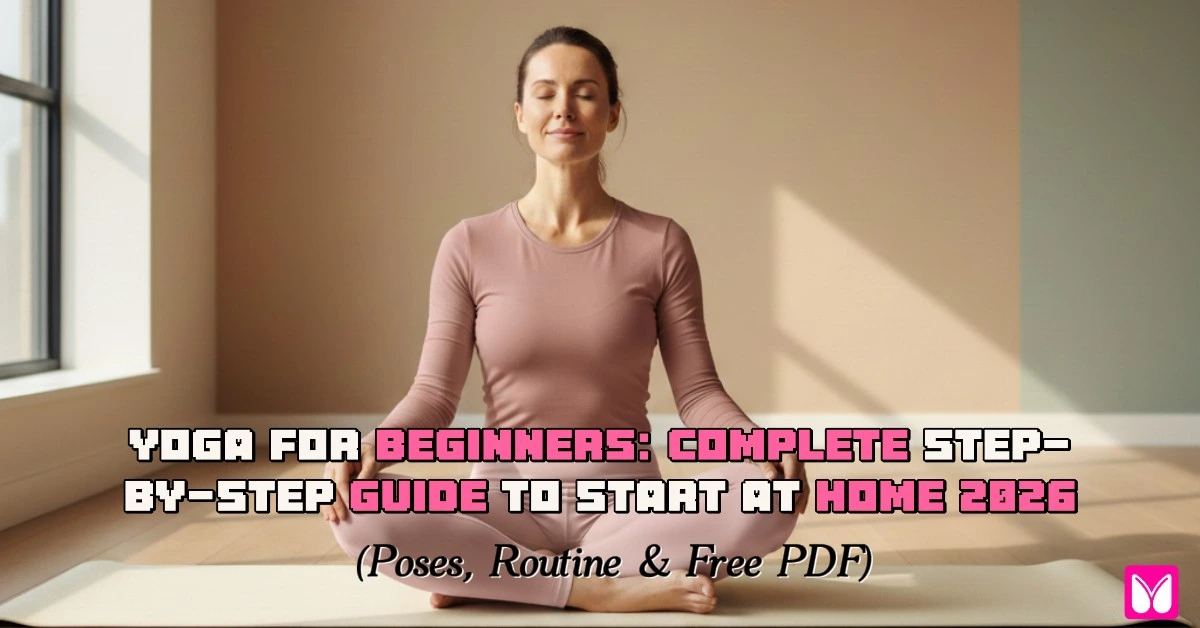
-
 by
Nandini Sharma
by
Nandini Sharma - February 15, 2026
- 0 Comments

Table of Contents
Starting yoga for the first time can feel intimidating.
Maybe you’ve seen advanced poses on social media and thought, “I’m not flexible enough for that.”
Maybe you’re worried you’ll do it wrong.
Or maybe you simply don’t know where to begin.
Here’s the truth: yoga for beginners is not about touching your toes, twisting into complicated shapes, or being perfectly calm. It’s about learning how to move your body with awareness, breathe more deeply, and build strength and flexibility at your own pace.
You don’t need to be flexible.
You don’t need expensive equipment.
You don’t even need more than 10 minutes a day.
What you do need is a simple, structured starting point—and that’s exactly what this guide gives you.
Inside this complete beginner yoga guide, you’ll learn:
- 12 essential beginner yoga poses (with easy modifications)
- A simple 10-minute daily yoga routine for beginners
- How to start yoga at home with confidence
- Common beginner mistakes (and how to avoid them)
- A free printable beginner yoga PDF to help you stay consistent
Every pose and routine in this guide has been reviewed for somatic safety, ensuring you move in a way that protects your joints and calms your nervous system.
Whether your goal is to improve flexibility, reduce stress, ease lower back pain, or simply feel stronger and more balanced, this step-by-step guide will help you start safely and build a routine that actually fits your life.
If you’re brand new to yoga, you’re in the right place.
Let’s begin.
Before you scroll down, take one deep breath in through your nose and out through your mouth.
That was your first yoga practice. Now, let’s continue.
Yoga for Beginners—At a Glance
Reviewed by: Mindfullyoga Wellness Team
Approach: Somatic, joint-conscious, beginner-safe
Level: Complete Beginner
Time Required: 10–20 minutes
Equipment: Optional yoga mat
Best For: Flexibility, stress relief, strength, posture support
Includes: 12 poses, 10-minute routine, 7-day starter plan, free printable PDF
✔ No flexibility required
✔ No prior experience needed
✔ Designed for at-home practice
What Is Yoga for Beginners?
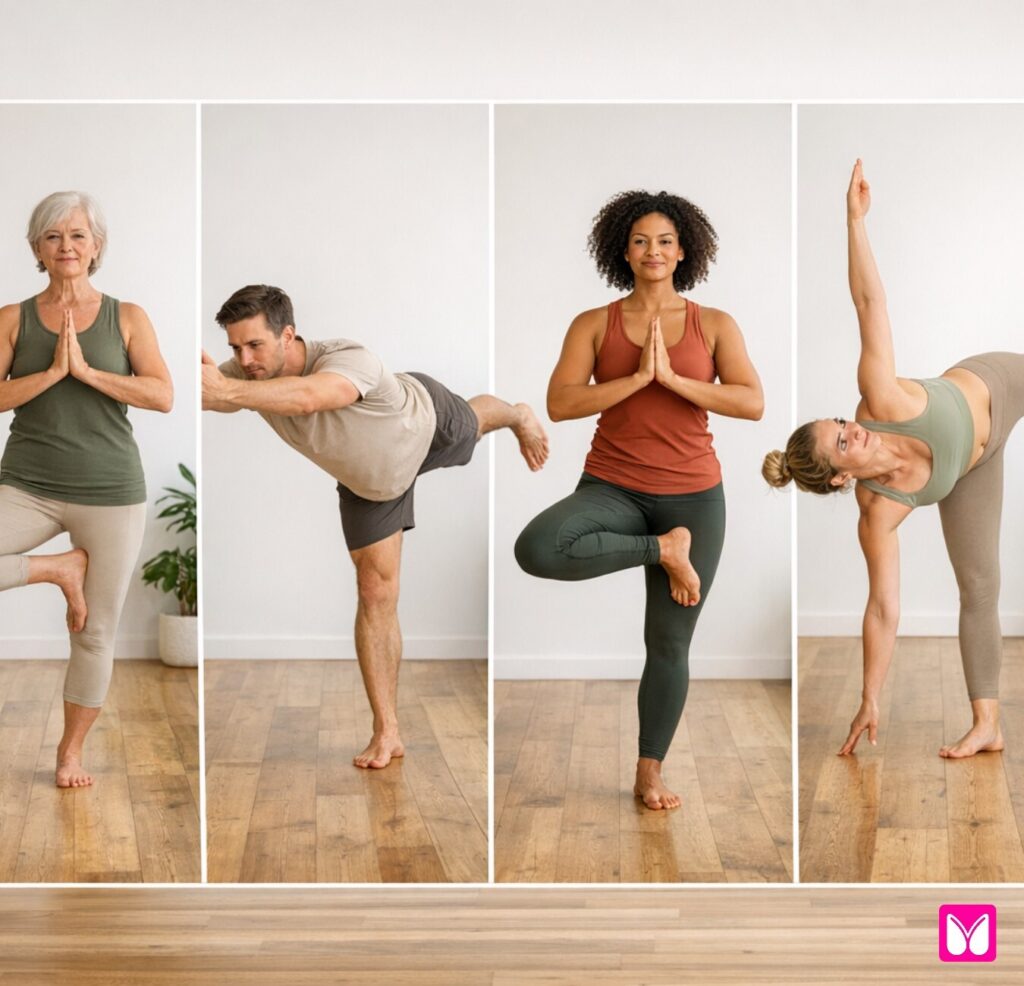
Yoga for beginners is a gentle introduction to foundational poses, simple breathing techniques, and short guided routines designed to help you build strength, flexibility, and balance safely.
It’s not about extreme stretches or complicated sequences. Instead, beginner-friendly yoga focuses on proper alignment, moving slowly with your breath, and building body awareness (proprioception) step by step. This is a “Work-In,” not just a workout.
What to Expect in Your First Week: If you’re brand new, your first 7 days of practice will likely feel:
- Slightly Challenging but Manageable: You’ll wake up muscles you haven’t used in a while.
- Stretch-Focused: The intensity is low, focusing on lengthening rather than straining.
- Calm and Grounding: Most practitioners notice an immediate “quieting” of the mind.
- Efficient: Sessions are short (usually 10–20 minutes) to help you build the habit without burnout.
Nandini’s Note: You may notice mild muscle “waking up” (especially in your legs and core), improved posture, and better sleep within the first week. Flexibility and balance are not requirements for starting; they are the results of staying consistent.
What Makes Yoga “Beginner-Friendly”?
Not all yoga is created equal. A true beginner practice is specifically structured to protect your body while you learn the basics. A beginner-friendly routine should:
- Move at a Slower Pace: Allowing you time to find your footing in each pose.
- Provide Clear Cues: Step-by-step instructions that don’t assume you know the Sanskrit names of poses.
- Offer Pose Modifications: Using props like chairs, blocks, or pillows to bring the floor to you.
- Prioritize Joint Safety: Avoiding advanced inversions (like headstands) or deep backbends that require years of preparation.
- Focus on the Breath: Teaching you to use your inhale and exhale to stabilize your movement.
Why Yoga is Perfect for Beginners (Backed by Research)
If you are looking for a yoga routine for beginners, you likely aren’t just looking for “stretches”—you are looking for a way to feel better in your body. Unlike high-impact gym workouts, yoga for beginners at home provides a full-body reset that is backed by modern science.
Here is why starting your practice today is one of the best decisions you can make for your long-term health.
1. Increases Functional Flexibility
Many people avoid starting because they “aren’t flexible.” Research shows that yoga for flexibility beginners is actually the most effective way to regain lost range of motion. A study published in the International Journal of Yoga found that consistent practice significantly improves joint flexibility and muscle elasticity by targeting the fascia, the connective tissue that often feels “tight” after years of sitting.
2. Build Strength Without Equipment
You don’t need a gym to build a resilient body. Most beginner yoga poses, such as Plank or Warrior II, use isometric contraction (holding a position under tension). This builds functional strength in the core, legs, and upper body using nothing but your own body weight.
3. Science-Backed Lower Back Support
One of the primary reasons people search for yoga for lower back pain beginners is chronic stiffness from office work or aging. Yoga helps by strengthening the “posterior chain” (the muscles along your back and glutes) while lengthening the hip flexors. This combination decompresses the spine and reduces the load on your lower vertebrae.
4. Nervous System & Hormonal Calming
This is where yoga differs from a standard “workout.” When you follow a 10 minute yoga for beginners flow, you aren’t just moving muscles; you are stimulating the Vagus Nerve.
- The Science: Slow, rhythmic breathing tells your brain to move from the Sympathetic (fight-or-flight) nervous system to the Parasympathetic (rest-and-digest) system.
- The Result: A clinical reduction in cortisol (the stress hormone) and an increase in GABA (a neurotransmitter that promotes calm and better sleep).
5. Improved Proprioception & Balance
As we age, our “spatial awareness” or balance can decline. Yoga challenges your brain to coordinate complex movements, which sharpens your proprioception. Research suggests that even a short beginner yoga routine twice a week can significantly reduce the risk of falls and improve ankle stability.
Pro-Tip: To make your start as easy as possible, we’ve condensed these science-backed movements into a single-page beginner yoga PDF. You can print it out and keep it by your mat so you never have to wonder what pose comes next.
12 Essential Beginner Yoga Poses (With Safe Modifications)
Mastering these beginner yoga poses is the most effective way to build a sustainable yoga routine for beginners. Each pose below includes:
- A Beginner Difficulty Rating
- A Clear Goal (what it improves)
- A Somatic Breathing Cue
- A Common Mistake to Avoid
- A Safe Modification
These 12 poses create a complete full-body beginner yoga foundation.
The Core Four (Foundation & Awareness)
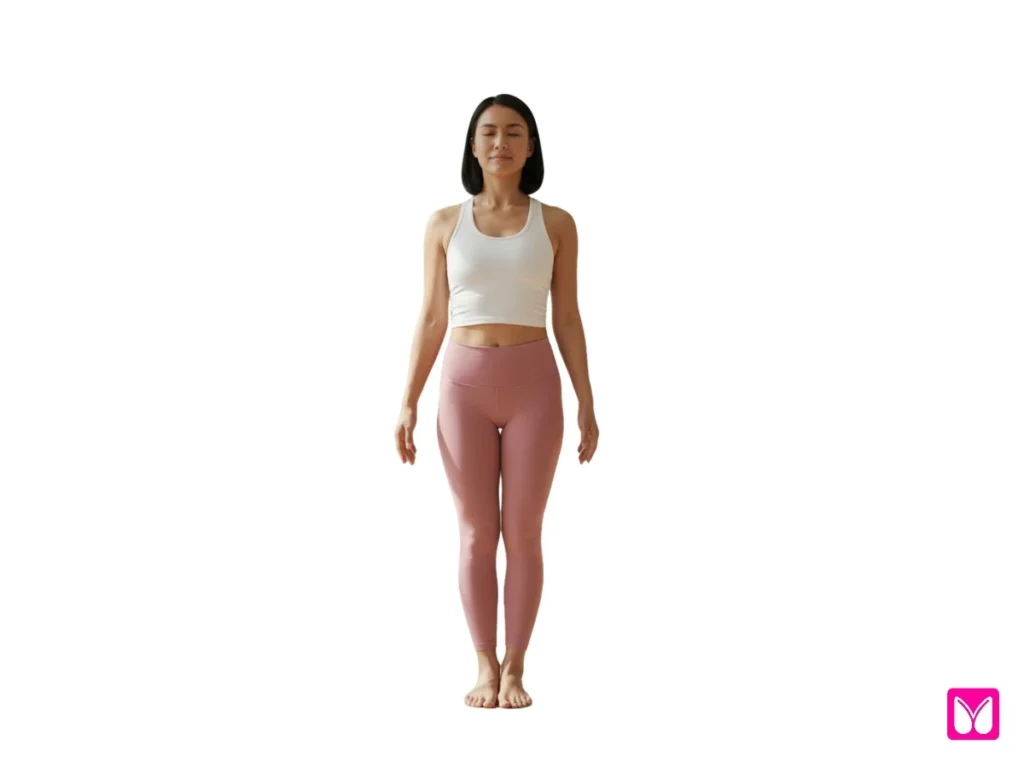
1. Mountain Pose (Tadasana)
Beginner Rating: 1/10
The Goal: Posture, grounding, vertical alignment.
Somatic Cue: Inhale to lengthen through the crown of your head. Exhale to root evenly through all four corners of your feet.
Common Mistake: Locking the knees or over-arching the lower back.
Modification: Stand with your back lightly touching a wall to feel true alignment.
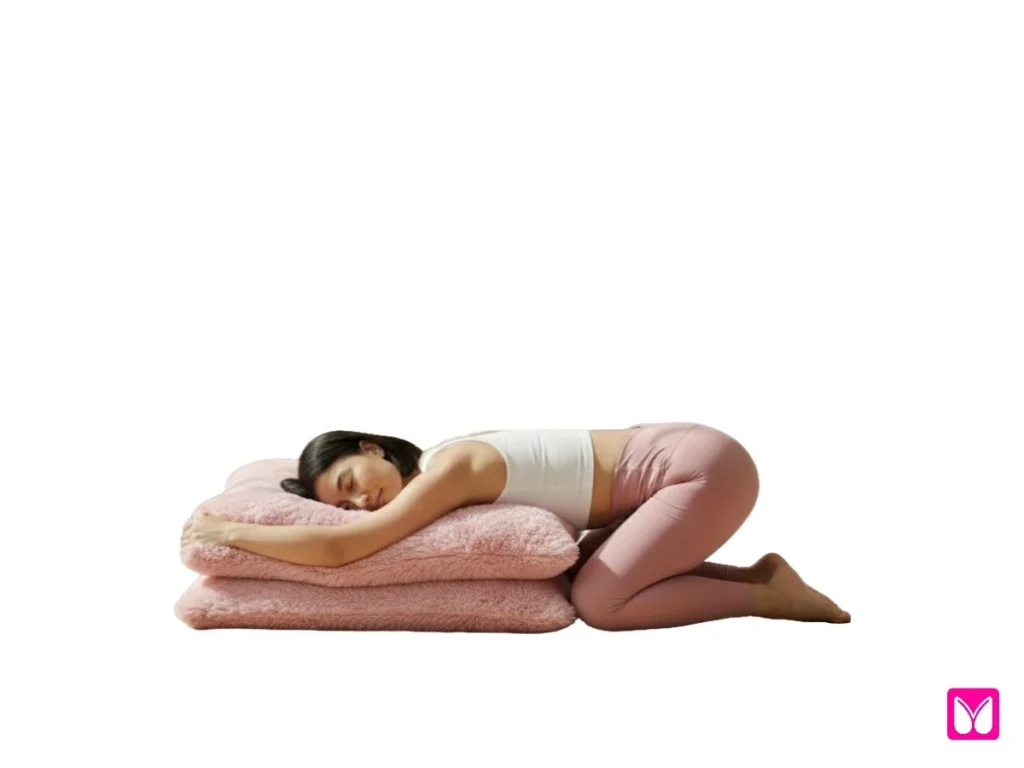
2. Child’s Pose (Balasana)
Beginner Rating: 1/10
The Goal: Nervous system reset and gentle yoga for lower back pain beginners.
Somatic Cue: Breathe into the back ribs. Feel them widen on each inhale.
Common Mistake: Forcing hips toward heels when knees or hips feel tight.
Modification: Place a pillow or folded blanket between heels and sit-bones to reduce knee pressure.
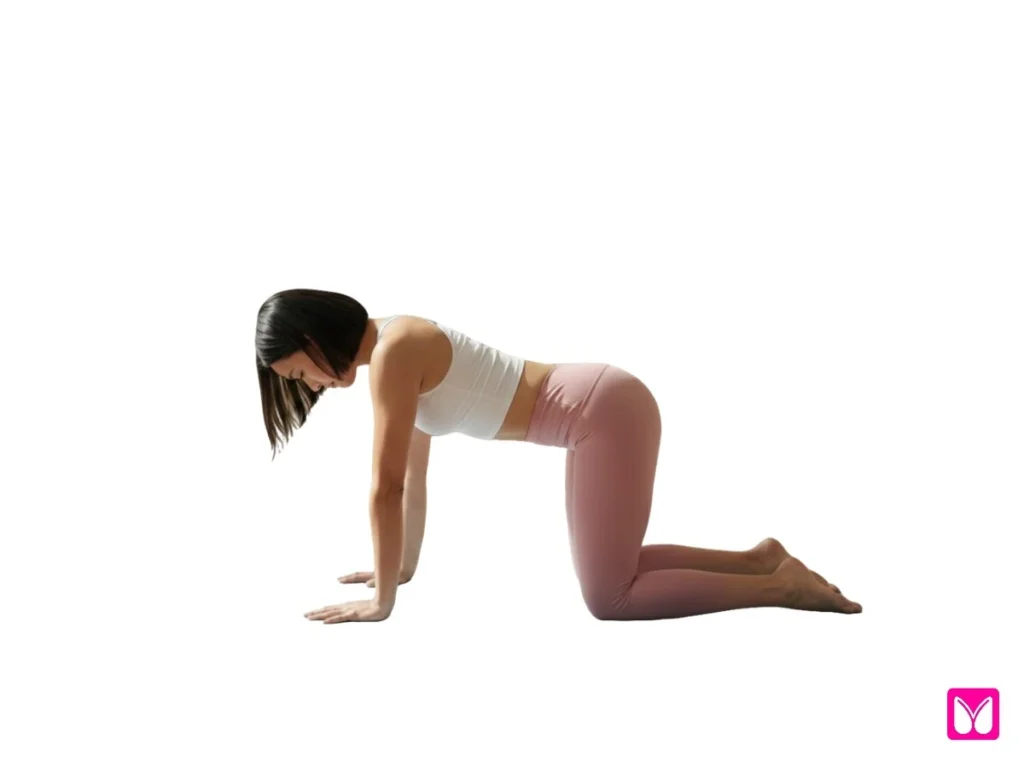
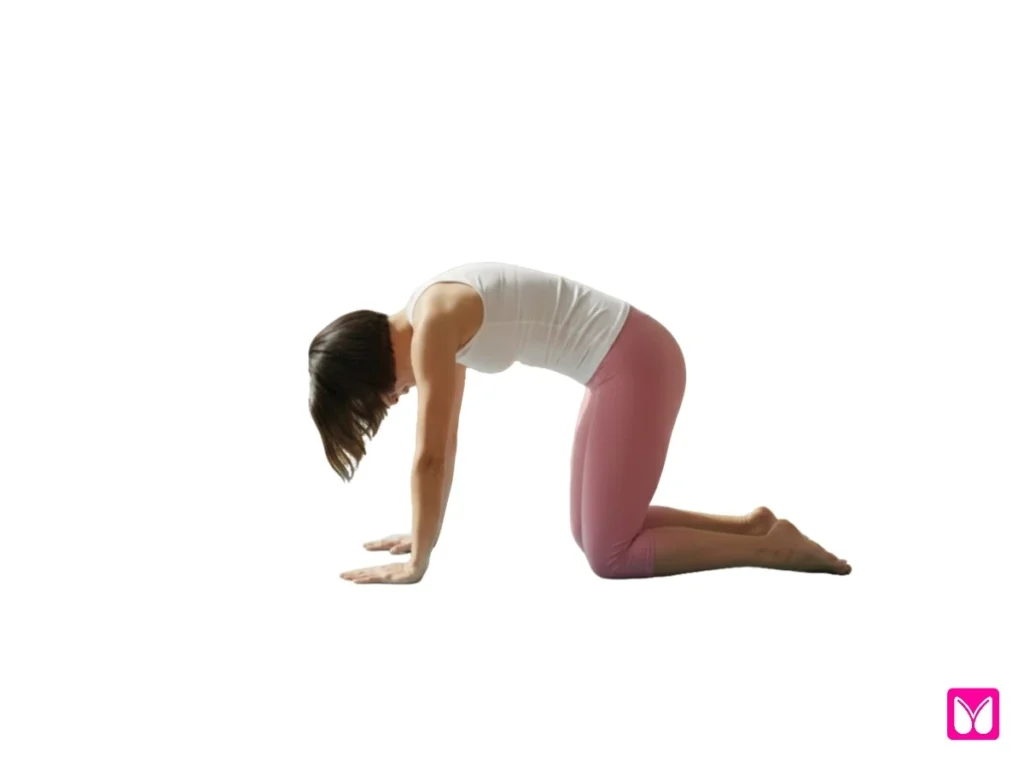
3. Cat–Cow (Chakravakasana)
Beginner Rating: 2/10
The Goal: Spinal mobility and gentle core activation.
Somatic Cue: Inhale as the chest opens (Cow). Exhale as you round and draw the navel in (Cat). Move slowly.
Common Mistake: Rushing. This is rhythmic, not fast.
Modification: Perform on forearms or seated in a chair if wrists are sensitive.
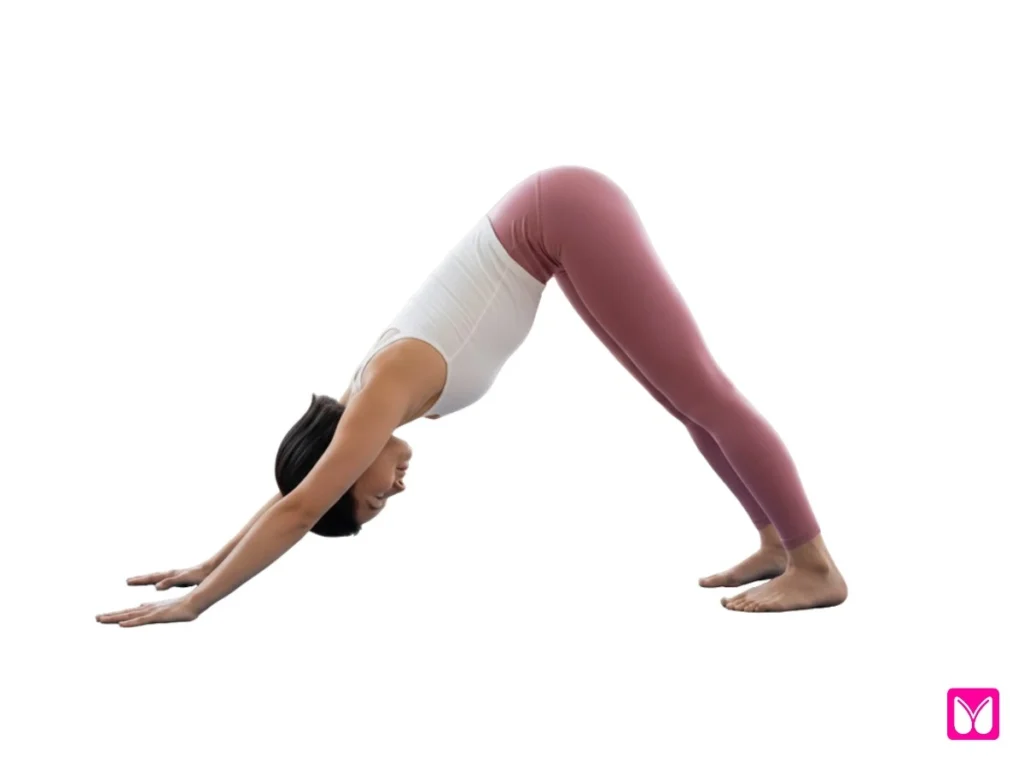
4. Downward-Facing Dog (Adho Mukha Svanasana)
Beginner Rating: 4/10
The Goal: Full-body stretch and shoulder strength.
Somatic Cue: Prioritize length in the spine over straight legs.
Common Mistake: Forcing heels down and rounding the back.
Modification: Keep a generous bend in the knees. Straight back > straight legs.
The Stability Six (Strength & Balance)
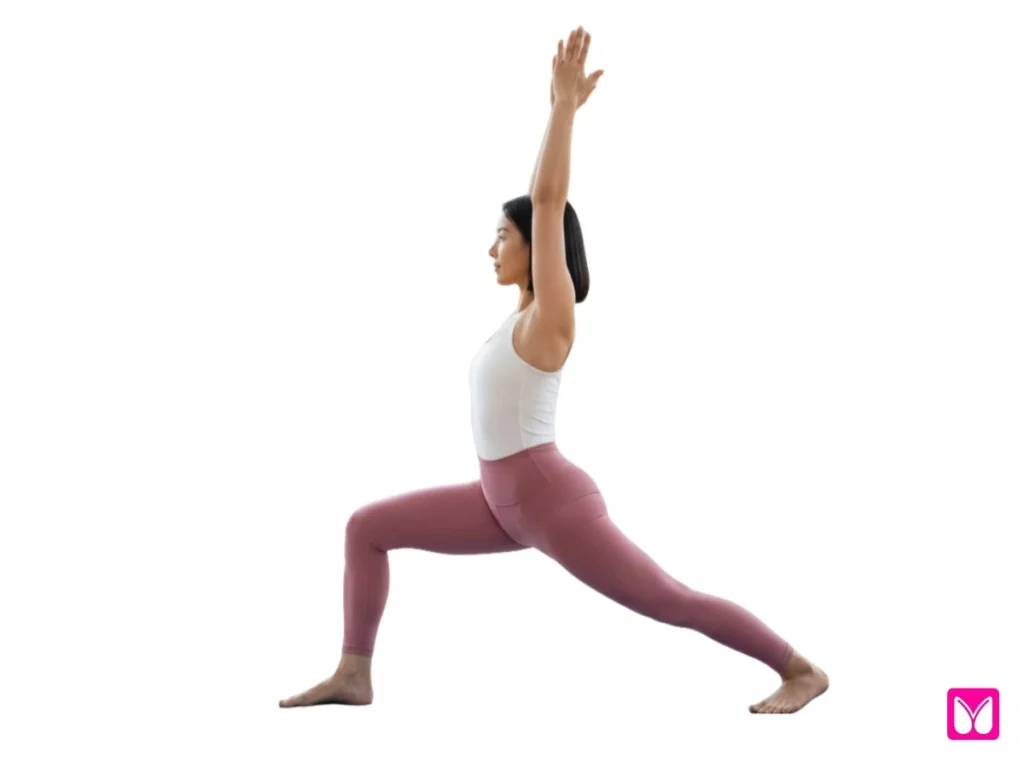
5. Warrior I (Virabhadrasana I)
Beginner Rating: 4/10
The Goal: Leg strength and hip flexor opening.
Somatic Cue: Inhale to lift through the torso before deepening the lunge.
Common Mistake: Front knee collapsing inward.
Modification: Shorten your stance to improve stability.
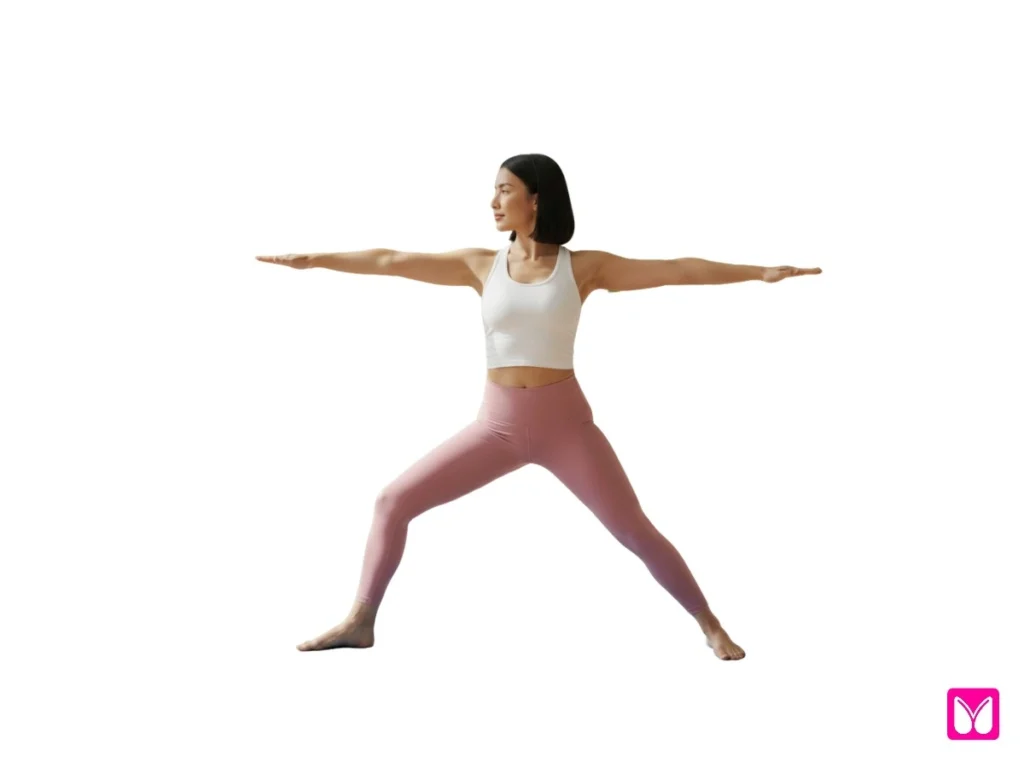
6. Warrior II (Virabhadrasana II)
Beginner Rating: 3/10
The Goal: Hip stability and external rotation strength.
Somatic Cue: Exhale as you settle into the front leg while keeping the spine tall.
Common Mistake: Leaning forward over the front thigh.
Modification: Keep hands on hips if shoulders fatigue.
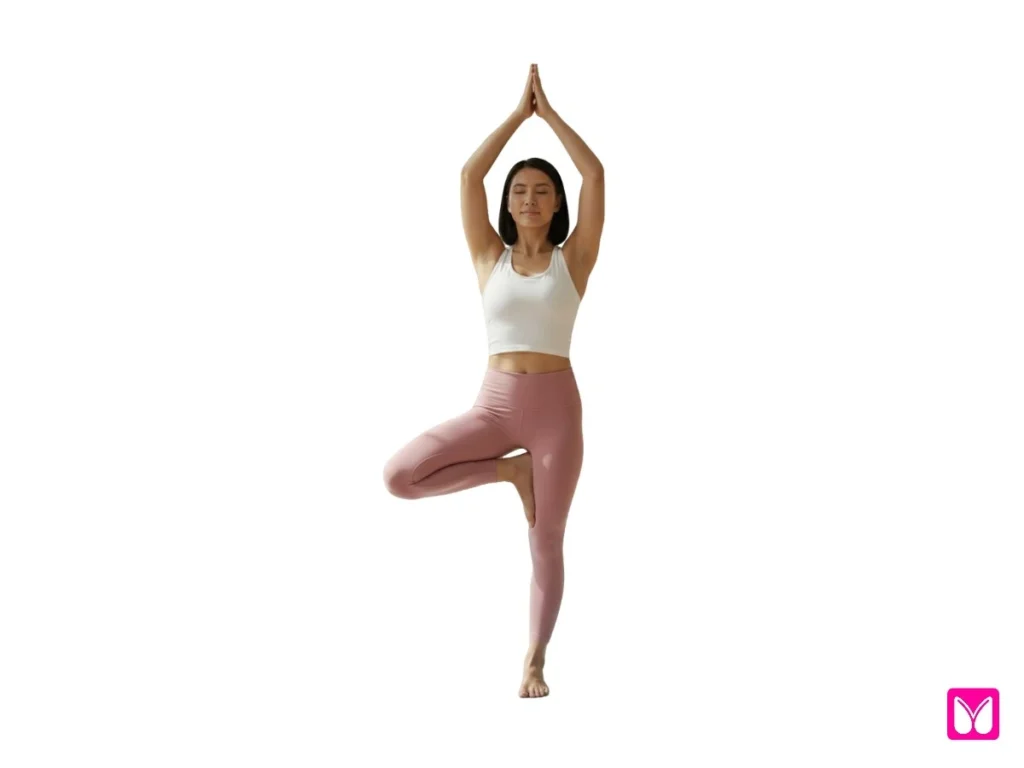
7. Tree Pose (Vrksasana)
Beginner Rating: 5/10
The Goal: Improve proprioception and balance.
Somatic Cue: Lightly engage your standing leg and breathe steadily.
Common Mistake: Pressing foot directly into the knee joint (avoid this).
Modification: Keep toes on the floor in a “kickstand” position.
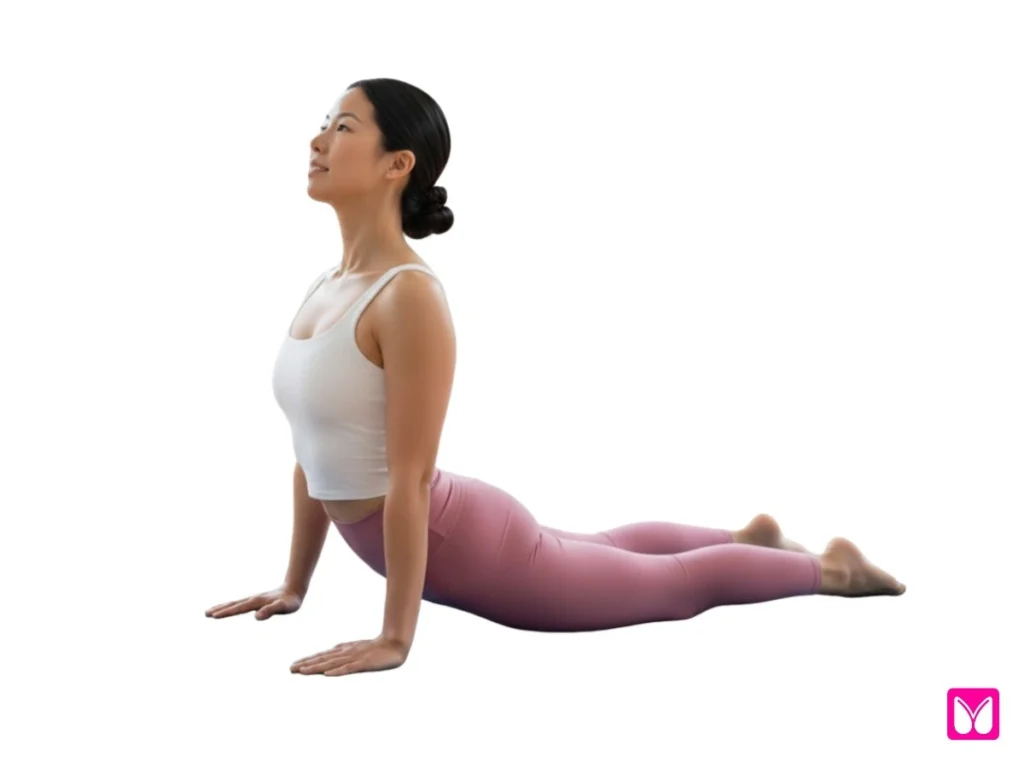
8. Cobra Pose (Bhujangasana)
Beginner Rating: 3/10
The Goal: Back strength and posture correction.
Somatic Cue: Lift the chest using back muscles first, arms second.
Common Mistake: Over-pushing into the lower back.
Modification: Practice Sphinx Pose (forearms down) for gentler support.
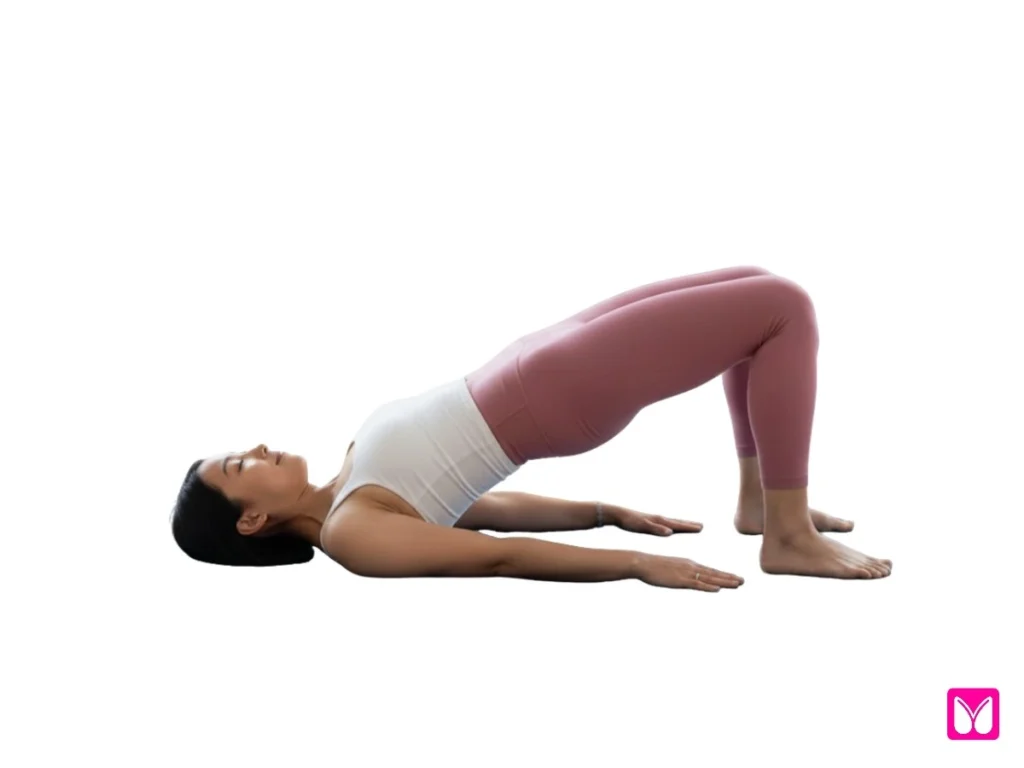
9. Bridge Pose (Setu Bandha Sarvangasana)
Beginner Rating: 3/10
The Goal: Glute activation and anterior hip opening.
Somatic Cue: Press evenly through the feet as you lift the hips.
Common Mistake: Knees drifting outward.
Modification: Hold a block or pillow between knees for alignment feedback.
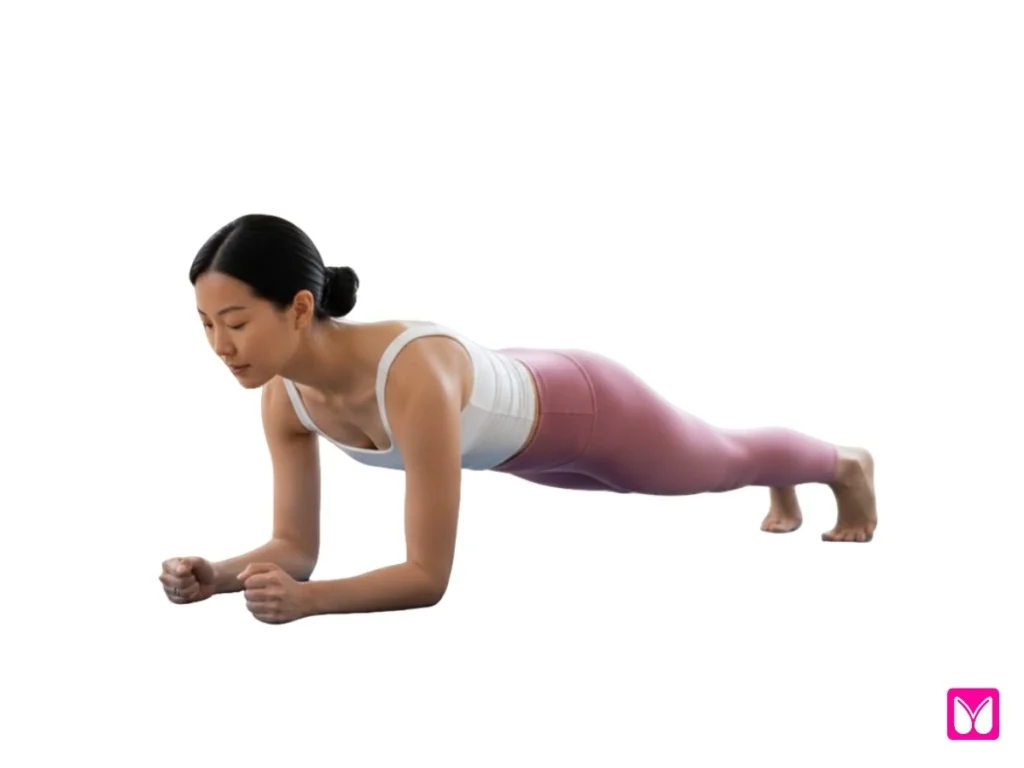
10. Plank Pose (Phalakasana)
Beginner Rating: 5/10
The Goal: Core stability and arm strength for yoga for beginners at home.
Somatic Cue: Draw the ribs gently inward and keep steady breathing.
Common Mistake: Hips sagging or lifting too high.
Modification: Drop knees to the mat while maintaining a straight line from head to knees.
The Recovery Two (Flexibility & Integration)
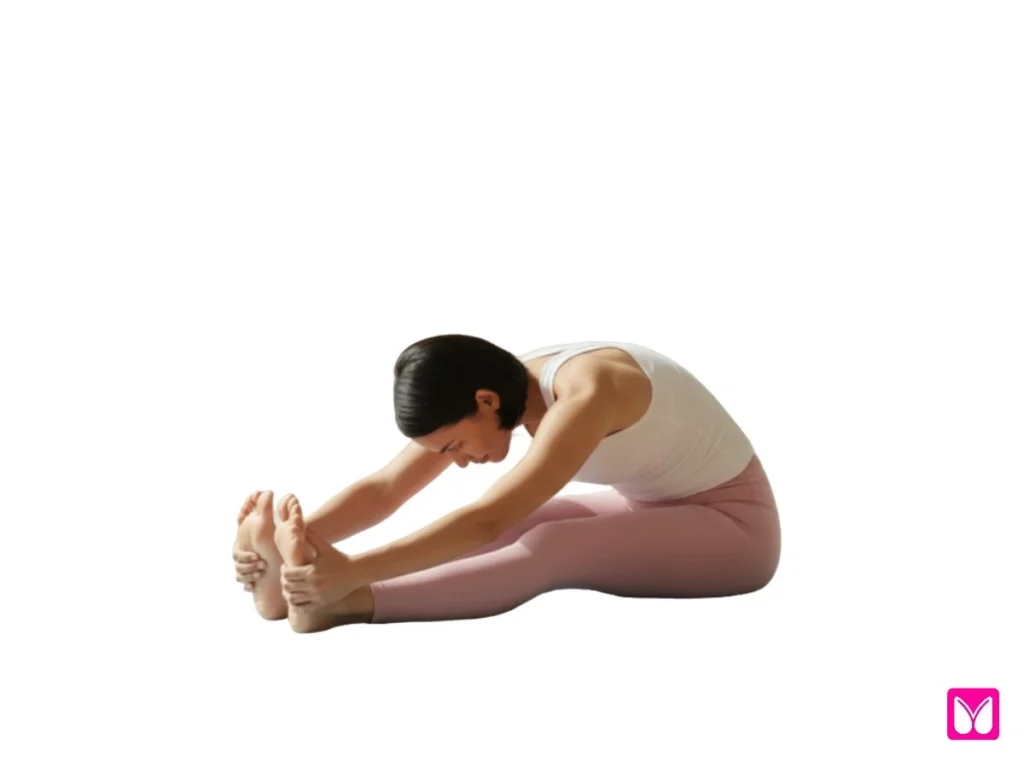
11. Seated Forward Fold (Paschimottanasana)
Beginner Rating: 3/10
The Goal: Hamstring mobility and calming the mind — ideal for yoga for flexibility beginners.
Somatic Cue: Hinge from the hips, not the spine.
Common Mistake: Pulling aggressively with the arms.
Modification: Use a strap or towel around the feet to avoid strain.
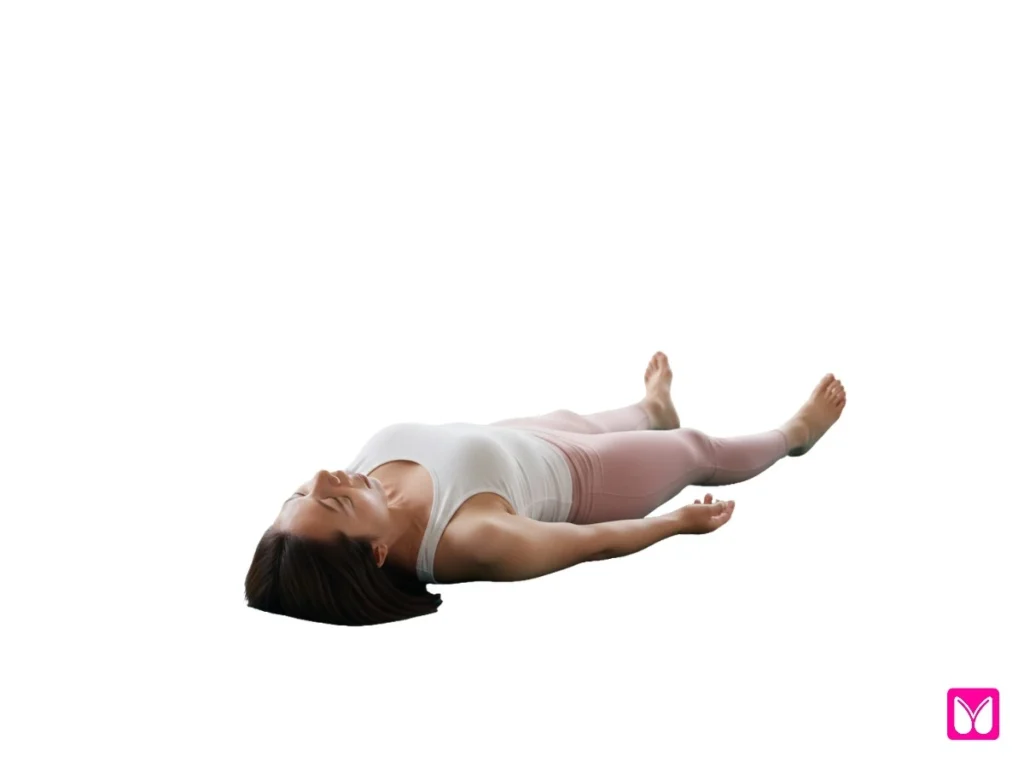
12. Corpse Pose (Savasana)
Beginner Rating: 1/10
The Goal: Nervous system integration and recovery.
Somatic Cue: Allow the breath to become effortless. Release muscular effort completely.
Common Mistake: Skipping this pose. This is where adaptation happens.
Modification: Place a rolled blanket under the knees to ease lower back tension.
Practice Without the Screen
Following a 10 minute yoga for beginners routine is easier when you aren’t checking your phone between poses.
We’ve created a printable Beginner Yoga PDF that includes:
- All 12 poses
- Clear modifications
- Somatic breathing cues
Start building your routine today.
This is excellent structurally; it creates progression, habit formation, and perceived transformation.
To make it competitive with major wellness publishers, we’ll:
- Increase clarity and flow
- Add subtle safety signals
- Strengthen SEO naturally
- Reinforce habit psychology
- Improve conversion framing
Here is the optimized, publish-ready version:
7-Day Beginner Yoga Starter Plan
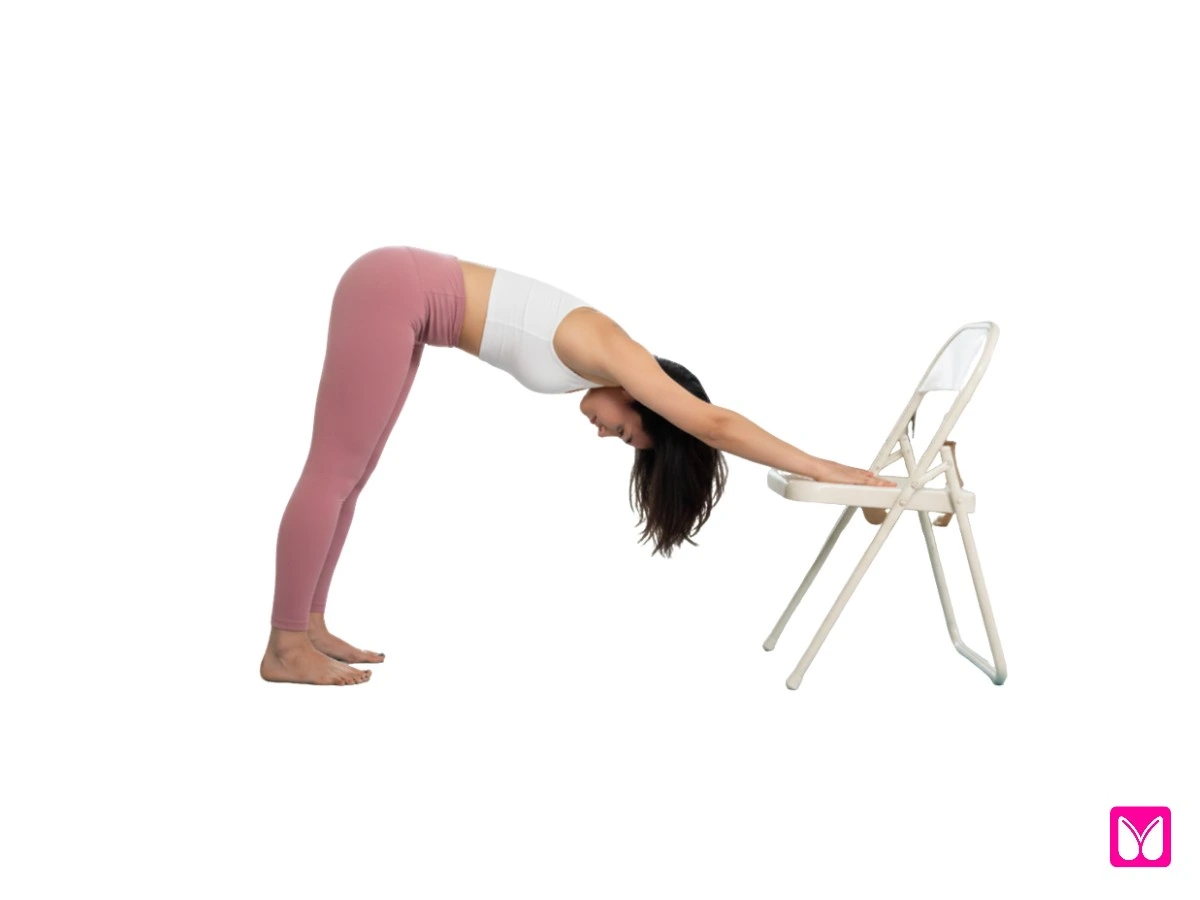
Starting a yoga routine for beginners is easier when you don’t have to guess what to do next.
This structured 7-day beginner yoga plan builds confidence, mobility, and strength gradually, without overwhelming your body.
Each day requires just 10–15 minutes of yoga for beginners at home.
Consistency matters more than intensity.
Day 1: The Foundation (5 Essential Poses)
Today is about meeting your mat.
Practice:
- Mountain Pose
- Child’s Pose
- Cat–Cow
- Downward-Facing Dog
- Plank
Goal: Learn the shapes and establish your somatic baseline (how your body feels right now).
Focus: Breathe through your nose and move slowly.
Beginner Reminder: You are not trying to “perform” the poses — just experience them.
Day 2: The 10-Minute Daily Flow
Now that you know the shapes, link them together.
Follow the 10 minute yoga for beginners flow from the previous section.
Goal: Coordinate breath and movement.
Focus: Progress over perfection. Keep breathing even if transitions feel clumsy.
Habit Tip: Set a recurring reminder at the same time you practiced yesterday.
Day 3: Balance & Focus
Balance is trained, not inherited.
Add:
- Warrior II
- Tree Pose
Goal: Improve proprioception and ankle stability.
Focus: Choose a steady Drishti (a fixed gaze point) to reduce wobbling.
Safety Cue: Keep your standing knee slightly soft, not locked.
Day 4: Flexibility & Mobility
Today is slower and stretch-focused.
Practice:
- Seated Forward Fold
- Bridge Pose
- Child’s Pose
Goal: Improve hamstring mobility and chest opening without strain.
Focus: Make your exhale slightly longer than your inhale to encourage muscular relaxation.
This is especially helpful for yoga for flexibility beginners.
Day 5: Lower Back Support
Today’s session targets the posterior chain and spinal mobility.
Practice:
- Cat–Cow
- Cobra (or Sphinx)
- Child’s Pose
- Supine Knee-to-Chest
Goal: Support the lumbar spine and decompress after long sitting.
Focus: Lightly engage the lower abdomen (“zip up” gently) to stabilize the lower back.
If you searched for yoga for lower back pain beginners, this is your key day.
Day 6: The Full Mindfullyoga Flow
Today, combine everything.
Run through the full 12-pose beginner sequence once or twice.
Goal: Build stamina and reinforce movement memory.
Focus: Somatic awareness, notice where tension shows up and breathe into those areas.
This is where the routine starts feeling natural.
Day 7: Active Recovery & Reset
Yoga isn’t always about doing more.
Today is integration.
Practice:
- Child’s Pose
- Gentle neck rolls
- Supine breathing
- Extended Savasana
Goal: Nervous system regulation and muscular recovery.
Focus: Stillness. Let your body absorb the work from the week.
Recovery improves results.
What Happens After 7 Days?
Most beginners notice:
- Less stiffness in the morning
- Improved posture awareness
- Slight strength gains in the core and legs
- More controlled breathing under stress
You don’t need intensity to see progress.
You need repetition.
Take the 7-Day Challenge (Printable Version)
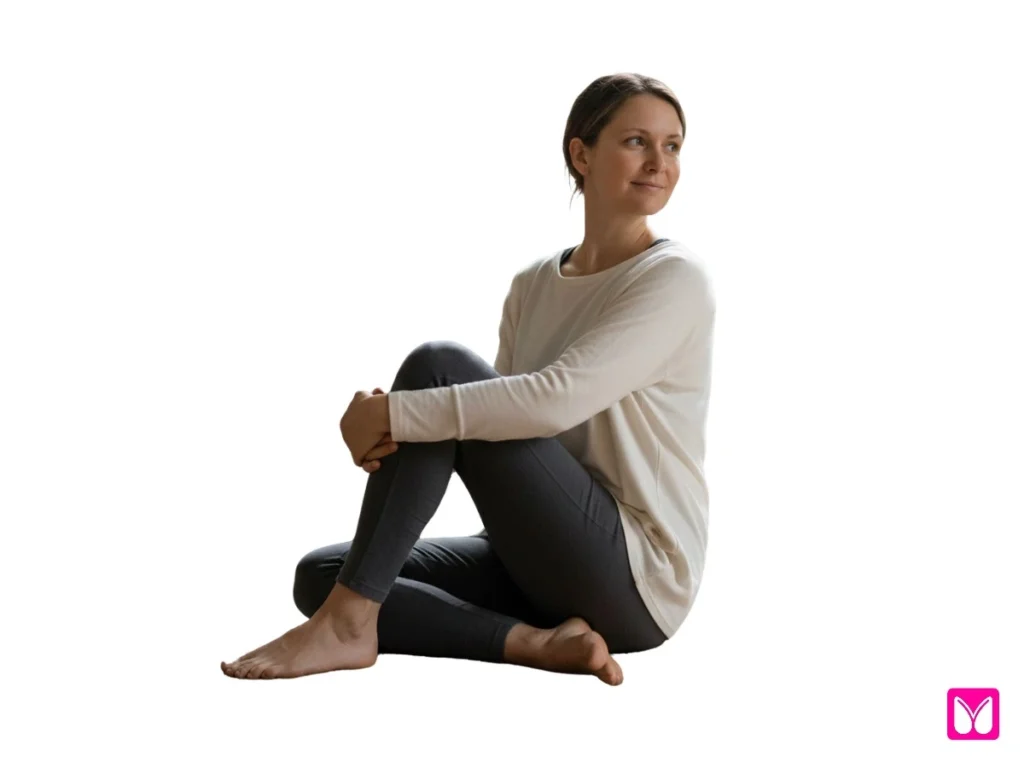
To make this effortless, we’ve created a high-quality Beginner Yoga PDF that includes:
- A full 7-day plan layout
- Daily check-off boxes for accountability
- Pose reminders (no scrolling required)
- Somatic reflection prompts
Build the habit once, and let structure carry you forward.
Yoga for Beginners Based on Your Goal
Not all beginner yoga journeys look the same.
While every yoga routine for beginners improves mobility and stress resilience, your results accelerate when your practice aligns with your primary goal.
Below is how to choose the right starting path.
Yoga for Flexibility Beginners
If your goal is to touch your toes, reduce stiffness, or improve mobility after years of sitting, your focus should be controlled lengthening — not forcing deep stretches.
Yoga for flexibility beginners emphasizes:
- Longer holds (30–60 seconds)
- Slow, steady breathing
- Hip and hamstring mobility
- Fascia hydration through gentle loading
Recommended Poses:
- Seated Forward Fold
- Low Lunge
- Pigeon Pose (with props)
- Child’s Pose
Somatic Focus:
Exhale slowly to allow muscles to release safely.
Yoga for Lower Back Pain Beginners
Back discomfort often stems from:
- Tight hip flexors
- Weak deep core muscles
- Prolonged sitting posture
A yoga for lower back pain beginner’s routine focuses on decompression and core stability.
Recommended Poses:
- Cat–Cow
- Sphinx Pose
- Bridge Pose
- Supine Knee-to-Chest
Somatic Focus:
Light abdominal engagement to support the lumbar spine.
Research has shown yoga can improve function in individuals with chronic low back discomfort when practiced consistently and safely.
Yoga for Weight Loss Beginners
Yoga supports weight management by:
- Building lean muscle
- Improving insulin sensitivity
- Reducing stress-related eating
- Increasing body awareness
For this goal, prioritize beginner-friendly flow sequences (gentle Vinyasa).
Recommended Poses:
- Sun Salutations (modified)
- Warrior I & II
- Plank Variations
- Chair Pose
Somatic Focus:
Move continuously with steady breath to build sustainable metabolic heat.
Yoga for Stress Relief & Burnout
If your main goal is calming anxiety, improving sleep, or reducing overwhelm, your focus should shift from intensity to nervous system regulation.
This somatic approach prioritizes parasympathetic activation (“Rest and Digest”).
Recommended Poses:
- Legs-Up-The-Wall
- Child’s Pose
- Seated Forward Fold
- Savasana
Somatic Focus:
Diaphragmatic breathing with longer exhales.
Even short 10-minute sessions can significantly improve perceived stress levels.
Further Reading: The Real Truth Behind Somatic Yoga Poses: Why Your “Gentle” Routine Isn’t Healing Your Nervous System
Yoga for Women / Female Beginners
Yoga can support women through:
- Menstrual cycles
- Perimenopause and menopause
- Bone density changes
- Pelvic floor awareness
A female-focused beginner yoga routine emphasizes hip stability, glute strength, and gentle core activation.
Recommended Poses:
- Goddess Pose
- Bridge Pose
- Low Lunge
- Supported Squats
Somatic Focus:
Gentle pelvic floor engagement paired with slow breathing.
How to Choose the Right Path
Ask yourself:
- Do I feel stiff? → Start with Flexibility
- Is my back uncomfortable? → Choose Lower Back Support
- Am I feeling stressed or burned out? → Choose Nervous System
- Do I want more strength and energy? → Choose Flow
You can rotate between goals weekly — or combine two complementary tracks.
Common Beginner Mistakes (And How to Avoid Them)
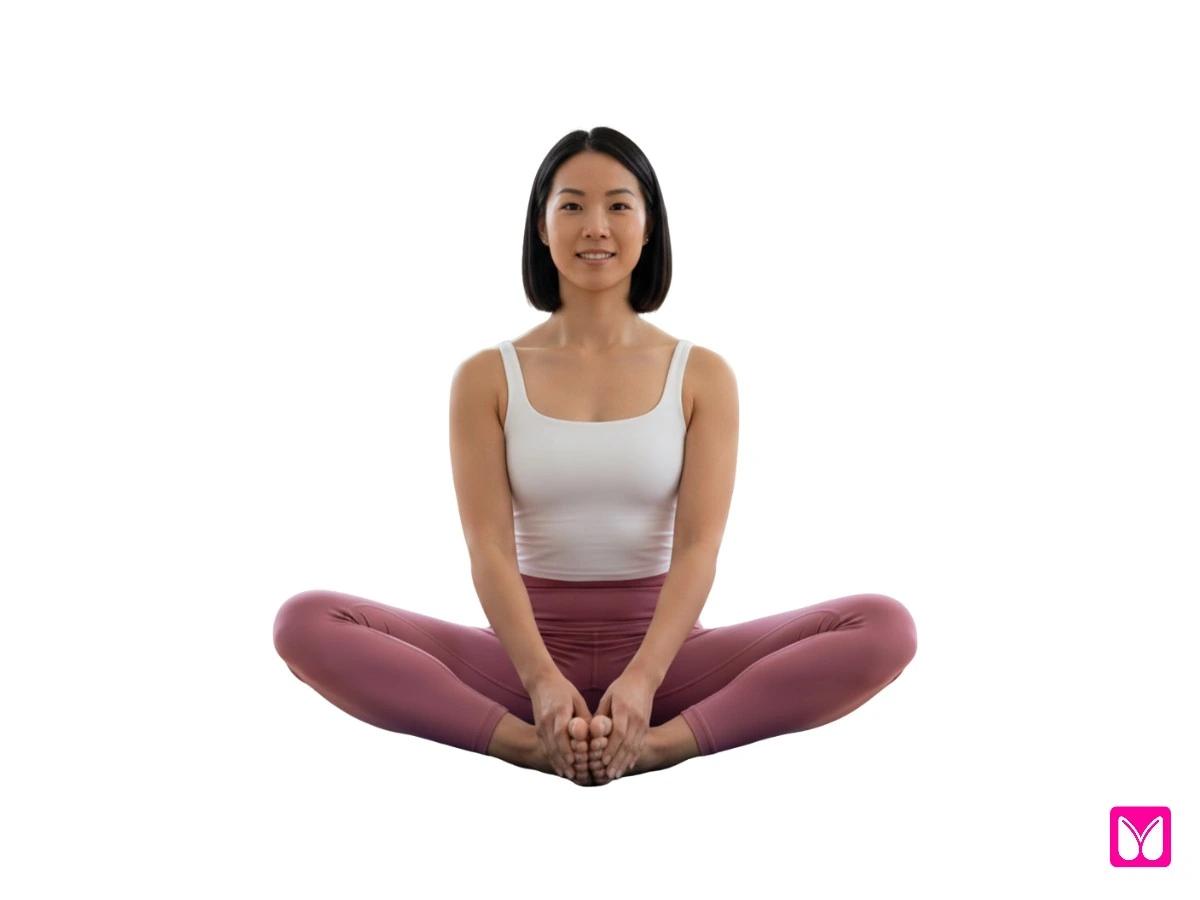
When you start yoga for beginners at home, there is no teacher in the room to adjust your posture. This makes it easy to fall into habits that can lead to stiffness or even injury.
By avoiding these five common pitfalls, you’ll ensure your yoga routine for beginners remains a safe and healing practice.
1. Holding Your Breath
The most common mistake in beginner yoga poses is “apnea”—unconsciously holding your breath during a difficult stretch.
- The Risk: This triggers the “Fight-or-Flight” response, making your muscles tighten and your blood pressure rise.
- The Fix: If you can’t breathe deeply, you’ve gone too far into the pose. Back off until your breath is smooth and rhythmic.
2. Forcing Flexibility
Many people approach yoga for flexibility, and beginners like a competition. They pull on their hamstrings or push their knees down with force.
- The Risk: Overstretching can lead to small tears in the tendons or ligaments, which take much longer to heal than muscle soreness.
- The Fix: Move to your “edge”—the point where you feel a gentle stretch, not a sharp pain. Use your beginner yoga PDF to find modifications (like using a strap) to bring the floor to you.
3. Comparing Your Practice to Social Media
Seeing “perfect” yoga photos can make you feel like your 10 minute yoga for beginners flow isn’t “real yoga” because your heels don’t touch the floor in Downward Dog.
- The Risk: This leads to “Performative Yoga,” where you prioritize how the pose looks over how it feels, increasing the risk of injury.
- The Fix: Remember that a photo is a static moment; yoga is a somatic experience. Your “Down Dog” is perfect exactly as it is today.
4. Doing Advanced Flows Too Early
It’s tempting to jump into a “Power Yoga” or “Level 2” video before you’ve mastered the basics.
- The Risk: Without a foundation in alignment, you may put too much pressure on your wrists, neck, or lower back.
- The Fix: Stick to a dedicated yoga routine for beginners for at least 4–6 weeks. Mastering the “Core Twelve” poses is the fastest way to progress safely.
5. Skipping Savasana (Rest)
After a 10 minute yoga for beginners session, many people jump right back into their busy day without the final rest.
- The Risk: You miss out on the “Rest and Digest” benefits. Savasana is when your nervous system integrates the movement you just did.
- The Fix: Even if you only have one minute, lie down in Corpse Pose. It is the most important part of the entire practice.
Final Safety Check
To help you avoid these mistakes, we’ve included a “Safety Checklist“ inside our beginner yoga PDF. It includes a list of “Red Flag” sensations (like tingling or sharp pain) that tell you when to stop and rest.
Download Your Free Beginner Yoga PDF (Daily Starter Kit)
The hardest part of starting yoga for beginners at home is remembering the poses once you put your phone away. To help you stay consistent and mindful, we’ve created the Mindfullyoga Beginner Starter Kit.
This high-quality, printable beginner yoga PDF is designed to be your companion on the mat, so you can focus on your breath instead of a screen.
What’s Inside Your Free Download:
- The “Core 12” Pose Chart: A visual guide to the essential beginner yoga poses we covered today, including quick somatic cues and safe modifications.
- 10-Minute Daily Flow Printable: A minute-by-minute breakdown of our signature 10 minute yoga for beginners routine. Tape it to your wall for an instant visual cue!
- 7-Day Progress Tracker: An accountability calendar designed to help you turn your new yoga routine for beginners into a lasting habit.
- Goal-Specific Mini-Flows: Quick “cheat sheets” for yoga for flexibility beginners and yoga for lower back pain beginners.
Why Go Screen-Free?
Practicing with a printed guide rather than a video allows you to:
- Listen to Your Body: You move at your own pace, not the pace of an instructor on a screen.
- Reduce Eye Strain: Give your nervous system a break from blue light.
- Deepen Focus: Eliminate the temptation to check notifications mid-stretch.
Download the printable chart below featuring 12 beginner yoga poses.
How to Get Your Guide:
Simply click the button below, enter your email, and we will send the beginner yoga PDF straight to your inbox.
This section is a strategic “filter.” While competitors confuse readers with Sanskrit history, you are helping the user make a practical decision. This increases your authority because you are acting as a curator, not just an encyclopedia.
Types of Yoga for Beginners (Simplified)
If you look at a local studio schedule, the names can feel like a foreign language. When starting yoga for beginners, you don’t need to know the ancient history of every branch—you just need to know which style fits your current energy level and physical goals.
Here is the “No-Nonsense” guide to picking the right class for your yoga routine for beginners.
1. Hatha Yoga (The Best Starting Point)
- The Vibe: Slow-paced and foundational.
- Why it’s great: You hold beginner yoga poses long enough to learn the alignment and get comfortable with the breathing.
- Best for: Learning the basics and building confidence for yoga for beginners at home.
2. Vinyasa Yoga (The “Flow” Style)
- The Vibe: Fluid and athletic.
- Why it’s great: You link movement with breath in a continuous “flow.” It’s a bit more “moderate” in difficulty.
- Best for: Building heat, light cardio, and improving coordination.
3. Yin Yoga (Deep Stretching)
- The Vibe: Still and meditative.
- Why it’s great: You hold seated or lying poses for 3–5 minutes. This is the gold standard for yoga for beginners in flexibility.
- Best for: Releasing deep connective tissue and calming the nervous system.
4. Restorative Yoga (Total Relaxation)
- The Vibe: Pure comfort.
- Why it’s great: You use props (bolsters, pillows, blankets) to fully support the body so you can “do” nothing.
- Best for: Stress relief, burnout recovery, and yoga for beginners with lower back pain who need zero-impact movement.
5. Power Yoga (Approach with Caution)
- The Vibe: High intensity and fast.
- Why it’s great: It builds a lot of muscle and stamina quickly.
- The Beginner Warning: It’s often not ideal for true beginners because the fast pace makes it easy to lose proper form and risk injury. Wait until you’ve mastered the basics in Hatha first.
Which Style is in Your Routine?
Our 10 minute yoga for beginners flow is primarily a Hatha-Vinyasa blend—giving you the perfect balance of slow learning and gentle movement.
Note: Every style mentioned above is represented in our beginner yoga PDF, with specific symbols to tell you which poses are best for “Flow” (Vinyasa) and which are for “Rest” (Restorative).
Frequently Asked Questions About Yoga for Beginners
Starting a new practice often comes with many questions. Here are the quick, science-backed answers to help you start your yoga routine for beginners with total confidence.
Is yoga hard for beginners?
Yoga can be as easy or as challenging as you make it. While some beginner yoga poses require effort and focus, a true beginner practice is designed to meet you where you are. If you move slowly and use modifications, yoga is highly accessible and not “hard” in a way that should feel discouraging.
Is flexibility required to begin practicing yoga?
Absolutely not. It’s like saying you’re too filthy to take a bath when you say you’re too stiff for yoga. Yoga for flexibility beginners is specifically designed to build range of motion over time. You don’t need to touch your toes on Day 1; you just need to be willing to breathe while you try.
Is 10 minutes of yoga enough for a beginner?
Yes. A 10 minute yoga for beginners session is highly effective for improving circulation, reducing cortisol, and building the “habit of showing up.” Consistency is more important than duration. Ten minutes every day will yield better results than a 60-minute class once a week.
How long should beginners do yoga each day?
For most people starting yoga for beginners at home, a window of 10 to 20 minutes is the “sweet spot.” This is long enough to warm up the joints and calm the nervous system, but short enough to fit into a busy schedule without feeling like a chore.
Can a beginner do yoga every day?
Yes, as long as you listen to your body. Because yoga is low-impact, a daily practice is safe for most. However, we recommend alternating between “active” days (like our 10-minute flow) and “recovery” days (focusing on yoga for lower back pain beginners or restorative stretches) to prevent muscle fatigue.
What is the easiest type of yoga for a beginner?
Hatha Yoga is generally considered the easiest and best starting point. It moves at a slower pace than Vinyasa or Power Yoga, giving you plenty of time to learn the alignment of basic poses and focus on your breathing.
How long does it take for yoga to start delivering results?
Most beginners feel a “mental shift” (less stress, better sleep) after their very first session. Physical results, such as improved posture and yoga for flexibility beginners progress, typically become noticeable within 3 to 4 weeks of consistent practice.
Do I need a teacher to start yoga at home?
While a teacher is helpful, you can safely start on your own by using a structured guide. Following a beginner yoga PDF with clear illustrations and “common mistake” warnings ensures you stay aligned and safe while practicing in your own living room.
Also Read:
Free 28-Day Chair Yoga for Seniors (Printable PDF & Chart + Daily Challenge Plan)
Is Puppy Yoga Ethical? Benefits, Risks, and What No One Tells You
Simple Yoga Poses: A Beginner’s Guide to Daily Mobility & Calm (Free PDF)
Chair Yoga for Seniors: Benefits, Exercises, Programs & Free Resources
Goat Yoga: Everything You Need to Know Before Your First Class
10- Minutes Daily Yoga Routine For Emotional Release and Healing (7 Gentle Poses)
100+ Yoga Poses for 2 (With Pictures): Partner, Couple & Acro Yoga from Easy to Hard
Is Yin Yoga a Waste of Time? The Vṛtti Nirodha Sequence for Surrender, Stillness, and Mental Clarity
Why Is Kundalini Yoga Dangerous? (The Real Risks You Should Know)
Can’t Straighten Your Elbow? It Might Be Hyperextended, Here’s What to Do
5 Erector Spinae Exercises to Strengthen Your Lower Back at Home
I Drank Detox Cleansing Tea for 7 Days – These 5 Worked for Colon Cleanse & Gut Health

Nandini Sharma
Nandini Sharma is the Co-Founder of Mindfullyoga and the leading philosophical voice of the Yoga Revolution, a movement focused on restoring the integrity of classical yoga.As a dedicated scholar of the original Yoga Sutras and an authority rooted in Jaipur, Rajasthan, Nandini's expertise is in Yoga Philosophy and Classical Texts, not secular fitness.Her content strategically tackles the core ethical crisis of the $125 Billion global yoga industry. Nandini uses keywords like Asteya (non-stealing) and Aparigraha (non-possessiveness) to challenge commercialization and educate readers on the full Eight Limbs of Yoga, including Pranayama and Dhyana.