Table of Contents
One of the things I love most about morning yoga is how simple it feels. Before emails, noise, and daily responsibilities start piling up, even a few quiet minutes of movement can completely change the way the day feels. I’ve noticed that when beginners keep their routine short and realistic, they’re much more likely to stay consistent with it.
A lot of people think they need to be flexible or experienced before starting yoga at home, but that honestly isn’t true. Some of the best beginner practices are the simplest ones, slow stretches, steady breathing, and movements that help wake the body up gently instead of pushing it too hard first thing in the morning.
This beginner-friendly morning yoga routine is designed to help you ease into your day without feeling overwhelmed. The poses are simple, calming, and easy to follow at home, even if you’ve never practiced yoga before.
Over time, a short routine like this can help improve flexibility, posture, mobility, and overall body awareness while creating a calmer start to your mornings.
Why Morning Yoga Can Transform Your Day
One of the reasons so many people stick with morning yoga is because it helps create a calmer start to the day before everything gets busy. Even a short routine in the morning can help your body feel more awake, especially if you spend long hours sitting, working at a desk, or dealing with daily stress.
For beginners, practicing in the morning also removes a lot of the pressure that comes later in the day. By evening, energy levels usually drop, and motivation becomes harder to find. A simple 10-minute routine at home often feels much more manageable and realistic to stay consistent with.
Over time, morning yoga can support both physical and mental well-being in gentle but noticeable ways. Many beginners start to notice benefits like the following:
- Less stiffness and tension in the body
- Better focus and mental clarity throughout the day
- Improved flexibility and posture
- Increased energy without intense workouts
- A calmer and more balanced mood
Mental Benefits of Morning Practice
One thing many beginners don’t expect is how much yoga can affect the mind, not just the body. Slow breathing and mindful movement in the morning can help reduce that rushed or overwhelmed feeling that often starts the day.
Even a few quiet minutes on the mat can help you feel more grounded, focused, and emotionally steady before checking emails or social media or jumping into responsibilities.
Essential Equipment for Your Home Practice
One of the best things about starting yoga at home is that you don’t need much equipment. A comfortable yoga mat is usually enough for most beginners. It gives your joints support and helps you feel more stable during poses and stretches.
If you’re completely new to yoga, don’t worry too much about buying expensive accessories right away. Many people begin with just a mat and slowly add props later if they feel helpful for comfort or balance.
A few simple items that can make home practice easier include:
- A supportive yoga mat with good grip
- Yoga blocks for balance and flexibility support
- A yoga strap for gentle stretching
- A folded blanket or cushion for comfort during seated poses
The most important part of building a home yoga routine isn’t having perfect equipment. It’s creating a practice that feels comfortable, realistic, and easy to return to consistently.
Creating Your Morning Yoga Space
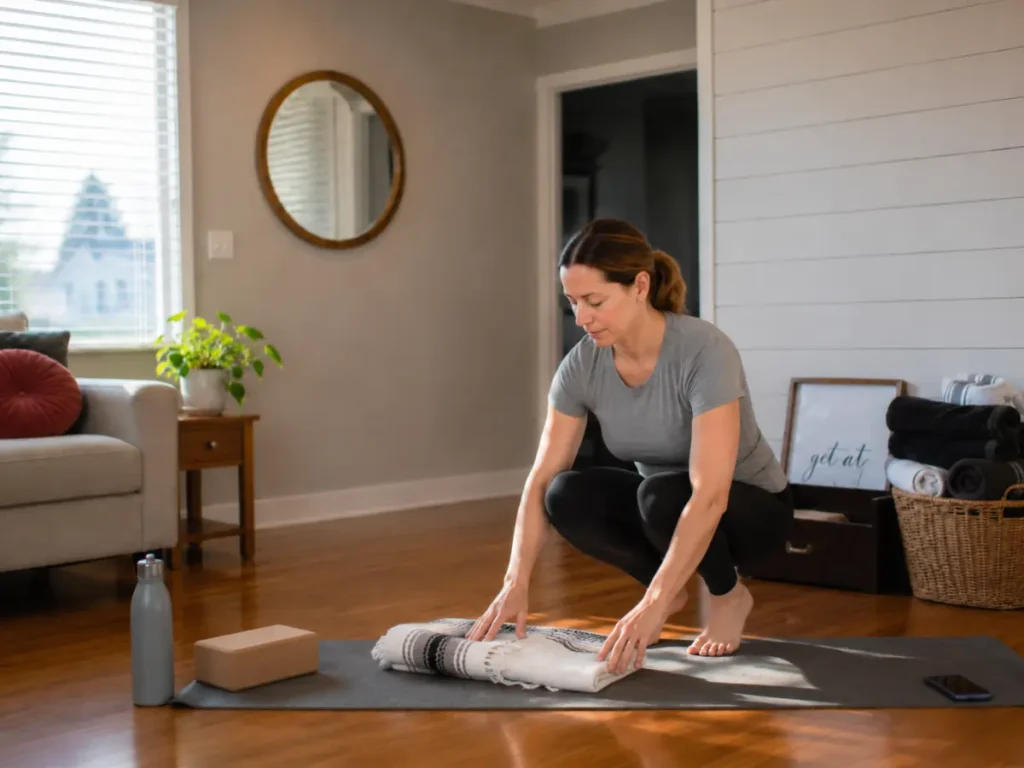
One thing that can make a home yoga routine feel much easier is having a space that feels calm and comfortable to practice in. It doesn’t need to be a perfect “wellness room” or a large area with expensive decor. Even a small quiet corner of your bedroom or living room can work well for a beginner practice.
In the morning, your environment affects your energy more than most people realize. A cluttered or distracting space can make it harder to slow down and focus, especially when you’re still waking up. Keeping your yoga area simple and peaceful helps create a routine that feels grounding instead of stressful.
Try to choose a spot with natural light if possible, or use soft lighting that feels relaxing on the eyes early in the morning. Many beginners also find it helpful to keep their yoga mat rolled out or easily accessible so starting the routine feels effortless.
Simple Ways to Set Up Your Space
- Choose a quiet area with enough room to move comfortably
- Keep your yoga mat and props nearby so they’re easy to access
- Wear comfortable clothing that allows you to stretch freely
- If needed, use a sturdy chair or wall for extra balance and support
- Keep distractions low by silencing notifications or reducing background noise
Your morning yoga space does not need to look perfect to be effective. The goal is simply to create an environment where you can breathe, move slowly, and begin your day feeling a little more centered and connected to yourself.
10 Minute Morning Yoga for Beginners: A Simple Routine to Start Your Day
Starting yoga at home can feel intimidating at first, especially if you’re not flexible or have never followed a routine before. That’s why a short and beginner-friendly morning practice is often the best place to start. A simple 10 minute morning yoga routine gives your body time to wake up gradually without feeling too intense or overwhelming.
One thing many beginners struggle with is trying to do too much too quickly. In reality, the most effective morning yoga routines are usually the simplest ones. Gentle stretches, slow breathing, and a few foundational yoga poses can do more for your body than forcing yourself into advanced movements too early.
A balanced beginner yoga routine should include a combination of light mobility work, easy strengthening poses, and calming breath awareness. This helps improve flexibility, posture, balance, and overall body awareness while also helping your mind feel more focused for the day ahead.
A typical morning yoga routine for beginners might include:
- Gentle warm-up movements like neck rolls, shoulder stretches, and wrist mobility
- Beginner yoga poses such as Downward Dog, Child’s Pose, Cat-Cow, and Warrior poses
- Simple balance and core-focused movements to build stability
- Slow breathing exercises to help calm the nervous system
- A short resting pose at the end to help the body relax
The goal of a 10 minute yoga routine isn’t perfection. It’s consistency. Even a short daily practice at home can help you feel more flexible, energized, and connected to your body over time.
If you’re new to yoga, focus less on “performing” poses perfectly and more on learning how your body feels during the movement. Small, steady progress is what builds a sustainable yoga practice for beginners.
Proper Breathing Techniques for Morning Yoga
One of the most overlooked parts of yoga for beginners is breathing. Many people focus only on the poses, but breathing is what helps the body relax, stay steady, and move with more control during practice. In a morning yoga routine, slow breathing can also help wake up the mind gently instead of starting the day feeling rushed or tense.
If you’re new to yoga at home, don’t worry about learning complicated breathing methods right away. The goal is simply to breathe slowly and naturally while moving through each pose. Over time, this creates a calmer rhythm between the body and mind.
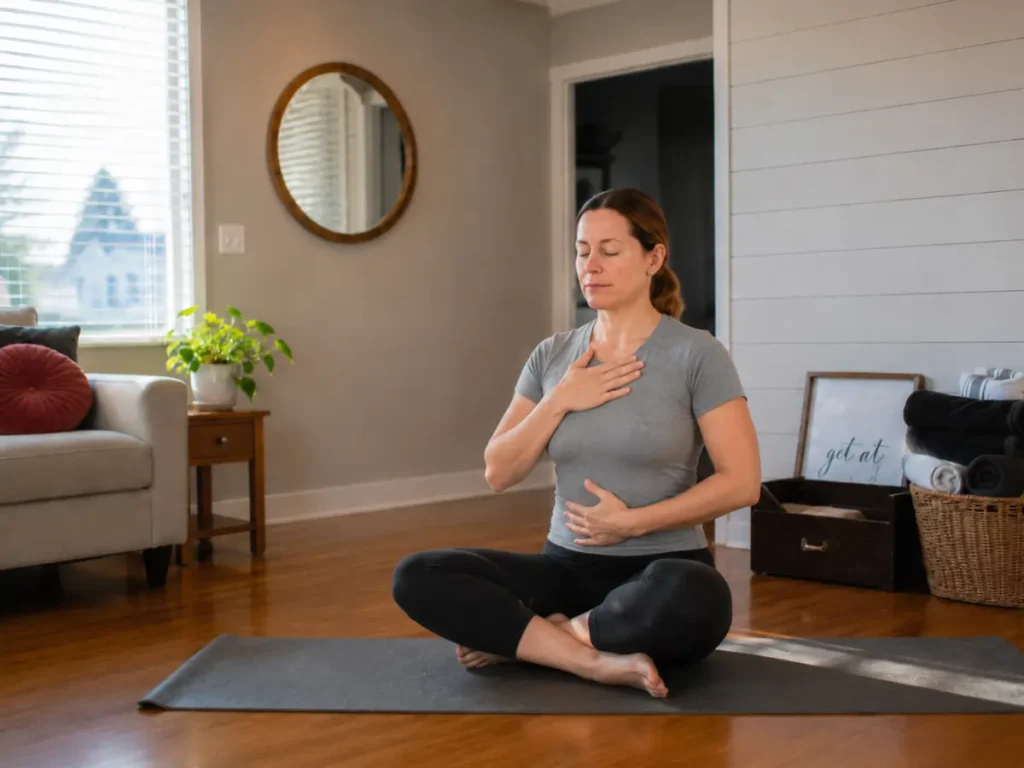
A breathing technique commonly used in beginner yoga is called Ujjayi breathing, sometimes known as “ocean breath.” It involves breathing slowly through the nose while keeping the breath smooth and controlled. Many people find it calming during morning yoga because it helps improve focus and makes movement feel more grounded.
Understanding Ujjayi Breath
To practice Ujjayi breathing:
- Inhale slowly through your nose
- Exhale slowly through your nose
- Keep your jaw relaxed and shoulders soft
- Breathe deeply into the belly instead of taking shallow chest breaths
The breath should feel steady and comfortable, never forced. During beginner yoga practice, this type of breathing can help reduce tension and improve body awareness throughout the routine.
Syncing Breath With Movement
As you become more comfortable with yoga poses, try connecting your breath to the movement itself. For example:
- Inhale while lengthening or lifting the body
- Exhale while folding, twisting, or relaxing deeper into a pose
This simple rhythm helps create a smoother and more mindful yoga practice. It can also make a short morning yoga routine feel calmer and more energizing at the same time.
For many beginners, learning how to breathe properly during yoga is just as important as learning the poses themselves. With regular practice, controlled breathing starts to feel natural and becomes one of the most calming parts of a home yoga routine.
Essential Morning Yoga Poses for Beginners
When you’re starting a morning yoga routine at home, it’s best to focus on simple poses that help the body feel awake without pushing too hard too early. Beginner yoga doesn’t need to be complicated to be effective. A few foundational poses practiced consistently can help improve flexibility, posture, balance, and overall body awareness over time.
One mistake many beginners make is trying advanced poses too quickly. In reality, basic yoga poses are often the most important because they teach proper alignment, breathing, and stability. These movements help create a strong foundation for a safe and sustainable yoga practice.
The following beginner-friendly yoga poses work especially well in a 10 minute morning yoga routine because they gently stretch stiff muscles while also building strength and mobility.
Mountain Pose (Tadasana)
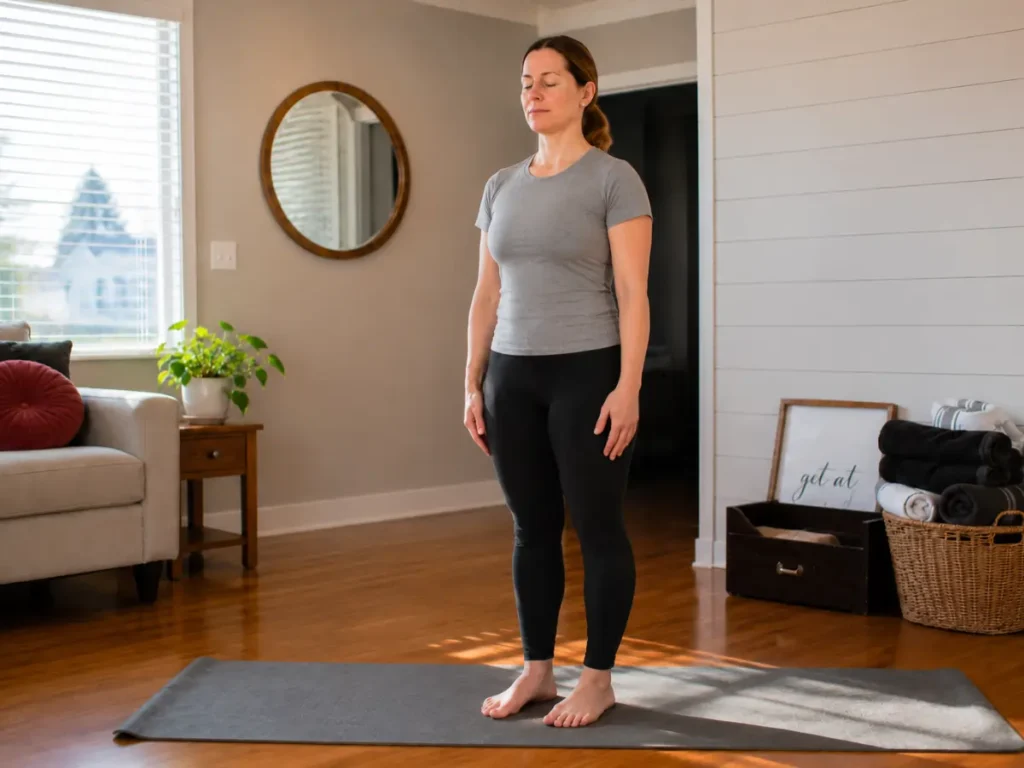
Mountain Pose may look simple, but it teaches posture, balance, and body awareness. It’s a great starting pose for beginners because it helps you feel grounded and aligned before moving into other stretches.
How to Do Mountain Pose
- Stand with your feet hip-width apart or together
- Keep your weight evenly balanced between both feet
- Gently engage your core and lengthen your spine
- Relax your shoulders away from your ears
- Let your arms rest naturally by your sides
- Take slow, steady breaths while standing tall
This pose can help improve posture and body alignment, especially for people who spend long hours sitting during the day.
Downward-Facing Dog (Adho Mukha Svanasana)
Downward Dog is one of the most common beginner yoga poses because it stretches multiple areas of the body at once, including the back, hamstrings, calves, and shoulders.
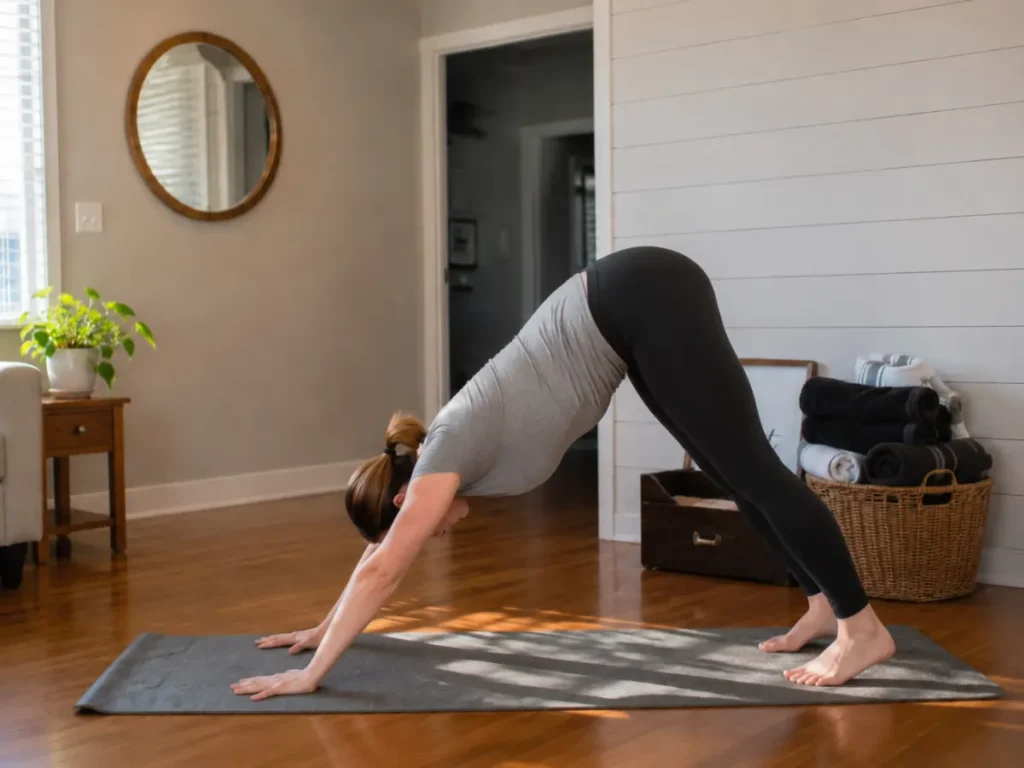
How to Do Downward Dog
- Start on your hands and knees in a tabletop position
- Place your wrists under your shoulders and knees under your hips
- Tuck your toes under and slowly lift your hips upward
- Keep a soft bend in your knees if your hamstrings feel tight
- Press your hands firmly into the mat
- Relax your neck and look gently toward your legs
- Hold the pose for a few slow breaths
This pose helps improve flexibility while also building light upper-body and core strength.
Seated Forward Fold (Paschimottanasana)
Seated Forward Fold is a calming beginner yoga stretch that targets the back, hips, and hamstrings. It’s especially helpful at the end of a morning yoga session when the body feels warmer and more relaxed.
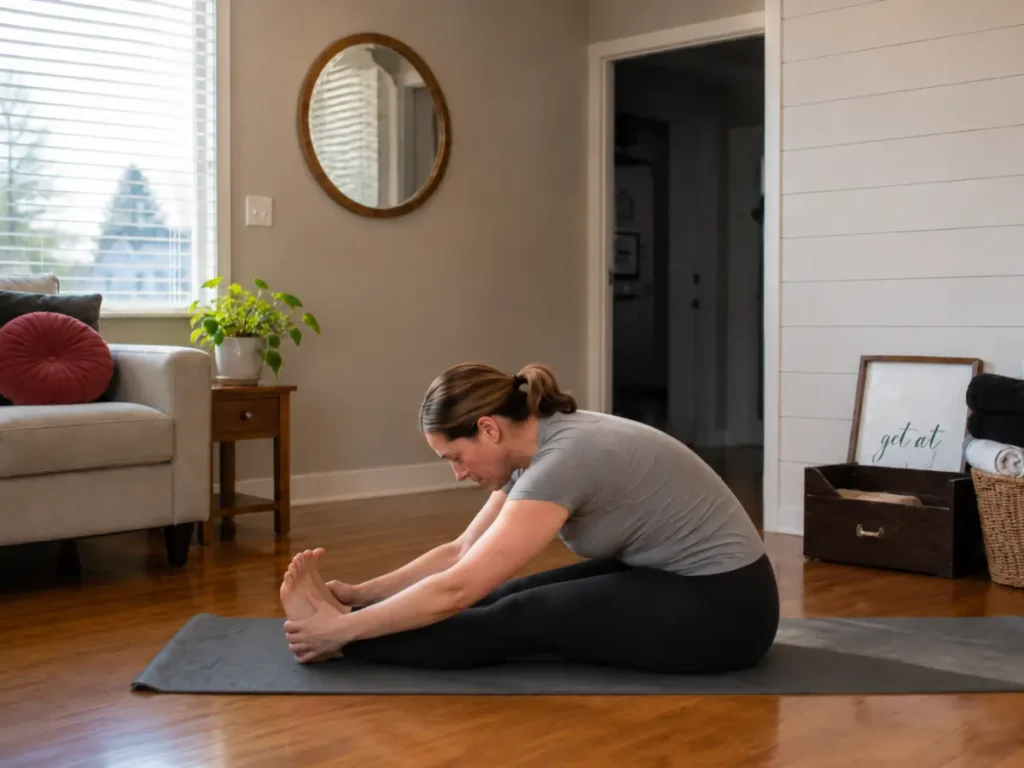
How to Do Seated Forward Fold
- Sit with your legs extended straight in front of you
- Flex your feet gently and sit up tall
- Inhale and lengthen your spine upward
- Exhale slowly as you hinge forward from the hips
- Rest your hands on your legs, ankles, or feet
- Keep your back long instead of rounding your shoulders
- Breathe slowly and relax into the stretch
The goal is not to force flexibility. Focus on breathing steadily and allowing the body to loosen gradually over time.
Adding a few foundational poses like these into your morning yoga routine for beginners can help create a practice that feels calming, realistic, and easy to stay consistent with at home.
Common Mistakes to Avoid During Morning Yoga
When starting a morning yoga routine at home, it’s completely normal to feel unsure about poses, breathing, or flexibility. Most beginners make small mistakes in the beginning, especially when practicing without a teacher. The good news is that yoga is not about being perfect. It’s about learning how to move with more awareness and paying attention to how your body feels.
One of the biggest mistakes beginners make is trying to force flexibility too quickly. Morning yoga should help the body wake up gently, not leave you feeling strained or exhausted. Moving slowly and focusing on proper form is much more important than trying to do advanced poses right away.
Another common issue is rushing through movements without paying attention to breathing. In yoga, the breath helps support balance, stability, and relaxation. Even simple poses can feel much better when your breathing stays slow and steady.
Common Beginner Yoga Mistakes
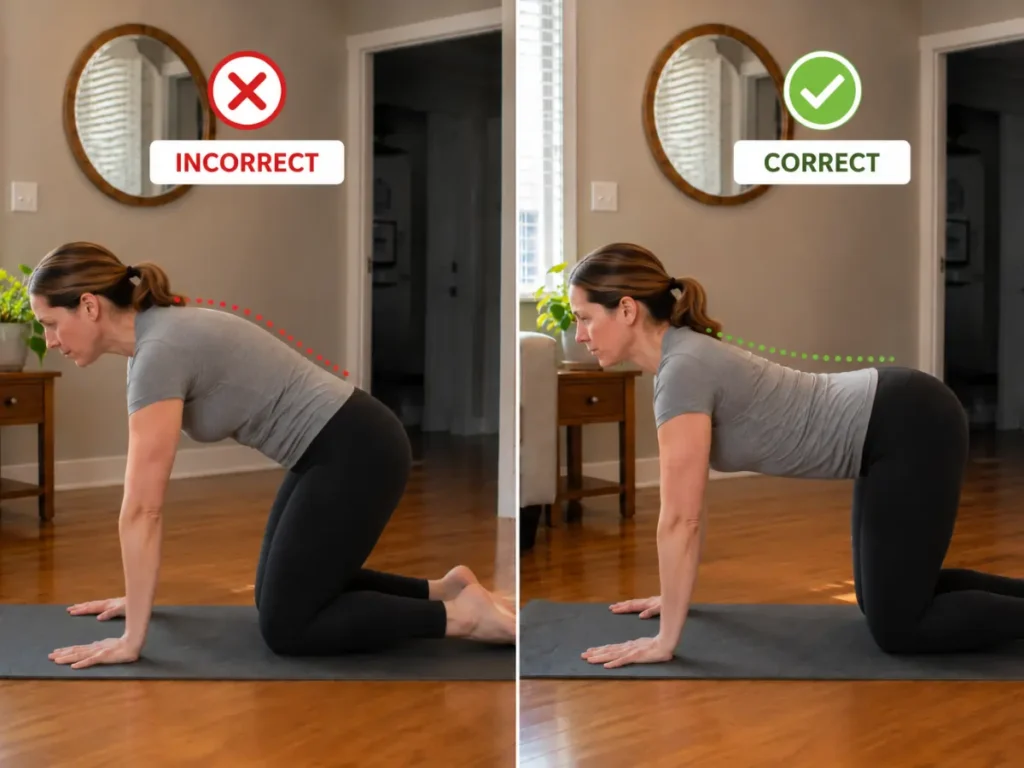
- Pushing too hard into stretches before the body feels warm
- Holding tension in the shoulders, neck, or jaw during poses
- Forgetting to engage the core for support and stability
- Ignoring discomfort or sharp pain during movement
- Moving too quickly instead of focusing on controlled breathing
- Comparing your flexibility or progress to other people online
If a pose feels uncomfortable, it’s completely okay to modify it or take a break. Yoga for beginners should feel supportive and sustainable, especially during a home practice.
Focus on Progress, Not Perfection
One thing many people don’t realize is that consistency matters far more than doing every pose perfectly. A short morning yoga practice done regularly is usually more beneficial than pushing too hard and feeling discouraged after a few days.
As your flexibility, balance, and confidence improve, the movements will start to feel more natural over time. The goal is simply to create a morning yoga routine that helps you feel better physically and mentally — not to perform yoga perfectly.
Adapting Your Practice for Different Energy Levels
One thing I’ve learned from practicing yoga at home is that not every morning feels the same. Some days your body feels light and energized, and other days even getting onto the mat can feel difficult. That’s completely normal, especially when you’re beginning a 10 minute morning yoga for beginners routine.
The beautiful thing about morning yoga is that it doesn’t need to look perfect every day to still help you. A gentle practice done consistently is far more beneficial than forcing yourself through an intense session when your body is asking for rest.
On lower-energy mornings, I like to slow everything down and focus more on breathing and simple stretches rather than strong flows. Even a few mindful movements can help wake up the body, improve circulation, and clear mental fog without feeling exhausting.
If you’re practicing yoga for beginners at home, give yourself permission to adjust your routine based on how you feel that day. Some mornings your practice may feel strong and active, while other mornings it may feel soft and restorative. Both are valuable.
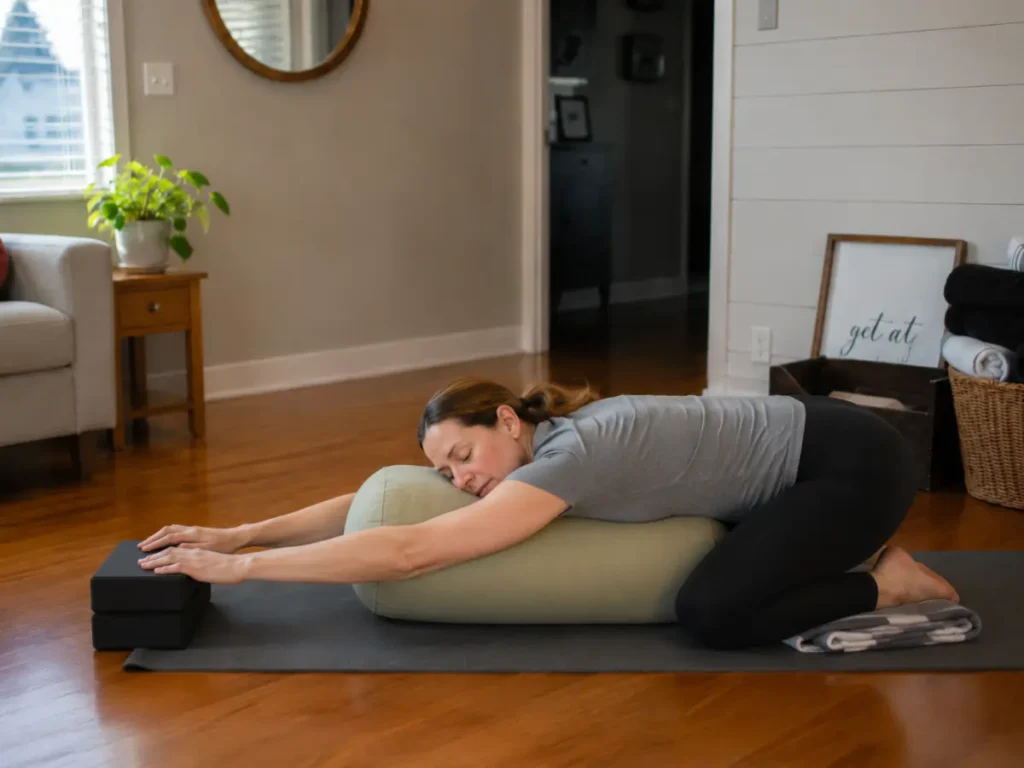
Simple Ways to Modify Your Morning Yoga Routine
- Use yoga blocks, cushions, or blankets to make poses feel more comfortable and supportive
- Spend extra time in gentle stretches like Child’s Pose or Seated Forward Fold
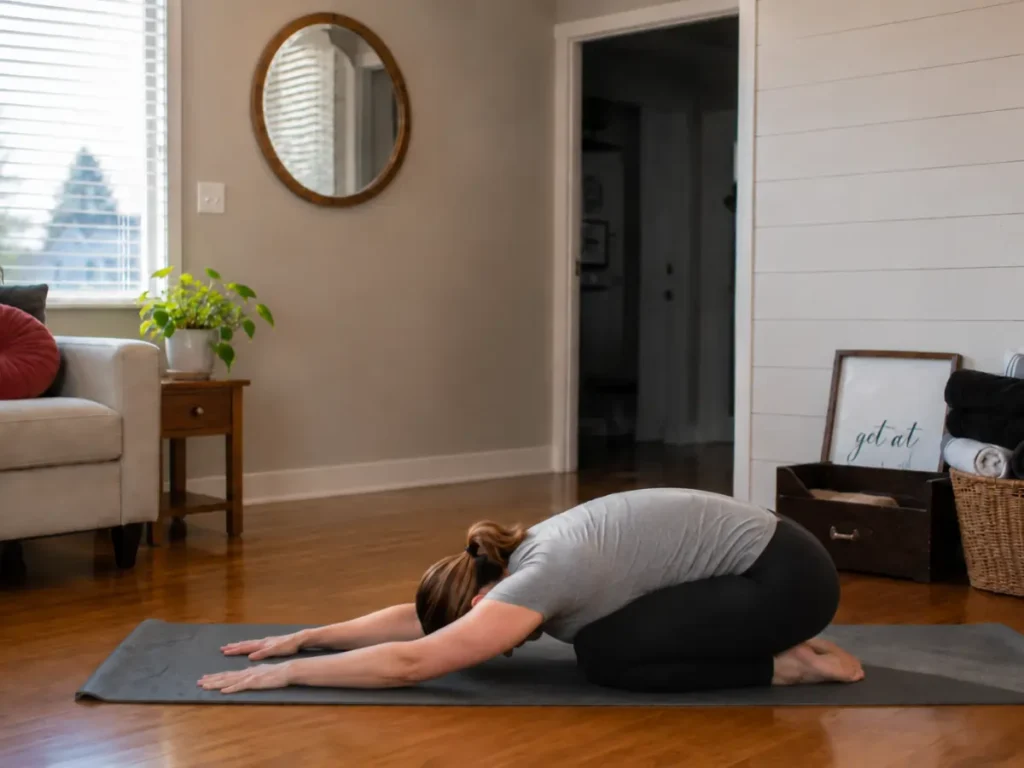
- Focus on slow breathing if your body feels stiff or tired
- Take breaks whenever needed instead of rushing through the routine
- Choose calming beginner yoga poses instead of fast-paced movements
Learning how to adapt your practice is an important part of building a sustainable yoga routine. Over time, this helps you stay consistent with your morning yoga for beginners practice without feeling overwhelmed or discouraged.
The goal isn’t to perform every pose perfectly. It’s simply to move, breathe, and reconnect with yourself for a few quiet minutes before the day begins.
Building Consistency in Your Morning Routine
One thing I’ve noticed with beginners is that the people who benefit most from morning yoga aren’t necessarily the most flexible or experienced. They’re simply the ones who keep showing up, even on busy mornings. A short 10 minute morning yoga for beginners routine done consistently will always feel better than doing a long practice once in a while.
When you’re learning how to start yoga at home, consistency matters more than perfection. Some mornings your body may feel energized and open, while other days you may feel stiff, tired, or distracted. That’s completely normal. The goal is to create a realistic morning yoga routine you can actually enjoy and return to daily.
I always recommend making your practice feel easy to begin. Keep your yoga mat visible, wear comfortable clothes, and remove as many obstacles as possible. A calm environment can make a huge difference, especially when you’re building a new wellness habit.
A few simple ways to stay consistent with your beginner yoga routine:
- Start with easy poses instead of forcing advanced movements
- Practice at the same time each morning to build a habit naturally
- Focus on slow breathing and gentle movement rather than intensity
- Keep your sessions short and realistic so they feel sustainable
- Allow yourself rest days without guilt if your body feels exhausted
One of the biggest benefits of morning yoga for beginners is that it creates a sense of structure before the day becomes busy. Even a few mindful stretches and deep breaths can help you feel more grounded, focused, and emotionally balanced throughout the day.
Remember that yoga is not about performing perfectly. Some mornings your practice may feel amazing, while other mornings it may simply help you wake up and reconnect with your body. Both experiences are valuable, and both are part of building a long-term home yoga practice.
When to Progress to Longer Sessions
After practicing a beginner morning yoga routine consistently for a few weeks, you may naturally start craving a little more time on the mat. This usually happens when the body begins feeling stronger, breathing becomes easier, and the movements start feeling more familiar instead of overwhelming.
You don’t need to rush into advanced yoga classes or long workouts immediately. The best way to grow your yoga practice is slowly and sustainably. A simple 10 minute y
session can eventually become 15 or 20 minutes without feeling difficult.
Some signs you may be ready to progress include:
- Your beginner yoga poses feel more stable and comfortable
- You can hold stretches and balances without rushing
- Your breathing stays calm throughout the session
- You feel energized after yoga instead of fatigued
- You genuinely look forward to practicing each morning
As your confidence grows, you can begin exploring longer flows, deeper stretches, and different yoga styles for beginners like Hatha Yoga, Yin Yoga, or gentle Vinyasa Yoga. Many people also enjoy adding meditation or breathwork after their morning yoga exercises to create a more calming wellness routine.
The most important thing is to progress at your own pace. Yoga should support your body, not pressure it. Some people feel happy practicing short morning yoga sessions forever, while others slowly move into longer practices. Both approaches are completely valid.
A strong yoga practice is built gradually, through patience, awareness, and consistency. The more connected you become to your breath and body, the more naturally your practice will continue to evolve.
Embracing Your Morning Yoga Journey
One of the most beautiful things about starting a 10 minute morning yoga for beginners routine is realizing that yoga is not really about touching your toes or doing advanced poses perfectly. It’s about learning how to slow down, breathe deeply, and reconnect with yourself before the world becomes busy.
When I first began practicing yoga consistently, I noticed that the biggest changes didn’t happen overnight in my flexibility or strength. The real transformation was in how I felt mentally. Mornings felt calmer, my body felt less stiff, and I started carrying a little more patience and awareness into everyday life.
Your beginner yoga journey will look different from someone else’s, and that’s completely okay. Some days your body may feel strong and energized. Other days you may feel tired, distracted, or emotionally drained. What matters most is simply showing up for yourself, even if your practice only lasts a few quiet minutes.
With regular practice, a simple morning yoga routine at home can help improve flexibility, posture, balance, energy levels, and overall well-being. More importantly, it creates space in your day to pause, breathe, and reset before stress takes over.
As you continue practicing beginner yoga at home, try to celebrate small progress instead of chasing perfection. Maybe your breathing feels steadier. Maybe your body feels more open when you wake up. Maybe your mornings feel a little less rushed than before. These small shifts are often the signs that yoga is working in the deepest way.
If you ever feel uncertain, remember that every experienced yogi once started exactly where you are now — learning simple poses, figuring out breathing, and trying to stay consistent. Growth in yoga happens gradually through patience, repetition, and self-awareness.
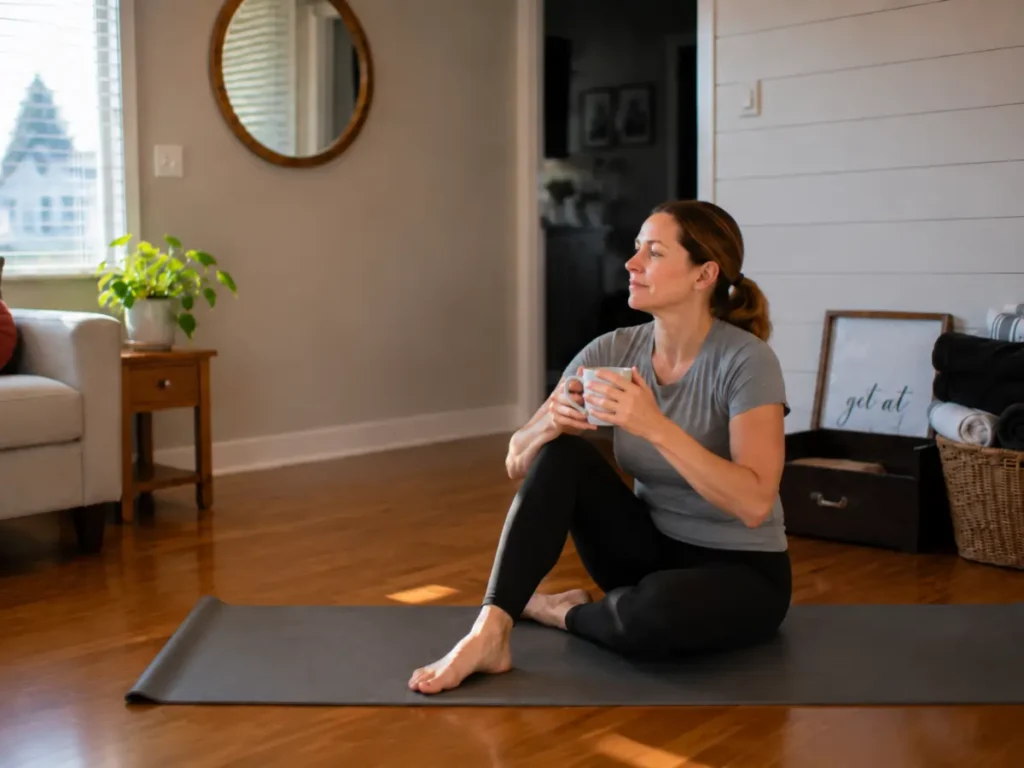
Your 10 minute morning yoga for beginners practice is more than just exercise. It’s a quiet moment of care you give yourself each morning. Over time, those few mindful minutes can positively shape not only your physical health, but also the way you move through life each day.
Also Read: Pilates vs Yoga for Seniors: Which is Better?
Also Read: Yoga for Lower Back Pain for Seniors
Also Read: Yoga Poses for Male Reproductive Organs