
-
 by
Emmanuel Okafor
by
Emmanuel Okafor - December 12, 2025
- 0 Comments

Table of Contents
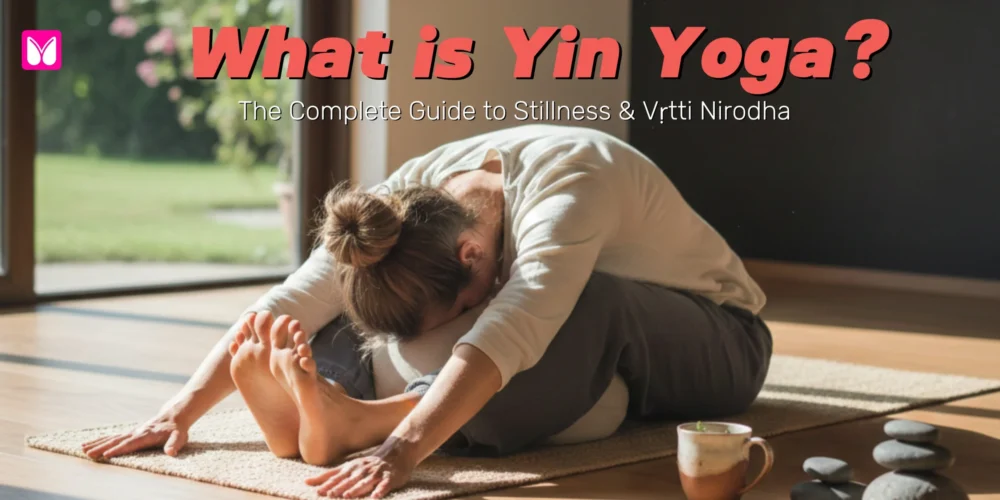
There is this question that is quietly rising across studios, living rooms, and tired minds everywhere: What is Yin Yoga, and why does it feel like the exact medicine we need in this era
Before we answer that question, we must begin with a truth many know but don’t say:
For years, the modern world has transformed yoga into a movement, introducing elements such as heat, playlists, sweat, and performance. It became a task to accomplish, in the sense that it’s another way to prove one’s capability.
And in that situation, there is something that becomes paramount.
Peace.
People may have become stronger, but their inner selves are loud. Some become flexible, but they are restless, while others have found their flow, yet they rarely meet themselves. This is the crack through which Yin Yoga entered.
The Context (The Truth): Yin Yoga as the Practice of Time and Surrender
There’s something everyone should know here. Yin Yoga didn’t just come to compete with the Yoga styles we know about; instead, it came to fill the gap that was missing.
That part of yoga that the Western world ignored, that part of yoga that isn’t only about postures, but about time, stillness, and surrender, that’s what Yin yoga is all about.
Yin is yoga down to its fullness, because it is all about you, your mind, your breath, and the present moment that refuses to be rushed. Where modern Yoga asks you to “move more,” Yin Yoga asks you to do less so you can finally see more.
- This is the practice of staying.
- Not escaping.
- Not fixing.
- Not distracting.
Just… staying.
Also Read: Is Yoga Demonic? The Truth $125 Billion Market Hide
The Thesis (Satya): The Only Real Definition of Yoga
Here is the truth that no one wants to let out:
Yoga has one fundamental purpose:
Yogaś citta-vṛtti nirodhaḥ: the cessation of the mind’s fluctuations. This is an ancient definition from Pantanji, and it is neither poetic nor lyrical; it’s practical.
What it means is that Yoga is ultimately about calming mental turbulence: the thoughts, reactions, impulses, and emotional storms that pull us in every direction.
Yin Yoga is not a branch of yoga or a soft version of yoga. It is one of the purest ways to practice the original intention:
- To sit with the mind.
- To witness its movements.
- To wait as those movements settle.
- And to discover the quiet that remains when the noise dissolves.
Many people have the misconception that Yin Yoga is slow because it’s gentle, but the truth of the matter is that yoga is slow because it requires a certain slowness.
That sounds funny, right?
We should know that, when there’s slowness, stillness follows….and Yin Yoga keeps rising because it follows this path.
A world that is without stillness and is restless needs a practice that teaches the art of stopping.
The Definition and Mechanism (Pure Philosophy & Psychology)
Before we can truly understand what Yin Yoga is, we must understand the real meaning and philosophy of yoga, rather than how it is often presented in the world.
The Only Definition That Matters: What Is Yoga?
Patanjali gives a single, uncompromising answer: Let me break it down here what the philosophy of Yoga is all about.
Yogaś citta-vṛtti nirodhaḥ — Yoga is the ceasing of mental disturbances.
“vṛttis.”– Vṛttis are the waves of the mind, the constant thoughts, judgments, memories, expectations, and reactions that keep the mind in motion.
- Imagine the mind as a lake.
- Every thought is a ripple.
- Every emotion is a splash.
- Every distraction is a stone thrown into the water.
Yoga is not about bending the body; it is about stillness in the lake. This is where Yin Yoga becomes not just relevant but essential. Because when beginners ask, “What is Yin Yoga truly about?” the answer is simple: Yin Yoga is the mechanical and psychological training that makes stillness possible.
Also read: 7 Yoga Ball Exercises for Back Pain: Simple Strategies to Prevent Pain Naturally
Origin and History: Yin Yoga’s Roots in Yin Yang Philosophy
Having known that Yin Yoga is not a Western invention, its foundation lies in the ancient principle of Yin and Yang, the balance between active and receptive forces.
Yang is: effort, heat, motion, and achievement.
Yin is: patience, receptivity, slowness, and inward focus.
Over the years, Eastern philosophy has understood that wisdom grows in stillness, not in speed. Yin Yoga adopts this principle directly:
You stay.
You breathe.
You listen to the inner world that movement usually hides
Unlike those exercises based on modern styles, Yin Yoga is not designed to energize your muscles or change your shape. Its purpose remains the same, which is psychological and philosophical, rather than athletic.
The Mechanism of Stillness (The How)
Yin Yoga utilizes one essential tool:
Time.
When you hold your postures for several minutes, something extraordinary happens.
- The body stops distracting you.
- The nervous system stops reacting.
- The mind runs out of excuses to escape the present moment.
Eventually, you confront your inner mind, including thoughts, emotions, restlessness, and impatience, without trying to escape from them.
All these ain’t physical training. This is mental training.
Yin Yoga teaches students to sit with discomfort without panic, stay still without feeling bored, and observe their thoughts without getting carried away. This is the mechanism that softens vṛttis, the ripples, until your mind becomes clearer and quieter.
The Physical Anchor: Why We Use Connective Tissue and Fascia
Although Yin Yoga is a deeply psychological practice, the body plays a supportive role in this practice.
We use connective tissue and fascia as the physical anchor because they respond to gentle, sustained pressure over time.
- You are not stretching.
- You are not performing.
- You are not chasing sensation.
- You are waiting, and that waiting becomes the platform for mental stability.
The Internal Focus: The Subtle Body and the Flow of Prana
In Yoga philosophy, there’s what is called the flow of prana. The Pranic system is what we describe as the energy pathway, stillness that affects more than the muscles.
When you hold a Yin posture:
- Your breath slows.
- Energy settles.
- Attention turns inward, away from external stimulation.
That is why Yogis call this the softening of the Pranic winds– the internal movements that keep consciousness agitated.
In simple terms:
When the body becomes still, the energy becomes still.
When the energy becomes still, the mind becomes still.
And this is the real mechanism of Yin Yoga. It is about organizing consciousness around the calmness of chaos and not just about flexibility.
The Purpose of Practice (The Deeper Limbs)
Now that we’ve defined what Yin Yoga is and how it works, we must explore its deeper purpose, not just on the surface level, but on the classical level.
To understand Yin, we must place it within the ancient contrast:
Yang vs. Yin: The Philosophical Contrast
The world today is overwhelmingly Yang.
Yang represents:
- Doing
- Striving
- Achieving
- Performance
- Movement
- Outcome
This is the exact version of yoga that became fast, heated, and endlessly active.
But activity without inner awareness rarely produces peace. Yin represents the forgotten half:
- Being
- Observing
- Stillness
- Patience
- Receptivity
- Inner listening
Where Yang pushes outward, Yin draws inward.
Where Yang produces effort, Yin cultivates acceptance.
In this balance, Yin becomes a direct doorway to the deeper limbs of Yoga, the parts of the practice designed to calm the mind, refine awareness, and stabilize consciousness. This is the true purpose of Yin Yoga.
The True Benefits (Psychological & Philosophical)
Instead of physical claims or fitness promises, Yin Yoga offers something far more essential:
1. Pratyahara — The Turning of the Senses Inward
Pratyahara is the fifth limb of Yoga, and it’s one of the most powerful outcomes of yin practices. This limb teaches something unique, and what is it?
Silence is not empty; silence is a doorway.
2. Dharana & Dhyana — Concentration and Meditation
Yin Yoga trains the mind in stages:
First, you learn to stay with one point of focus: the breath, a sensation, or simply the present moment. This is Dharana (concentration).
Then, as the effort becomes natural and continuous, attention enters a stream-like flow. This is Dhyana (meditation). Beginners often feel surprised here because they come expecting “stretching” and unintentionally find meditation, not by trying but by staying.
3. Tapas & Santosha — Discipline and Contentment
Every long hold is a minor confrontation with yourself.
- You notice impatience.
- You notice the urge to move.
You notice the mind negotiating with discomfort:
Just adjust a little.
Maybe skip this one.
This is too long.
This is boring.
But in Yin Yoga, you stay. That staying builds Tapas, disciplined endurance.
And as the mind stops fighting, a new quality appears:
Santosha: quiet contentment. Hold on, this is not excitement, pleasure, or achievement; rather, it is a sense of “I am here, and this is enough.”
These qualities are rarely developed in fast-paced Yoga styles because movement distracts from the mind’s deeper tendencies. Stillness exposes them and transforms them.
Why These Benefits Matter
By now, it should be clear that asking “what is Yin Yoga?” is not merely asking about a style of Yoga. It is asking about a pathway into:
- mental clarity
- emotional steadiness
- self-awareness
- psychological balance, inner quietness
Yin Yoga is the architecture of a stable mind.
And because the world grows louder every year, the relevance of Yin grows just as quickly.
Practical Application (Mindful Execution)
Understanding what Yin Yoga is becomes even more powerful when you know how to practice it with integrity.
Just as I have already explained from the beginning, Yin is not about shaping the mind or the body. Everything you do in Yin should support inward focus.
Before we move on to the practical, grounded approach, let’s examine who YinYin yoga is suitable for.
Who Is This Practice For?
Yin Yoga is for anyone who feels:
- mentally overstimulated
- emotionally scattered
- spiritually disconnected
- overwhelmed by constant activity
- tired of noise, speed, and external pressure
Yin yoga is ideal for those seeking mental clarity, emotional steadiness, or a sense of inner balance and grounding. And because Yin Yoga is the practice rooted in stillness rather than performance, you don’t need strength, flexibility, or prior Yoga experience.
All you need is the willingness to pause.
Foundational Postures for Inward Focus (Step-by-Step)
You should know that these postures are not chosen for flexibility. Let’s dive deeper
1. Butterfly Pose — The Practice of Surrender
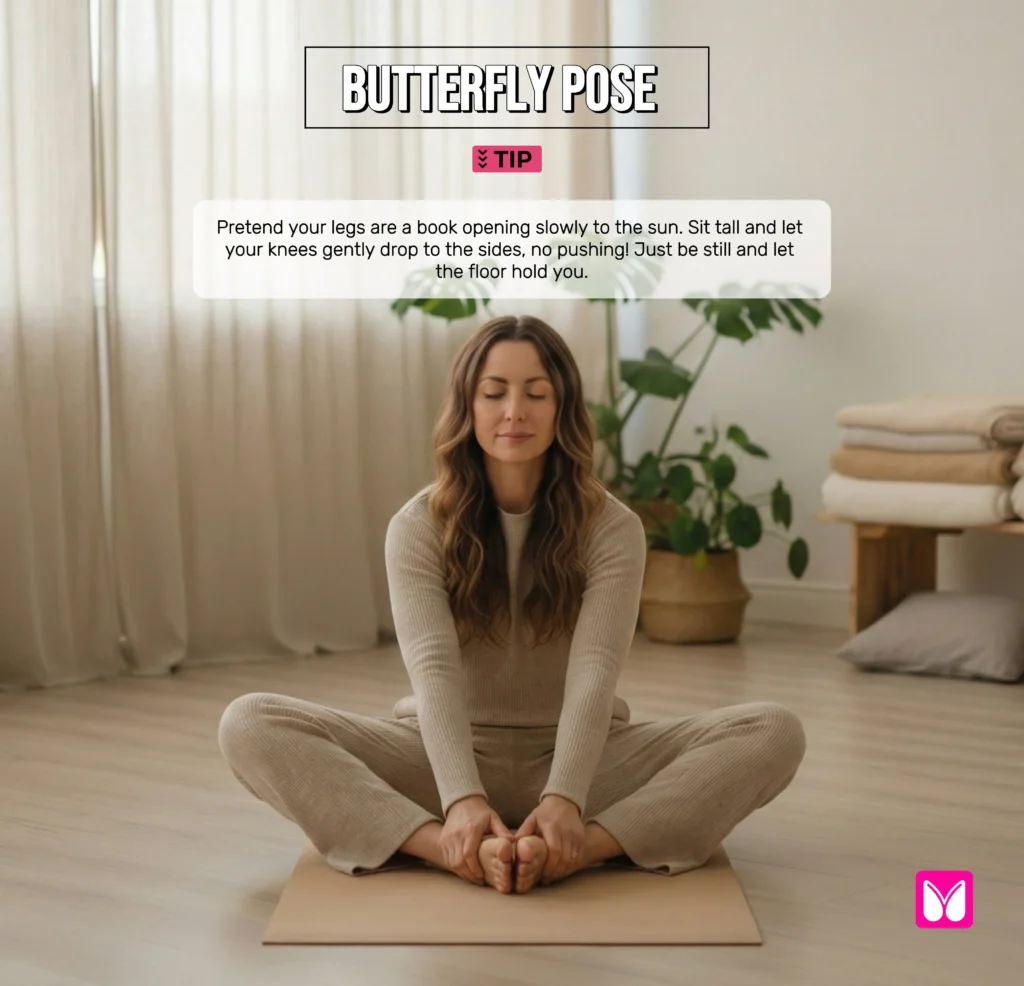
Sit with your feet together, soles touching, and your knees falling outward.
Let the spine relax into a gentle curve.
Rest your hands anywhere comfortable.
The steps are simple: just let gravity do the work.
The stillness teaches you what happens when you stop forcing and start allowing.
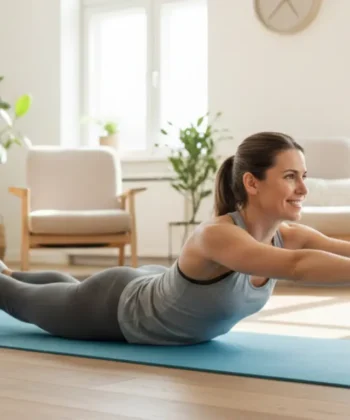
2. Sphinx Pose — The Stillness of the Torso
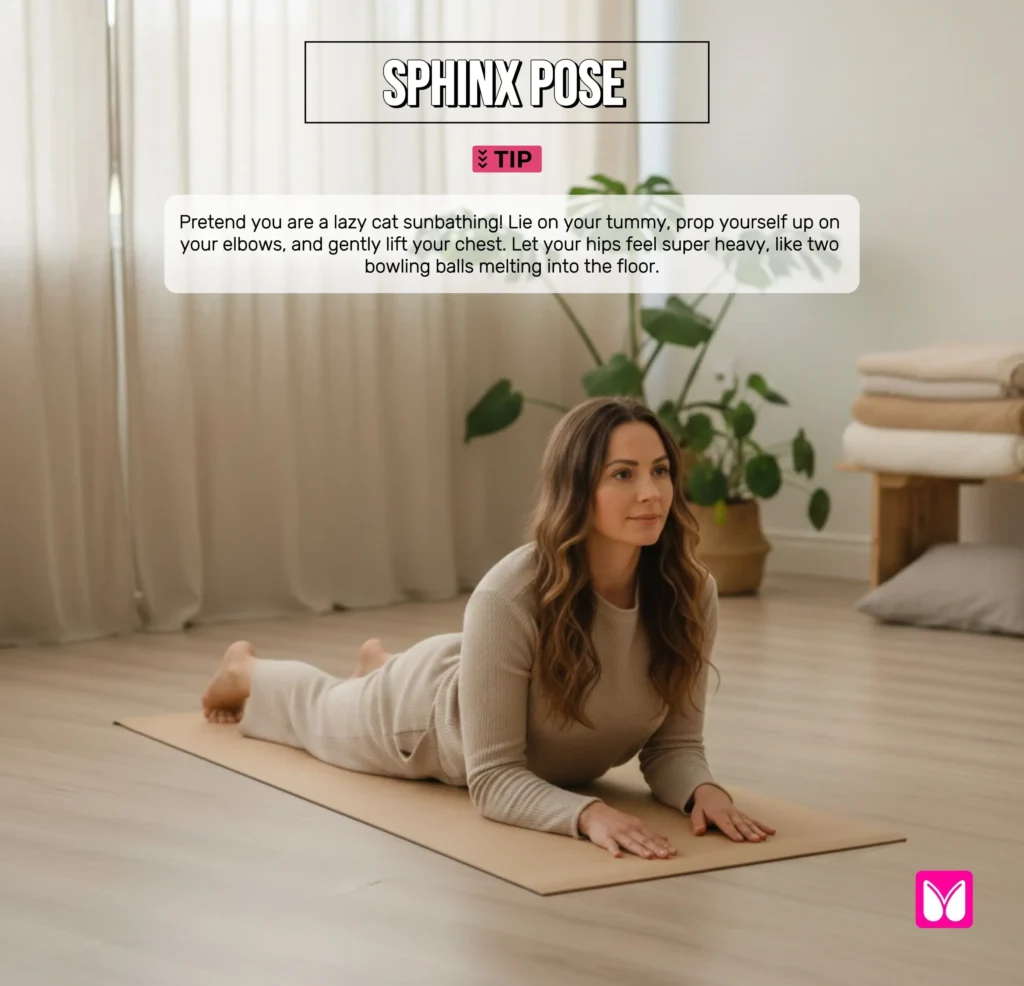
Lie on your belly and prop yourself up on your forearms.
Your torso becomes a quiet, stable anchor.
Breath slows naturally.
Attention drops deeper into the body’s interior. You are not “lifting.” You are being supported.
3. Shoelace Pose — Meeting Internal Resistance
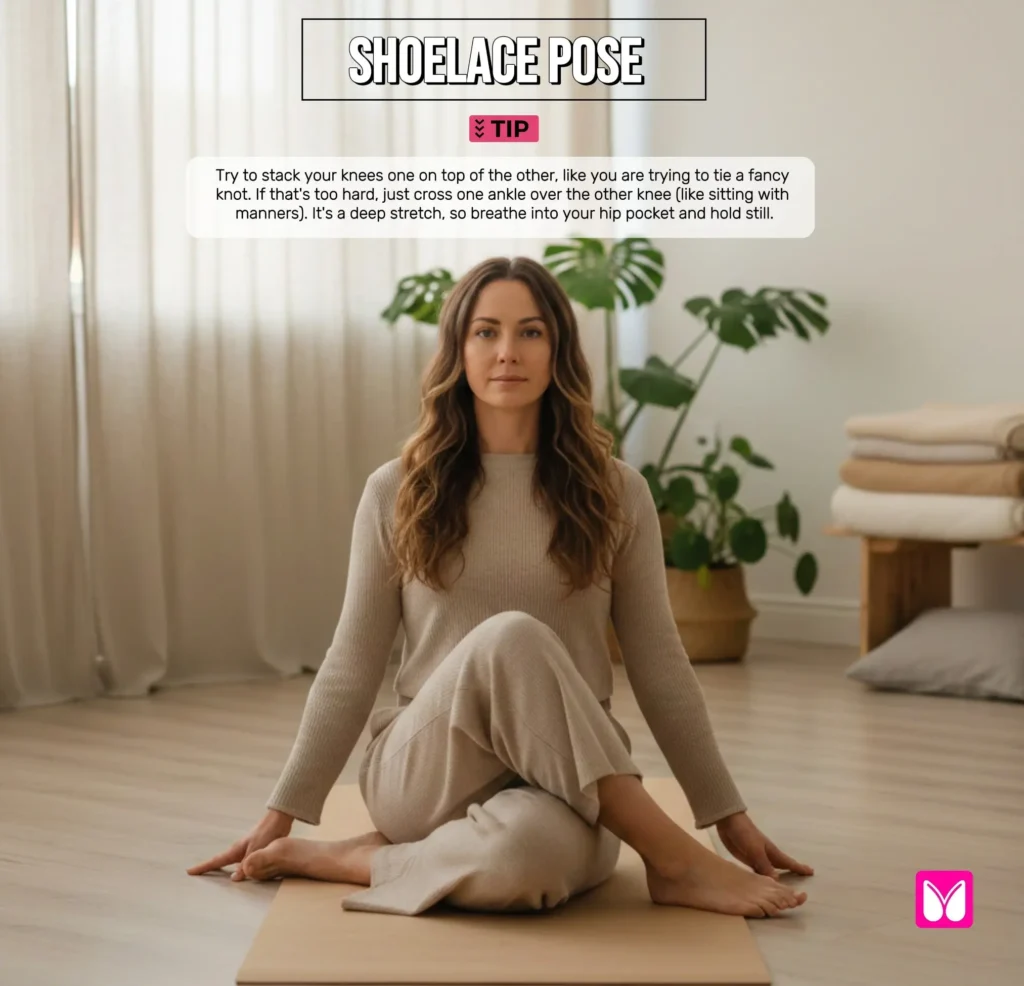
Sit upright, crossing one knee over the other so both knees stack in the center.
The shape is secondary. Just ask yourself this question and give an honest emotional answer.
“Can I stay with this feeling without reacting?”
“Can I observe instead of escape?”
This pose helps cultivate emotional honesty.
4. Dragon Pose — Observing Intensity Without Panic
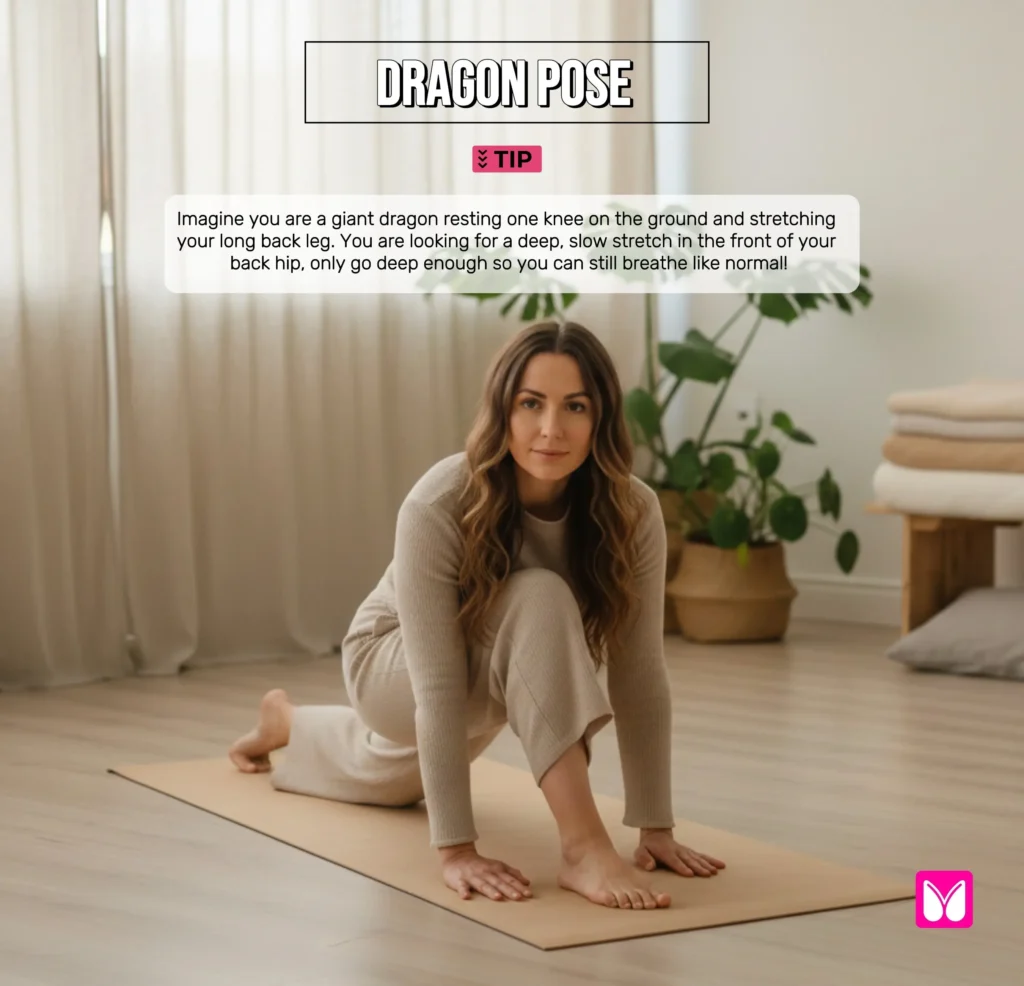
From hands and knees, step one foot forward into a low lunge and relax the hips downward.
This is often the first posture where intensity appears. The purpose is to watch your mind’s reaction.
Intensity becomes the teacher while you become the witness.
5. Child’s Pose — Complete Surrender
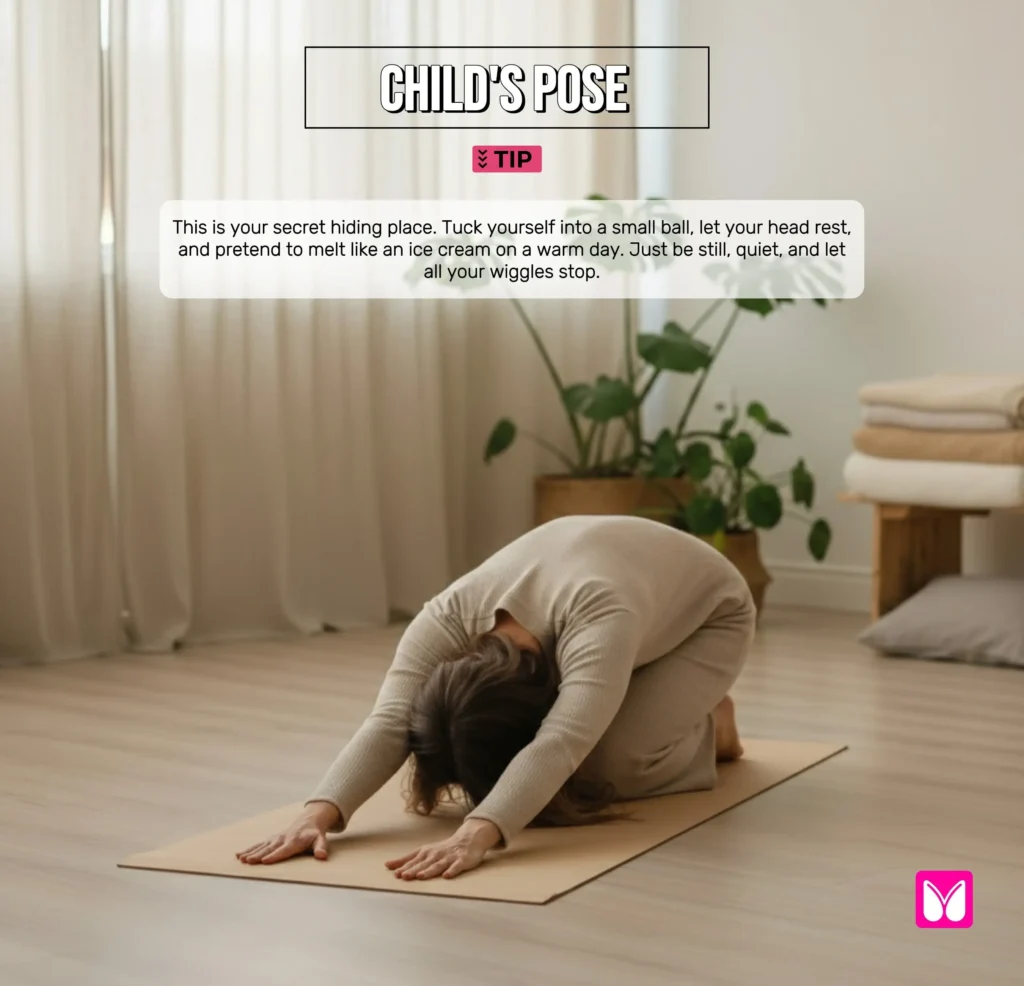
Sit back on your heels, fold forward, and let your arms rest.
Child’s Pose is the physical symbol of Yin:
- softness
- humility
- allowance.
This is where many students, for the first time, understand that stillness is not a sign of weakness, but rather a source of clarity.
20-Minute Yin Yoga Sequence for Mental Clarity
As a beginner, you can get started by following this 20-minute sequence, which is grounded in inner focus and concentration.
Butterfly Pose — 3 minutes.
(Let the body settle.)
Sphinx Pose — 4 minutes
(Slow the breath.)
Shoelace Pose — 4 minutes each side
(Meet resistance with patience.)
Child’s Pose — 5 minutes
(Integrate and rest in stillness.)
Total: 20 minutes of conscious presence.
When you follow this short sequence, you feel transformed because you’re not just training your body, you’re also nourishing the mind.
Starting Your Practice at Home
You can start Yin Yoga at home. It becomes powerful when you create the right conditions:
1. Set a Clear Intention
Before beginning, ask yourself:
“What part of my mind needs quiet today?
When your intentions are clear, awareness becomes direct and focused.
2. Reduce External Stimulus
- dim lights
- silence or soft ambient sound
- no screens
- no fast-paced music
Yin thrives when the outside world fades.
3. Value Quality of Stillness Over Duration
When you hold a posture with divided attention, there will not be any effect. A posture held with calm awareness teaches everything.
The goal is not “how long.” The goal is to be fully present.
By the time you reach this stage, you’ll realize that the answer to “what is Yin Yoga?” is no longer theoretical. It is something you experience.
Conclusion: The Choice of Integrity
If the purpose of Yoga is one of the stillness of the mind, then Yin Yoga is one of the direct, undistracted paths available today.
You came here asking, ‘What is Yin Yoga?’ But by now, you’ve seen that it is less a question and more an invitation. Yin Yoga invites you to slow down in a world addicted to speed. It invites you to listen in a world filled with shouting. It invites you to stay in a world that constantly pushes you to move.
And ultimately, it invites you to choose integrity over performance.
Because 99% of Yoga is about the mind.
- Not sweat.
- Not shape.
- Not aesthetics.
- Not achievement.
The greatest threat to Yoga today is distraction, not even difficulty.
Yin Yoga returns us to the honest center of the practice based on patience, presence, and inner stillness.
The Call to Integrity
You now know what Yin Yoga is in its purest sense: It is…
- A discipline of awareness.
- A training of stillness.
- A method of calming the fluctuations of the mind.
The world will continue to offer louder, faster, more complex systems that promise peace but never deliver it. Yin provides the opposite:
- Simplicity.
- Slowness.
- Depth.
- Truth.
The choice is now yours, but the path is clear.
Frequently Asked Questions (FAQ)
1. Why am I not sweating?
Yin Yoga is not designed to stimulate heat or exertion.
Its purpose is mental stillness, not physical intensity.
Sweat is a byproduct of activity, while Yin is a study of inactivity.
2. Is this even Yoga if I’m not moving?
Yes, and in many ways, it is closer to the original intention of Yoga.
Yoga is defined by mental stillness, not movement.
Yin Yoga returns you directly to that definition.
3. What should I focus on during the holds?
Focus on observing:
Your breath, your thoughts, your reactions, your restlessness.
Yin is a practice of watching the mind rather than controlling the body.
4. I get impatient or bored. Is that normal?
Completely normal.
Impatience and boredom are forms of mental turbulence (vṛttis).
Yin Yoga exposes them, allowing them to soften over time.
5. How often should I practice Yin Yoga?
Start with 10–20 minutes a few times a week.
Consistency matters more than duration.
The mind responds best to regular, gentle training.
6. Can I do Yin Yoga if I already practice fast-paced Yoga?
Absolutely.
Yang practices the train movement.
Yin practices train stillness.
Together, they create balance, but Yin is the part most people lack.
7. What if I don’t feel anything happening?
Stillness often feels uneventful at first.
But over time, you’ll notice subtle but powerful shifts in focus, patience, and inner calm.
The transformation is gradual, not dramatic.
8. How do I know I’m doing it right?
If you are:
breathing slowly
staying still
observing your mind
softening unnecessary effort
…you are practicing Yin correctly
This article reflects the classical and philosophical perspective of Nandini Sharma, the voice and heart behind Mindfullyoga. A dedicated scholar of the original Yoga Sutras and classical Yogic texts, Nandini is the sole author of the philosophical, ethical, and practical teachings here, aimed at restoring Yoga to its authentic, ancestral roots.
The structural clarity and precision of this work are ensured by Jai Mehta, Co-Founder of Mindfullyoga, a Mechanical Engineer (B.Tech) and ISRO-trained intern, committed to transmitting Yoga with scientific rigor and cultural fidelity.
Content Strategy & SEO Optimization The article was strategically structured and optimized by Emmanuel Okafor, Content Strategist, ensuring the teachings on Yin Yoga, stillness, and mental clarity are delivered with clarity, depth, and reach, making it a trusted and authoritative resource for seekers of authentic Yoga knowledge.

Emmanuel Okafor
Emmanuel Okafor is a skilled SEO specialist and content writer with hands-on experience in optimizing websites for visibility, traffic, and authority.Emmanuel has contributed to the growth of several startups across various niches, including AI, technology, health, and mental well-being. He is passionate about storytelling, digital marketing, and helping brands meaningfully connect with their audience online.