

-
 by
Rahul Kulhari
by
Rahul Kulhari - February 25, 2026
- 0 Comments

Reviewed for safety and clarity by Nandini Sharma, co-founder of Mindfullyoga and Chair Yoga Specialist for Seniors
Quick Answer: Is Chair Yoga Safe for Seniors?
Yes. Chair yoga is generally considered safe for many seniors with osteoporosis, osteoarthritis, or sciatica when practiced with proper modifications and a safety-first approach.
Because chair yoga is seated and low-impact, it may reduce fall risk, protect sensitive joints, and support gentle mobility. However, deep forward bends, forceful twisting, and extreme knee bending should be avoided or carefully modified.
If you experience sharp pain, worsening symptoms, numbness, or instability, stop and consult your healthcare provider. It is always wise to check with your doctor before beginning any new exercise routine.
The golden rule:
Move slowly. Stay upright. Avoid pain. Prioritize safety over intensity.
A Gentle Safety Note: This guide is meant to support your understanding of chair yoga and is for educational purposes only. It is not a substitute for medical advice, diagnosis, or treatment. Because every body is different, we encourage you to speak with your healthcare provider before beginning any new exercise routine especially if you are living with osteoporosis, arthritis, sciatica, or other health conditions.
If you’ve been hesitant to move because of pain or the fear of injury, you are not alone. With the right support and slow, mindful movements, your body can rediscover comfort and confidence again with the help of chair yoga. Chair yoga is generally considered low-risk for seniors living with osteoporosis, osteoarthritis, and sciatica when modified appropriately to protect the spine and joints. By utilizing a stable chair, you minimize the risk of falling while improving your range of motion and mobility again.
Because everyone’s body is different, it’s always a good idea to check in with your doctor before starting, just to make sure this gentle practice is right for you.
“Chair yoga is not a substitute for medical treatment or physical therapy.”
Table of Contents
Understanding the Conditions Before Starting Chair Yoga
Before adjusting your yoga practice, it’s helpful to understand how these conditions affect your body’s internal structure. Before adjusting your yoga practice, it’s helpful to understand how these conditions affect your body’s internal structure so you can move with intention rather than fear.
What Is Osteoporosis?
In a 2010 study published in PubMed, it was found that around ten percent of U.S. adults over 50 (or an estimated 10.2 million) had osteoporosis.
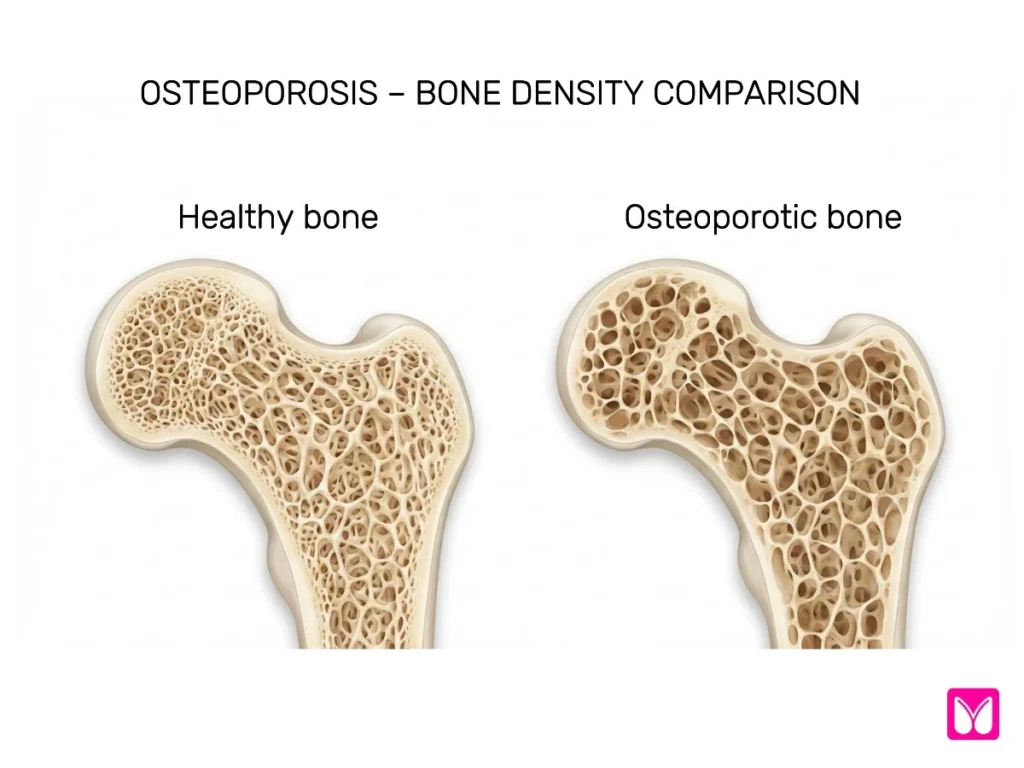
Osteoporosis is often referred to as a “silent disease” because it involves gradual bone density loss. As we age, our bones can become more porous, which can lead to a higher fracture risk while performing day-to-day activities. The main goal is to keep your spine supported and avoid movements that can put too much pressure on your back. In chair yoga, you use the chair to stay upright and stable, allowing you to build strength and balance while reducing fracture risk.
What Is Osteoarthritis?
Think of osteoarthritis as a natural “thinning” of the body’s built-in shock absorbers. It involves gradual cartilage loss that completely changes how your joints move. You may feel this most as joint stiffness after sitting for a long duration. When inflammation occurs, your body is simply asking for a gentler approach.
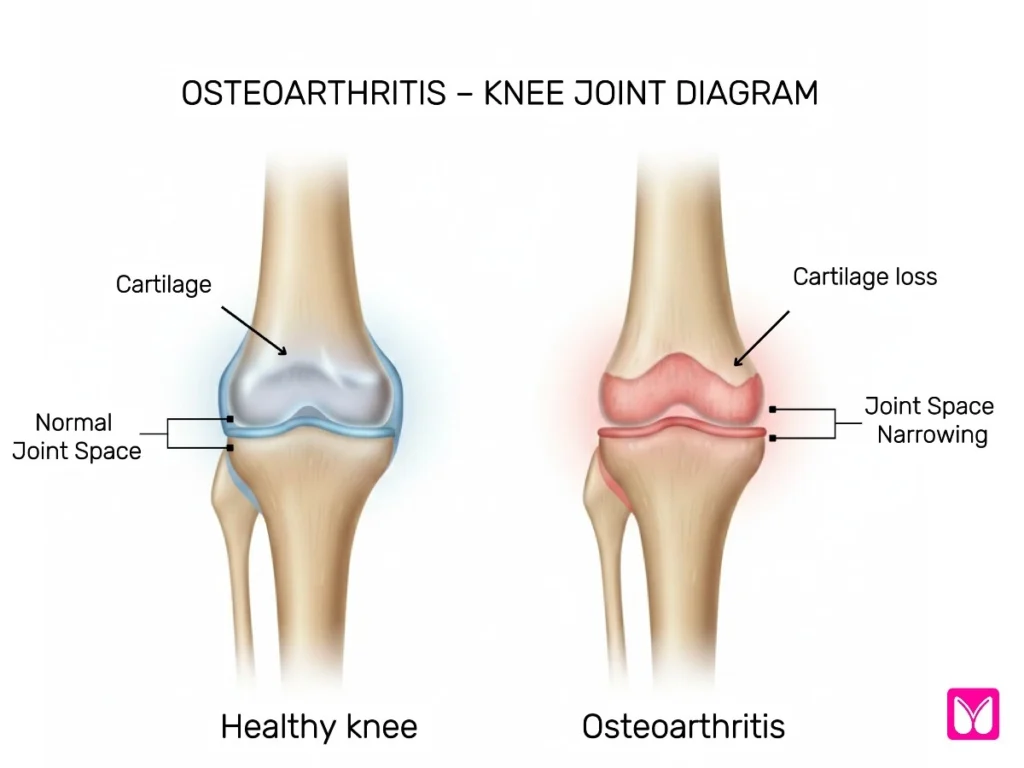
Chair yoga provides exactly that. By staying seated, it takes the heavy pressure off your lower body, focusing on smooth, rhythmic movements that keep your joints mobile and your inflammation in check.
What Is Sciatica?
Ever felt a deep, radiating leg pain starting from your lower back and shooting right through your leg? That’s likely sciatica, and you are not alone.
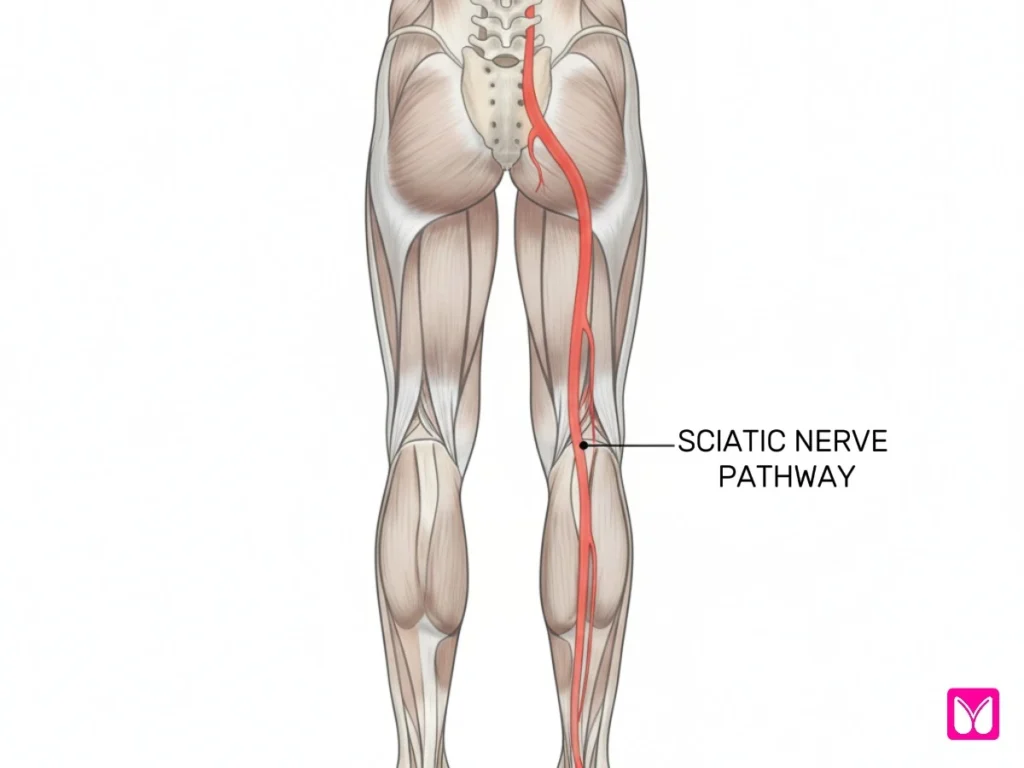
Around 40% of people experience sciatica at some point in their lives. It is not a single disease, but a signal from your body that the sciatic nerve (the longest nerve you have) is experiencing nerve compression. In chair yoga, you focus on identifying whether the cause is disc or muscular in nature.
For some people, the spinal disc is the culprit; for others, a tight hip muscle (the piriformis) is “pinching” the nerve. By moving mindfully in a chair, you create a space your nerves need to feel at ease again.
Is Chair Yoga Safe for Osteoporosis?
For many seniors with osteoporosis, the fear of a fracture can make the idea of yoga or exercise feel daunting. If you are managing low bone density, you may be asking yourself: Is chair yoga safe for osteoporosis?
The short answer is yes; in fact, it is preferred over traditional yoga for osteoporosis. By moving the practice from the floor to a sturdy chair, you eliminate many risks associated with balance and falls, creating a “safety-first” environment for your bones.
Why Seated, Low-Impact Movement May Be Safer
Health experts are increasingly recommending chair yoga for seniors as a well-being tool for bone health because it addresses the three biggest concerns for those with osteoporosis:
- Reduced Fall Risk: The most significant danger for anyone with osteoporosis is a fall, which is the leading cause of hip and wrist fractures. Using a chair provides a permanent point of stability, providing a safety net for practitioners.
- A Controlled Environment: Because your “sit bones” are firmly rooted in the chair, you have a physical boundary that prevents you from overstretching or collapsing and allows you to move within a controlled range of motion. This stability makes it easier to maintain a tall and long spine.
- Avoidance of High-Impact Loading: Chair yoga offers low-impact loading. You still use your muscles to support your frame, which may help maintain bone-supporting muscle strength, but you are doing this without a jerky movement, which can be risky for your spine.
Movements Often Advised Against With Osteoporosis
Certain traditional yoga movements may increase compression risk for those with osteoporosis. It’s always helpful to understand why they’re advised against:
- Spinal Flexion (Rounding): Gently tucking your chin to the chest or rounding the back can place extra pressure on the front part of the spine. Try to keep your back long and upright.
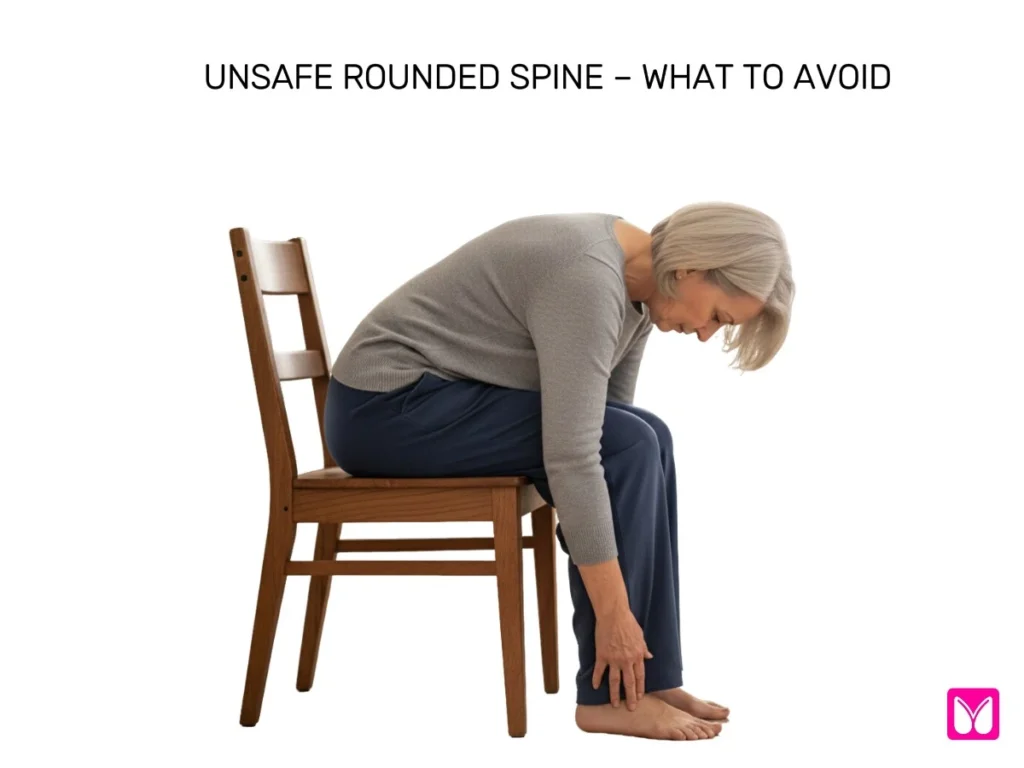
- Deep Forward Bends: Reaching for your toes or folding the torso over the thighs is a position where gravity adds extra “load” to a rounded spine, which is a primary concern for fracture safety.
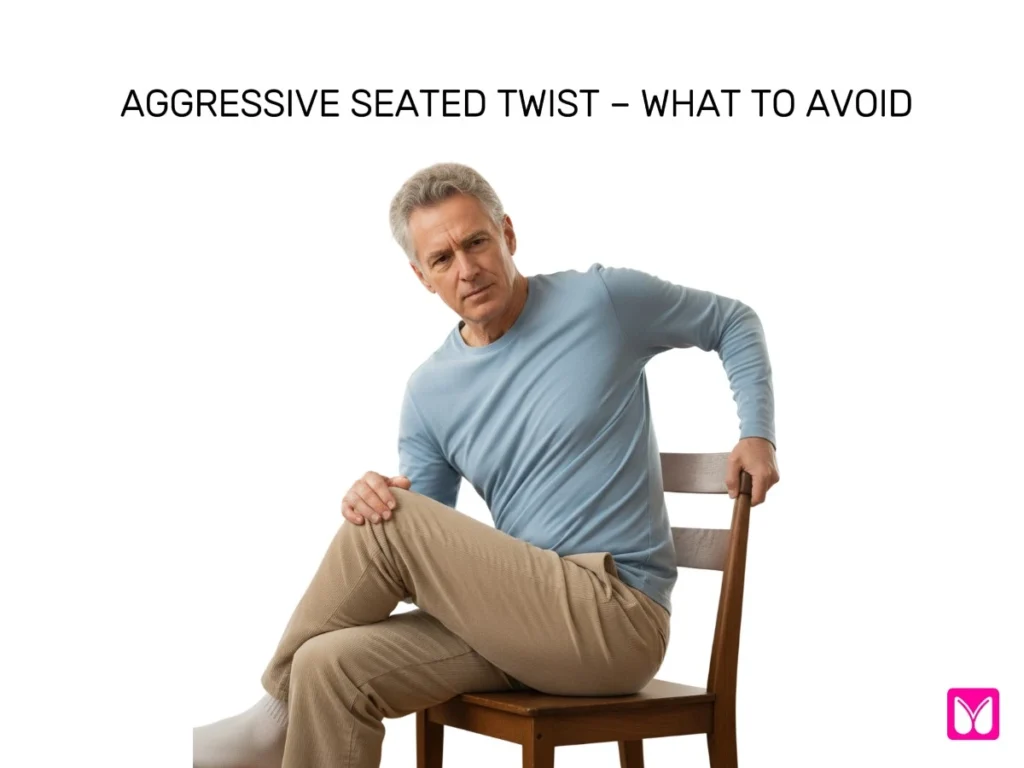
- Loaded Twisting: While very gentle, tiny rotations are often okay, avoid loaded twisting (this refers to deep, forceful twists where you use the chair’s backrest to “crank” the body).
- Rapid Transitions: Moving too quickly between poses can lead to a loss of balance or accidental tipping of the chair.
Practical Safety Modifications for Seniors
When practicing chair yoga with osteoporosis, safety is not just a list; it is about creating a controlled and supportive space so you can move freely. By implementing a few practical modifications for your protection, you can enjoy the benefits of yoga while protecting your bone health.
- Maintain a Neutral Spine: Sit tall with your back naturally aligned, not slouched forward and not overly arched. Imagine a string pulling at the crown of your head towards the ceiling.
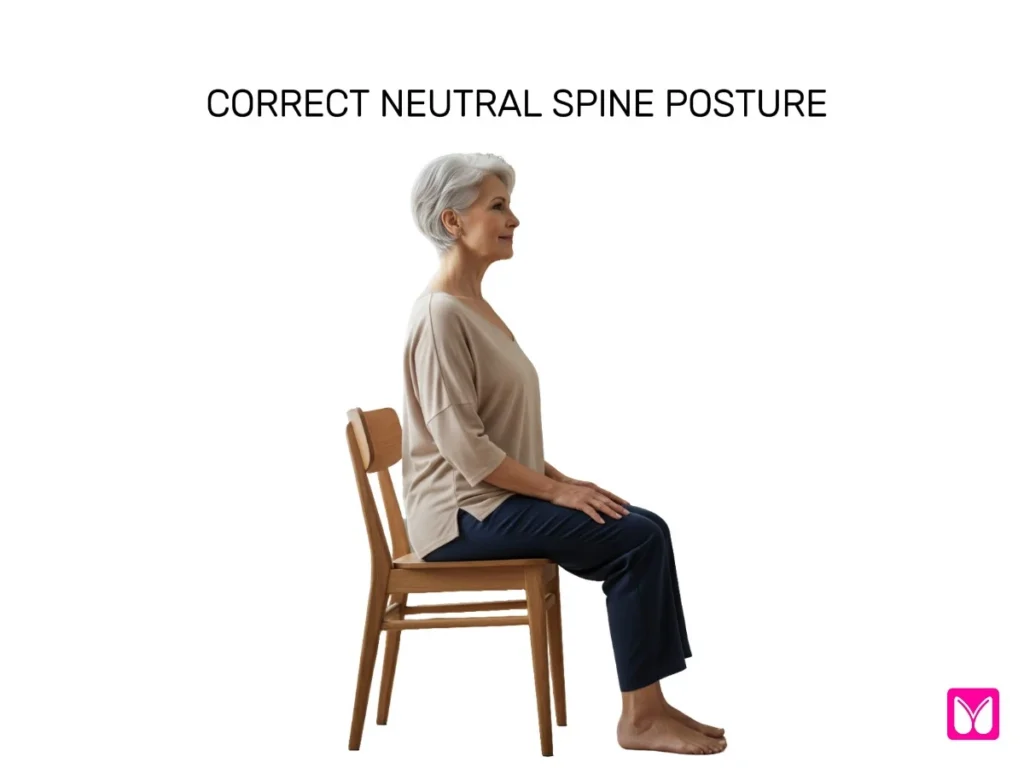
Adjustment: Instead of rounding your back to reach for your toes, keep your chest lifted and hinge only slightly at the hips.
- Embrace Slow Transitions: Rapid movements can lead to a sudden increase in blood pressure or imbalance, so embrace slow and steady movements.
Yogic Breathing Exercises for High Blood Pressure
Adjustment: Take at least two full breaths when moving from one pose to another. This “slow and steady” approach ensures that your muscles are fully engaged in supporting your body.
- Choose a Supportive Chair: Your equipment (chair) is your foundation in the practice; it doesn’t need to be fancy, but supportive. Use a sturdy, four-legged chair without wheels. Ensure it has a firm seat and a backrest that allows you to sit upright.
Mindfullyoga Tip: Place your chair on a non-slip surface or use a yoga mat or a firm carpet under it to prevent it from sliding.
- Supervised Practice: If you are new to yoga or have a high risk of fractures, supervised practice is highly recommended.
Mindfullyoga Safety Note: Always move within a controlled range of motion. If the pose feels like it is straining your back, causing a “pinching” sensation, ease back.
Is Chair Yoga Safe for Osteoarthritis?
If you are living with stiff, aching joints, you may be wondering, Is chair yoga safe for me? A 2017 randomized controlled trial published in the Journal of the American Geriatrics Society found that an 8-week chair yoga program significantly reduced pain and improved physical function in older adults with osteoarthritis.
Chair yoga is considered a supportive non-pharmacological approach for managing arthritis pain. By using a chair, you remove the additional stress from your sensitive joints, making chair yoga for seniors with arthritis an ideal way to stay active. It focuses on gentle mobility, which can help you improve joint lubrication and may help reduce that heavy, stiff feeling.
Why Gentle Chair Yoga May Help Joint Stiffness
Joint stiffness is a common part of aging and osteoarthritis. In this low-impact approach, because the movements are guided by the support of a chair, you can address your stiffness without the fear of overexertion on your joints.
Movement May Improve Joint Lubrication: Slow, controlled movement encourages circulation within the joints. Your joints are surrounded by a natural fluid called synovial fluid, which acts much like “oil in an engine.” When you remain still for too long, this fluid can thicken, leading to that heavy, “stuck” feeling. Gentle, rhythmic movement in a chair may help improve comfort by stimulating this fluid and allowing your bones to glide more smoothly.
Low-Impact Seated Format Reduces Load: Because in chair yoga, movements are performed while seated, less body weight is placed on the hips, legs, and spine. This allows you to move your hips and knees through their appropriate range of motion while the chair carries your weight.
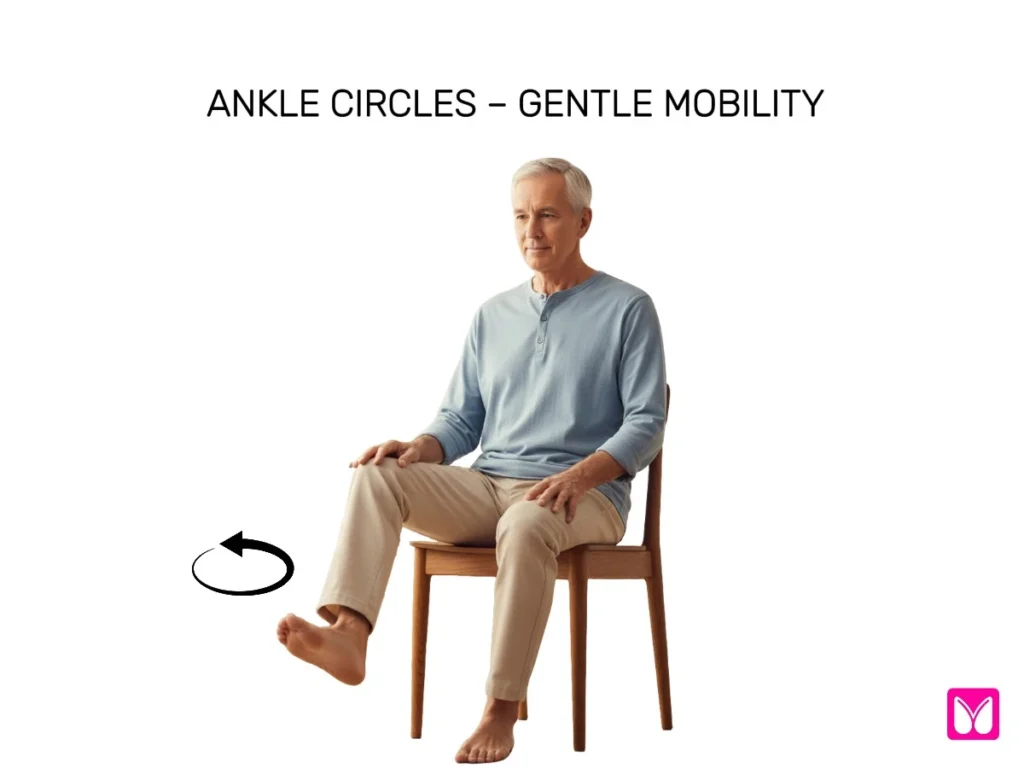
May Help Reduce Morning Stiffness: Light stretching and range of motion exercises in a chair can help the body gradually “wake up.” Simple seated movements, such as “ankle circles” or “seated marches,” can gently wake up your nervous system and warm up the connective tissues, making you more prepared for the day ahead.
Supporting independence in daily function: The ultimate goal for you
isn’t just a stretch, but keeping you and your movements independent.
Regular, gentle chair yoga sessions help you maintain the flexibility required for your daily functions, such as reaching for a cupboard or safely getting in and out of a car.
Chair yoga is not a cure for arthritis, but when practiced consistently and within a comfortable range of motion, it may help you improve comfort and support steady, cautions mobility. As always, speak with your healthcare provider before beginning a new exercise routine, especially if you have significant joint pain or other medical concerns.
Movements to Modify for Knee and Hip Arthritis
Living with arthritis doesn’t mean you have to stop moving; it means moving with more intent. When practicing chair yoga for arthritis in seniors, certain adjustments or poses should be approached cautiously to protect delicate cartilage in your lower joints. By listening to your body’s stop signal, you can enjoy the benefits without aggravating your symptoms further.
Avoid Deep Knee Bending: While it’s important to keep your knees mobile, extreme deep bending can increase the pressure within the joint capsule.
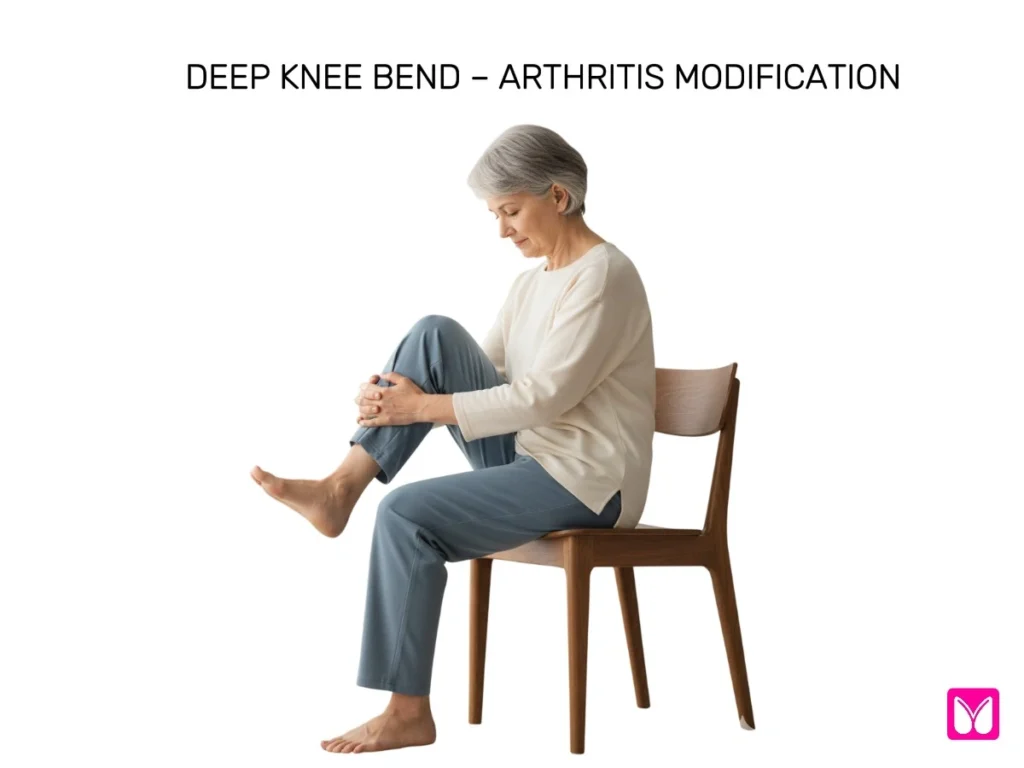
Mindfullyoga safety tip: In poses like a seated lunge or knee-to-chest stretch, it is often recommended to limit the bend. If pulling your knee toward your chest causes a sharp “pain,” simply lift the thigh a few inches off the chair.
Avoid Forcing Hip Rotation: In seniors with hip osteoarthritis, the “ball and socket” joint may have a smaller range of motion than it used to.
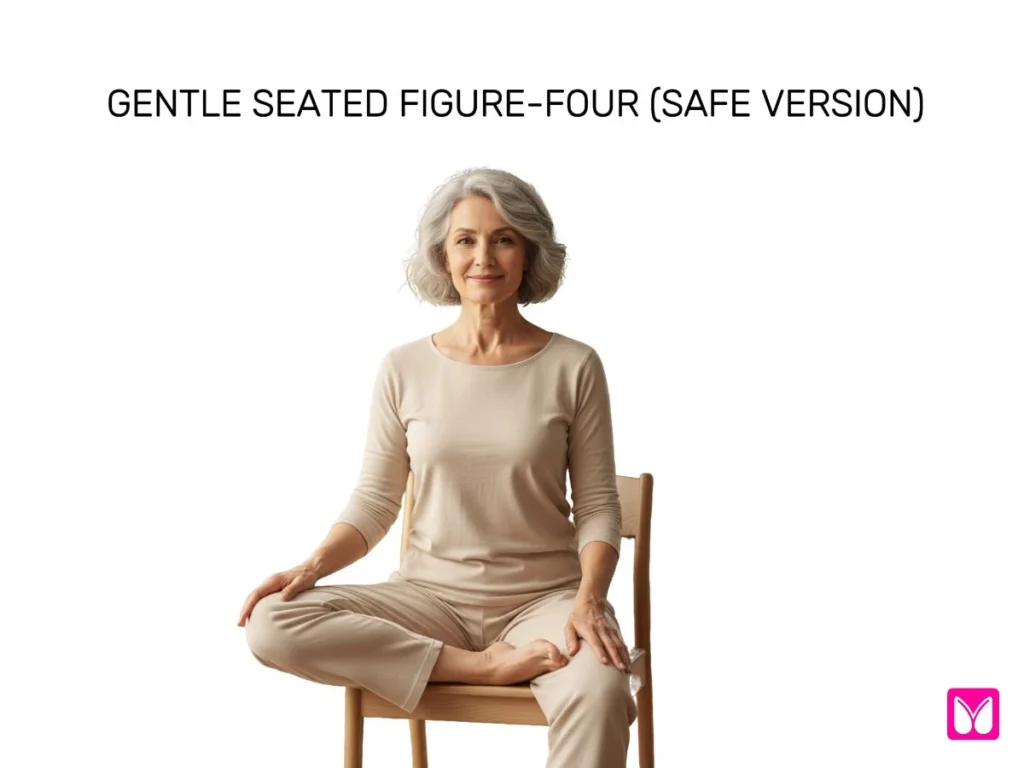
Mindfullyoga safety tip: If crossing your ankle over your knee is uncomfortable to you, try crossing your ankles instead and gently letting the knees fall outward. This provides a similar opening but without the strain.
Stay Within a Comfortable Range: Your goal should always be to feel a soft stretch, not a sharp pain. Practice the 70% Rule, move into a pose only until 70% of your maximum effort. This leaves a “safety buffer” ensuring you don’t accidentally overextend an inflamed area.
Move Slowly and with Control: Use a slow count of four to move into a pose and a count of four to move out. This controlled approach ensures that your muscles are supporting your movement instead of relying on momentum, which can be jarring.
Safety Tip: “If you have had a hip or knee replacement, some rotations and movements may be restricted by your surgeon. Always check your specific post-op guidelines before trying new poses.”
Best Ayurveda Medicine for Arthritis
When Chair Yoga May Not Be Appropriate for Osteoarthritis
While it is often said that movement is the best medicine for stiff joints, there are specific times when your body needs rest rather than activity.
Recognizing these signals is a key part of a “safety-first” approach.
If you encounter the following “red flag” symptoms, chair yoga should be paused or modified.
Severe Joint Swelling or Heat: Practicing yoga during an acute swelling can further irritate the joint lining. It is often best to wait until the swelling subsides and the joint returns to its normal temperature.
Locking, Catching, or Instability: In arthritis, you can sometimes feel like your joints are “giving out,” or you are physically stuck at a place.
If you experience locking or instability, avoid any poses that require you to put weight on that limb or move it through a wide range of motion. This can be a signal to consult your healthcare provider, ensuring the joint is stable before you start again.
Recent Joint Injections: Following a recent joint injection for arthritis, doctors typically recommend rest. Resuming your practice too early can interfere with your medication’s effectiveness or cause a “steroid flare” (temporary increase in pain). Always wait for your doctor’s green light before returning to the chair.
Sudden or Sharp Pain Increase: Arthritis pain is generally a dull ache or stiffness. If you experience sudden, sharp pain while performing movements, stop immediately.
Chair yoga movement should never cause “new” or “alarming” pain to you. If your joint pain lasts for hours after your session or keeps you awake at night, it is a sign that the intensity was too high and you have to dial it back a little.
Trust Your Intuition: You know your body better than anyone else. If a session doesn’t feel right today, swap your yoga practice for a gentle heating pad or a brief period of rest.
Is Chair Yoga Safe for Sciatica?
When it comes to nerve pain like sciatica, many seniors are hesitant to try new exercises. However, research on yoga-based movement programs suggests that gentle, low-impact activity may support people dealing with back-related nerve discomfort. A 2015 evidence review by the National Center for Complementary and Integrative Health reported that yoga programs designed for back pain may help improve physical function and reduce pain intensity in people with chronic low-back conditions. Sciatica usually happens when something in the lower back presses on or irritates the sciatic nerve; certain movements can make symptoms worse.
Because the chair provides a stable, upright base, it helps you avoid the deep forward folding and “slumping” often found in floor yoga, both of which can aggravate a sensitive nerve. Practicing movements in chair yoga may provide a safer entry point for you by avoiding high-impact exercises and deep spinal strain.
How Chair Yoga May Support Nerve Comfort
If you have ever felt a zapping or radiating ache of nerve pain in your lower back, you might be hesitant to try any form of new exercise. However, gentle chair yoga is specially designed to soothe your nerves, not stress them.
It achieves this by focusing on three key principles of nerve care:
Gentle Stretching to Reduce Muscular Tension: In some cases, sciatic nerve discomfort is influenced by tight surrounding piriformis muscles in the hip. Seated stretches, like the seated four pose of chair yoga, can help you release tension in the hip area, helping to improve comfort to the sciatic nerve.
Neutral Spine Positioning: Sitting tall without rounding or over-arching the lower back during practice helps you reduce unnecessary pressure on spinal structures, which decompresses your vertebrae and gives the sciatic nerve “room to breathe.”
Avoid Prolonged Compression: Sitting for longer durations can sometimes be a major trigger for sciatica pain. Chair yoga introduces you to dynamic, low-impact movement that encourages blood flow and “nerve gliding,” helping it move freely without getting stuck or inflamed.
“It is important to remember that its effectiveness depends on the underlying cause. Whether your sciatica stems from a bulging disc or muscular tightness will determine which movements are best for you. This is why a “safety-first” approach involves moving slowly and listening closely to your body’s signals.”
Movements That May Aggravate Sciatic Nerve Symptoms
When your joints feel stiff, the last thing you want to hear is ‘just move more.’ But gentle, supported movement can actually feel relieving — not exhausting. When practicing gentle chair yoga for sciatica, you need to know which common movements can accidentally trigger or increase your discomfort.
To protect your nerve health, you should approach the following movements with caution:
Deep Forward Folds: Reaching down towards your toes during forward folds can put extreme stress on your spine and overstretch your sciatic nerve. When nerve sensitivity is present, you should approach deep folding cautiously or avoid it.
Aggressive Hamstring Stretches: You might get tempted to “stretch out” pain in your leg, pulling a leg too high or too hard can actually irritate an already inflamed nerve.
Twisting with a Rounded Spine: Generally, twisting is wonderful for back mobility, but doing so while “slumped” in your chair creates a shearing force on your discs. Always sit as tall as possible in your chair before starting a gentle turn, and never use the chair’s arms to force a deeper twist.
Prolonged Seated Slouching: Sitting for long periods with a curved lower back can increase nerve compression. Try to maintain an upright position without slouching back in the chair, and take brief movement breaks to remove the unnecessary strain.
Important Safety Note: While a dull ache in the hip or thigh is common, symptoms that travel below the knee should not be ignored. If you experience numbness, weakness, or a “pins and needles” sensation that reaches your calf or foot, it is a signal to pause your yoga practice and consult with a healthcare professional.
When to Consult a Healthcare Professional
Chair yoga for sciatica can be considered a wonderful tool for maintaining comfort and mobility. But it is not a substitute for medical diagnosis or treatment. Nerve health is delicate, and in 2026, medical professionals are emphasizing the importance of recognizing this thin “line” between manageable stiffness and a situation that requires expert care.
For your peace of mind, please pause your practice and consult your healthcare provider if you experience any of the following:
Numbness or Tingling: If you notice a persistent “pins and needles” sensation or a loss of feeling in your leg, foot, or toes that does not go away with rest.
Progressive Weakness: If you feel your legs are heavy, or you find yourself stumbling, tripping over your feet, or having difficulty standing up from the chair. This may indicate that your sciatic nerve is under constant stress.
Pain Lasting Several Weeks: If nerve-related pain continues for several weeks despite rest and gentle movement, a professional evaluation can help you determine the underlying cause of it.
Emergency “Red Flag” Symptoms
These situations are rare, but it’s helpful to know the signs so you can feel confident and prepared. If this happens, please seek urgent medical care right away:
- Sudden loss of bladder or bowel control (difficulty starting your stream or accidental leakage).
- “Saddle anesthesia” (numbness in the area that will touch a saddle, like the groin, buttocks, or inner thighs).
- Severe weakness in both legs at the same time.
A Calm Reminder: By staying aware of these boundaries, you are taking the most proactive step possible toward a long, active, and safe yoga journey.
When Chair Yoga May Not Be Appropriate
Chair yoga is considered one of the low-risk and most accessible ways to stay active by healthcare experts, but it is not always the right choice for every person at every moment. You should know when to honor your body by choosing rest over movement.
There are specific situations when a seated yoga practice should be postponed until you have received a “green light” from your healthcare provider.
Key Times to Pause Your Practice
If you are managing the following, consider consulting your physician or physical therapist before starting or continuing again:
- Recent Vertebral Fractures: If you have experienced a recent spinal or vertebral fracture, especially related to osteoporosis, you should resume movement only under medical guidance. Certain bending or twisting motions can put stress on your healing joints.
- Severe Nerve Compression: If your sciatica or back pain is accompanied by significant numbness or sharp, electric shocks that occur with any movement, your nerve may be under significant distress. In these cases, even “gentle” stretching can inadvertently increase your nerve compression.
- Post-Surgical Spine Recovery: After spine surgery, there is typically a structured rehabilitation plan where your body goes through a delicate rebuilding phase. Starting chair yoga or any type of movement may interfere with healing. Always follow your surgeon’s or physical therapist’s recommendations.
- Uncontrolled or Changing Pain: Yoga is intended to support your well-being, not create new distress and problems for you. If pain is “uncontrolled” (meaning it is constant, keeps you awake at night, or changes rapidly in intensity), it can be your body’s way of asking for medical help, not another stretch.
Listening to Your Body’s “Red Lights”: If at any point during a session you feel a sudden “pop,” a sharp stabbing sensation, or a wave of dizziness, please stop immediately.
Choosing to rest is not a setback; it is a responsible part of a long-term wellness plan.
How to Make Chair Yoga Safer at Home
Creating a safe environment is as important as the movements themselves in chair yoga practice. Since you will not have an instructor with you to monitor your alignment, and you may be practicing at home, a little extra awareness can go a long way. By following these conservative, practical steps, you can enjoy the benefits of chair yoga.
Your Safety Setup Checklist
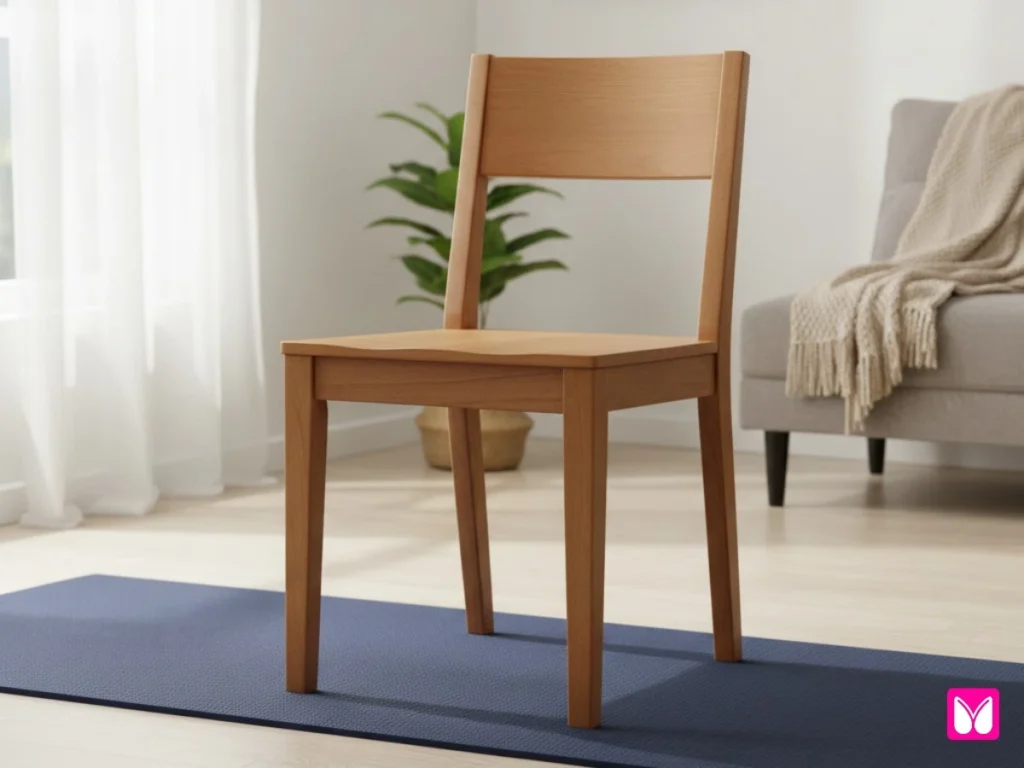
Before starting your first stretch, ensure your environment is set up for success.
Use a Sturdy, Arm less Chair: Choose a firm chair with four solid legs, like a kitchen or dining chair. An armless chair is often better because it allows you to stretch and move freely without hitting the chair frame.
Keep a Neutral Spine: Imagine a string pulling the top of your head toward the ceiling. Avoid the temptation to “slump” or round your back; instead, focus on sitting “tall and proud.” This should be your golden rule for your bone and nerve safety.
Move Slowly and Mindfully: Use a slow, rhythmic pace. Try counting to four as you move into a pose and four as you release it.
Never Push Into Pain: In yoga, we often talk about a “sweet stretch,” a sensation of stretching that feels productive. When this sensation turns into sharp pinching pain, you have gone too far.
Stop If Symptoms Worsen: If you notice increased swelling, radiating pain, dizziness, or discomfort that lingers after practice, stop or pause your practice and consult your healthcare provider.
The 70% Rule: Aim to move only 70% of your range of motion. Leaving the 30% buffer ensures that you are not overstressing your joints or nerves.
How This Guide Was Prepared
This guide was created using publicly available clinical research and senior fitness safety recommendations from reputable organizations, including the National Institutes of Health, the National Institute on Aging, and the Arthritis Foundation.
This article is for educational purposes only and does not replace personalized medical advice. Readers should consult a qualified healthcare professional before beginning any new exercise routine.
Frequently Asked Questions
Here are the most common questions seniors ask about practicing chair yoga with osteoporosis, arthritis, and sciatica.
- Can seniors with osteoporosis safely do chair yoga?
Many seniors with osteoporosis can participate in chair yoga when movements are modified appropriately. The chair provides the essential stability, reducing fall risk, which is a primary concern for osteoporosis. By avoiding deep bends and keeping a neutral spine, seniors can strengthen the muscles that support their bones without putting excessive pressure on the vertebrae.
- Is chair yoga better than floor yoga for arthritis?
Chair yoga is not necessarily better, but it is more accessible for seniors with arthritis. The seated format reduces the weight-bearing pressure on the knees and hip joints and can feel more stable than getting up and down in traditional yoga. For individuals with joint stiffness or balance concerns, chair yoga may offer a safer starting point.
- Can chair yoga make sciatica worse?
If performed incorrectly, any movement can aggravate a sensitive nerve. Chair yoga can also make sciatica worse if you engage in “slumped” sitting or deep forward folds that compress the spinal discs. But when practiced with neutral spine and gentle hip opening movements, it can reduce muscle tension, which is helpful in sciatica.
- How often should seniors with joint conditions practice?
Consistency is usually more beneficial than intensity. For those managing joint stiffness or osteoporosis, a 15 to 20-minute session three times a week is often recommended. This frequency keeps the joints lubricated and the muscles engaged without causing over-fatigue.
Safety Tip: If you are ever unsure about a specific pose, it is perfectly okay to simply sit tall and breathe. Deep, mindful breathing is also a core part of yoga, and it is generally considered safe.
Check out our Kriya Yoga Breathing techniques
Moving Forward with Confidence and Safety
Moving your body should feel like an invitation to ease, not a chore that causes you to worry. Chair yoga can be a supportive way to gently stay active, especially when joint stiffness, balance concerns, or nerve sensitivity make other forms of exercise feel difficult. The seated format of yoga supports stability and controlled movements.
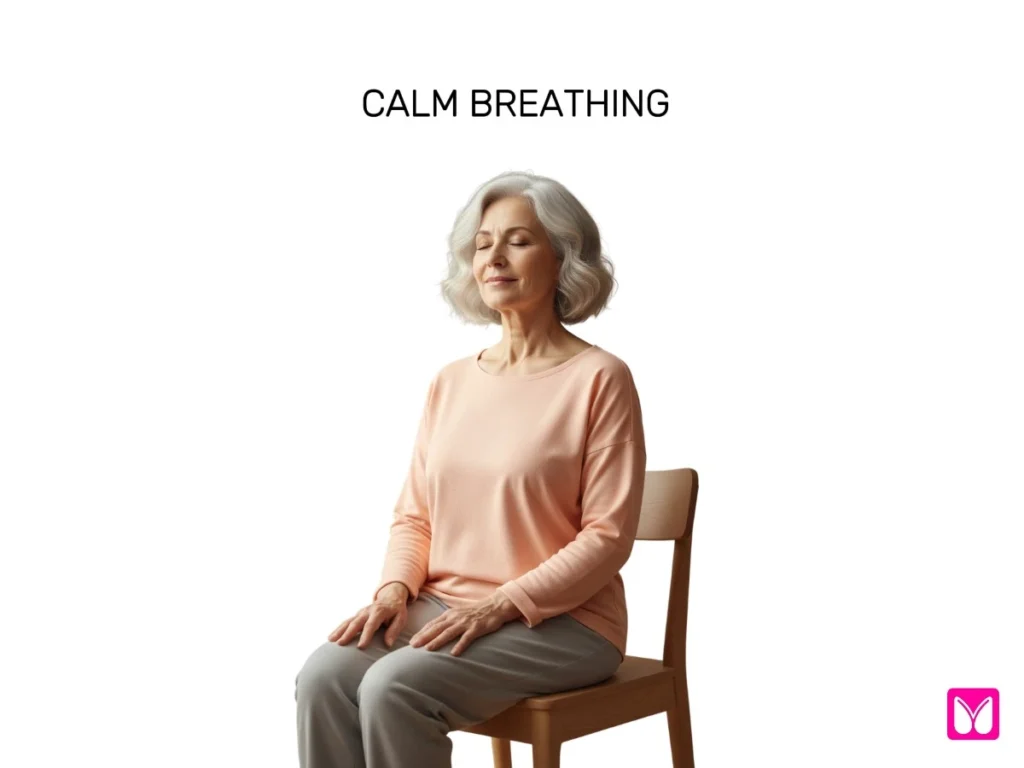
That said, small adjustments like keeping a neutral spine, avoiding deep forward bending or twisting, and staying in your range of motion should be made to reap the full rewards of chair yoga without worrying, because what works for one may not work for another person. While doing chair yoga, mild stretching sensations can be normal, but sharp, worsening, or radiating pain is not; it is a sign from your body to pause your practice and take a rest.
It’s always a smart and caring step to check in with your doctor, particularly if you have osteoporosis, advanced arthritis, or persistent nerve symptoms. A healthcare provider can help you determine whether chair yoga is appropriate for your specific condition.
Lastly, chair yoga isn’t just about flexibility; it’s about building the confidence to move through your world with a little more grace and a lot less fear. Fear of movement is common when your body has been through pain. But with patience, support, and small safe steps, you can reclaim your lost confidence again.
Each program emphasizes:
• Stability and fall prevention
• Joint-friendly mobility
• Slow, guided instruction
• Movements designed for real aging bodies
Because movement should feel supportive, not overwhelming.
How This Guide Was Prepared
This guide was developed using publicly available research and conservative senior fitness recommendations from reputable health organizations, including the National Institutes of Health (NIH), the National Institute on Aging (NIA), the Arthritis Foundation, and peer-reviewed clinical studies on osteoporosis, osteoarthritis, and low-back pain.
The movement guidance in this article follows a safety-first, low-impact approach designed specifically for older adults. Recommendations prioritize spinal protection, joint stability, fall prevention, and gradual range-of-motion development.
Because individual health histories vary, the information provided here is educational in nature and should not replace personalized medical advice, diagnosis, or treatment from a qualified healthcare professional.
Our goal is to help seniors make informed, confident decisions about gentle movement not to replace medical care.
About the Author
Rahul Kulhari is a wellness writer focused on senior mobility, mindful movement, and safe at-home fitness practices. His work centers on translating research-backed health information into practical, easy-to-understand guidance for older adults and caregivers. He writes with a strong emphasis on clarity, safety, and accessibility.
About the Reviewer
Nandini Sharma is the co-founder of Mindfullyoga and a chair yoga specialist dedicated to helping older adults move safely and confidently. After leaving her corporate career due to burnout, she devoted her work to mindful living and gentle movement education. She has helped thousands of seniors build strength, improve mobility, and reduce fear of movement through carefully designed chair yoga programs tailored to aging bodies.
Her review of this article focused on safety alignment, clarity of instructions, and suitability for seniors with joint or spine concerns.
Also Read:
Yoga for Beginners: Complete Step-by-Step Guide to Start at Home 2026
Simple Yoga Poses: A Beginner’s Guide to Daily Mobility & Calm (Free PDF)
Goat Yoga: Everything You Need to Know Before Your First Class
8 Powerful Bhagavad Gita Karma Yoga Quotes and Sanskrit Slokas You Should Know
Vinyasa Yoga vs Hatha Yoga: Which One is Better for You?
Free 28-Day Chair Yoga for Seniors (Printable PDF & Chart + Daily Challenge Plan)
Yoga for Beginners: Complete Step-by-Step Guide to Start at Home 2026 (Poses, Routine & Free PDF)