

-
 by
Nandini Sharma
by
Nandini Sharma - March 23, 2026
- 0 Comments

Table of Contents
Is Chair Yoga a Scam? Here’s the Short Answer
No, chair yoga is not a scam. It is a legitimate, low-impact form of exercise designed to improve mobility, flexibility, and balance for seniors.
However, some online programs and apps may use misleading marketing, especially around weight loss or “free” trials. The key is to choose programs with clear pricing and realistic claims.
As someone who has created and reviewed structured chair yoga routines specifically for seniors, I’ve seen both its real benefits and how unrealistic marketing can create confusion.
Chair yoga has grown rapidly in popularity, especially through online programs and mobile apps, and that growth has led to both genuine benefits and marketing confusion.
If you’ve been wondering whether chair yoga is a scam, you’re not alone. Many seniors feel cautious after seeing bold ads promising rapid weight loss or “free” programs that later require payment. That caution is understandable, especially when your health and safety matter.
Chair yoga itself is not a scam. It is a legitimate, low-impact form of exercise designed to improve mobility, balance, flexibility, and breathing control. Research and clinical experience support its benefits for many older adults when practiced safely and with appropriate modifications.
However, chair yoga is not a miracle weight-loss solution. It can support gentle movement and overall wellness, but it does not produce dramatic body transformations on its own. While many classes and videos are free, some structured programs and apps operate on subscription models that may not always be clearly explained.
The key is realistic expectations, transparent pricing, and choosing programs that prioritize safety over marketing hype.
Why Some Seniors Worry That Chair Yoga Might Be a Scam

If you’ve typed “chair yoga scam” or “is chair workout a scam” into Google, that concern likely didn’t appear out of nowhere. It often follows an advertisement that feels overly bold, promising dramatic weight loss in 14 or 28 days, showcasing dramatic before-and-after photos, or labeling a program “free” only to later reveal a subscription.
Experiences like these can make anyone cautious. For seniors in particular, protecting both health and finances is a priority — and it should be.
One of the most common concerns stems from aggressive weight-loss marketing. Some ads imply that chair yoga alone can rapidly melt belly fat or completely transform your body without dietary changes or additional activity. While chair yoga can support mobility, flexibility, and overall wellness, those claims go far beyond what gentle, seated movement is designed to accomplish.
Another frequent frustration involves “free trial” confusion. A program may advertise itself as free while requesting credit card details upfront. If cancellation terms are unclear or difficult to navigate, unexpected charges can follow, understandably leading to feelings of mistrust.
It’s also worth noting that subscription complaints are common across the broader fitness app industry. When cancellation buttons are hard to find or customer support is slow, users may label the entire experience a scam, even if the exercise method itself is legitimate.
After creating and reviewing structured chair yoga programs specifically for beginners and older adults, I’ve seen both sides: the genuine benefits of safe, seated movement — and the confusion that unclear marketing can create. The concern is rarely about the movement itself. More often, it’s about transparency.
And that distinction matters.
What Chair Yoga Actually Is (And What It Is Not)

Before deciding whether something is legitimate, it helps to understand what it truly is.
Chair yoga is a gentle, adaptive style of yoga that modifies traditional poses so they can be performed while seated or with the support of a sturdy chair. Many chair yoga exercises are simplified versions of familiar movements such as seated twists, gentle forward folds, ankle circles, arm raises, and supported backbends. The goal is not intensity. The goal is accessibility and safety.
For many older adults particularly those with balance concerns, joint stiffness, arthritis, or limited mobility chair yoga provides a safer entry point into consistent movement. It reduces the need to get down to the floor, minimizes strain on knees and hips, and allows participants to move at a controlled, comfortable pace. This is why it’s often recommended as a low-impact exercise option for older adults who may not tolerate traditional floor-based routines.
Chair yoga for limited mobility typically focuses on three core pillars:
- Mobility – improving joint range of motion and reducing stiffness
- Breathing – supporting steady, diaphragmatic breathing to calm the nervous system
- Balance support – maintaining coordination and confidence through controlled movement
What chair yoga is not is equally important.
It is not high-intensity cardiovascular training.
It is not heavy resistance or strength training.
And it is not designed as a rapid fat-loss program.
While it may contribute to overall activity levels and wellness particularly when practiced consistently its primary purpose is gentle, supportive movement. It exists to make exercise feel possible and safe for individuals who may otherwise feel intimidated, unstable, or excluded in traditional fitness settings.
When understood in its proper context, chair yoga makes sense. It is not meant to replace every other form of exercise. It is meant to create a sustainable starting point especially for seniors who need stability, confidence, and gradual progress.
In many rehabilitation and senior wellness settings, seated adaptations are used specifically to reduce fall risk while maintaining gentle mobility work.
Does Chair Yoga Actually Work? What the Research Shows

When people ask, “Does chair yoga really work?” they’re usually asking two important questions:
Will it make a meaningful difference in my body? And is it safe for someone my age?
The encouraging answer is yes — chair yoga can be effective, particularly for flexibility, balance, and stress reduction. However, its benefits are gradual and supportive rather than dramatic or immediate.
Here’s what research and clinical observations suggest.
A. Flexibility & Mobility
One of the most consistently reported benefits of chair yoga is improved joint range of motion.
Gentle, repeated movement — including seated twists, shoulder rolls, ankle circles, and supported forward folds — helps lubricate joints and reduce stiffness in the hips, knees, shoulders, and spine. For adults over 60, even modest improvements in mobility can translate into meaningful functional gains, such as dressing more comfortably, climbing stairs with greater ease, or reaching overhead without strain.
Studies examining seated or adapted yoga programs for older adults have shown improvements in flexibility and functional movement when practiced consistently over several weeks. The goal is not extreme stretching — it’s restoring comfortable, usable movement patterns.
B. Balance & Fall Prevention
Balance becomes increasingly important with age. Falls remain one of the leading causes of injury among adults over 60, making balance training essential.
Although chair yoga is primarily seated, many structured routines incorporate supported standing poses using the chair for stability. These controlled weight-shifting movements engage stabilizing muscles and improve coordination in a low-risk environment.
Research on adapted yoga and fall-prevention programs suggests that gentle balance training — especially when combined with light strengthening — may contribute to reduced fall risk over time. Chair yoga’s slow, supported structure makes it accessible for individuals who may not feel safe in traditional floor-based classes.
From a chair yoga safety perspective, that accessibility is one of its strongest advantages.
C. Stress & Mental Clarity
Chair yoga also offers measurable mental and emotional benefits.
Breathing techniques commonly used in chair yoga activate the parasympathetic nervous system — the body’s “rest and restore” response. Slow, diaphragmatic breathing can lower heart rate, reduce perceived stress, and improve focus.
Organizations such as Harvard Health Publishing have discussed how gentle yoga practices may support stress regulation, mood stability, and overall well-being. While chair yoga is not a medical treatment for anxiety or depression, it can serve as a supportive complementary practice within a broader wellness plan.
The Balanced Reality
Chair yoga does work — when expectations align with its purpose.
It improves mobility.
It supports balance.
It encourages calm, controlled breathing.
What it does not do is function as a high-calorie-burning workout or produce a rapid physical transformation. Its strength lies in consistency, safety, and gradual progress.
For many seniors, that steady and sustainable approach is exactly what makes it effective.
Does Chair Yoga Work for Weight Loss?
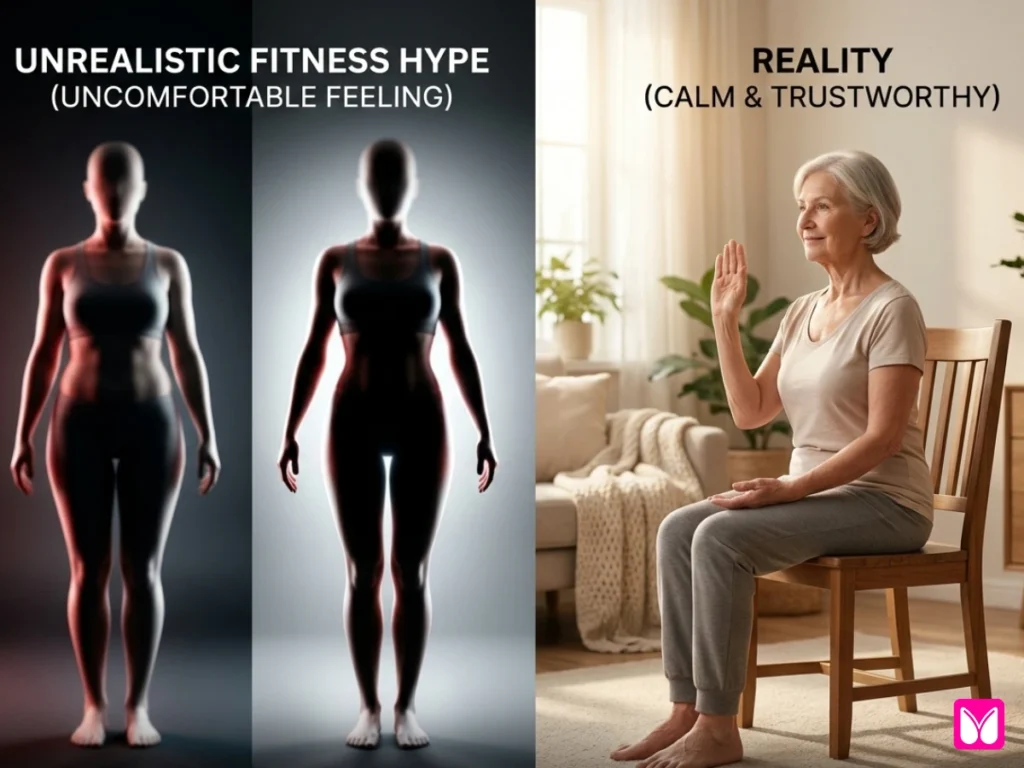
This is where much of the confusion — and frustration — begins.
If you’ve searched “does chair yoga work for weight loss” or read chair yoga reviews for weight loss, you’ve probably seen mixed experiences. Some people report feeling stronger and more mobile. Others feel disappointed because they expected dramatic physical changes.
The honest answer is this: chair yoga can support weight management — but it is not designed to produce rapid or significant fat loss on its own.
Let’s break that down clearly.
A. Calorie Burn Reality
Chair yoga is generally considered a low- to moderate-intensity activity.
A typical session may burn fewer calories than brisk walking, cycling, or resistance training, depending on duration and individual effort level. Most routines emphasize controlled movement, stretching, breathing, and light muscle engagement rather than sustained cardiovascular exertion.
That does not make it ineffective. It simply means its primary goal is improving mobility, stability, and body awareness — not maximizing calorie expenditure.
When chair yoga is marketed as a standalone solution for fast, visible fat loss, expectations can easily become misaligned with physiological reality.
B. When It Can Support Weight Loss
Chair yoga can contribute to weight management in indirect but meaningful ways:
1. Consistency
Because it’s joint-friendly and accessible, many seniors are more likely to practice it regularly. Long-term consistency plays a far greater role in health outcomes than short bursts of high intensity.
2. Improved mobility → increased daily movement
As stiffness decreases and balance improves, daily activity often increases naturally — walking more confidently, standing longer, or engaging in light household tasks that may have felt difficult before.
3. Reduced stress-related eating
Breathing and relaxation techniques activate the body’s calming (parasympathetic) response. Lower stress levels may help reduce emotional or stress-driven eating patterns, which can indirectly support weight stability.
So, is chair yoga good for weight loss?
It can be part of a broader, sustainable lifestyle approach — especially when combined with balanced nutrition and additional movement appropriate for your health status.
C. When Marketing Goes Too Far
This is often where the “is chair yoga a scam for weight loss” question originates.
Be cautious of claims such as:
- “Lose belly fat in 14 days”
- Dramatic before-and-after photos without context
- 28-day total body transformation promises
- Statements implying no dietary or lifestyle changes are needed
Spot reduction — losing fat from one specific area of the body — is not supported by exercise science. Fat loss occurs systemically and is influenced by overall energy balance, not isolated movements.
When marketing exaggerates outcomes, trust erodes — even if the movement practice itself remains legitimate.
Quick Reality Check
| Claim | Reality |
|---|---|
| Rapid fat loss | Not supported by seated exercise alone |
| Improved flexibility | Supported by consistent practice |
| High calorie burn | Typically low to moderate |
| Joint-friendly | Yes, when properly instructed |
The Bottom Line
Chair yoga works best as a foundation, not a miracle solution.
It helps you move safely.
It builds confidence.
It supports consistency.
For many seniors, that steady, sustainable progress is far more valuable than a short-term promise that sounds impressive in marketing but doesn’t align with how the body actually changes.
Is Chair Yoga Free or Does It Cost Money?
One of the most common and practical questions seniors ask is simple:
Does chair yoga cost money — or is chair yoga free?

The answer is: it can be either. There are genuinely free options available, as well as paid programs that offer additional structure, guidance, or accountability. The most important step is understanding exactly what you’re signing up for before entering payment information.
Let’s walk through this carefully.
A. Free Options
If budget is a concern, there are several legitimate ways to access free chair yoga for seniors.
1. YouTube Classes
Many certified instructors share full-length chair yoga sessions at no cost. Quality and instruction style can vary, so it’s helpful to choose videos that clearly mention senior safety, proper alignment, and modifications.
2. Community Centers
Local senior centers, churches, and recreation departments often offer free or low-cost chair yoga classes as part of community wellness programming. These classes may also provide social interaction, which is an added benefit.
3. Library Wellness Programs
Some public libraries host free wellness workshops, including gentle yoga sessions. Libraries may also provide access to free digital platforms that include exercise content.
Free options can be an excellent starting point — especially if you want to explore whether chair yoga feels comfortable and sustainable for you.
B. Paid Options
There are also situations where chair yoga involves a cost.
1. Studio Classes
In-person classes at yoga studios or wellness centers typically charge per session or through monthly memberships. Depending on location, fees may range from modest community rates to higher studio pricing. The benefit is more personalized guidance and hands-on correction.
2. Structured Programs
Some instructors offer multi-week chair yoga programs with progressive plans tailored for seniors. These may be one-time purchases or bundled packages that provide a clearer roadmap than standalone videos.
3. Subscription Apps
Fitness apps sometimes include chair yoga within broader wellness platforms. These usually operate on monthly or annual subscription models. If you’re searching for the best free chair yoga app for seniors, read carefully — some platforms advertise “free access” but require payment after a short trial period.
Paid programs are not inherently problematic. In fact, structured support can improve consistency and confidence. Concerns arise only when pricing details are unclear or cancellation policies are difficult to locate.
C. What to Check Before Paying
Before entering credit card details, take a moment to protect yourself. Look for:
- Clear auto-renewal terms — Does the subscription renew monthly or annually? Is this disclosed before checkout?
- Refund policy — Is there a money-back guarantee? What is the time window?
- Transparent pricing page — Is the full cost visible upfront, including taxes or add-ons?
- Instructor credentials — Is the program led by a certified yoga instructor or qualified fitness professional with experience working with older adults?
If pricing feels hidden or cancellation instructions are hard to find, pause. A legitimate program should make these details straightforward and accessible.
The Bottom Line
Chair yoga itself is not expensive to practice — and it absolutely does not require payment to get started. Free resources are widely available.
When choosing a paid option, look for clarity, transparency, and respect. A senior-friendly program should make both health guidance and financial terms easy to understand. Your well-being — and your finances — deserve that level of protection.
Warning Signs of Misleading Chair Yoga Programs
Before you sign up for any chair yoga program, it’s worth taking a moment to pause and look a little closer.
Not because chair yoga itself is unsafe, but because the way it’s marketed online isn’t always honest.
Chair yoga is real — but not everything sold around it is.
Over time, I’ve seen a pattern in the kinds of programs that leave seniors feeling confused, disappointed, or even misled. Knowing what to look for can help you protect both your health and your money.o
Here are some common red flags to watch for:
1. Promises of Rapid Weight Loss
Be cautious of claims like:
- “Lose belly fat in 14 days”
- “Drop 10 pounds in 28 days with chair yoga”
Chair yoga is a low-impact, gentle form of movement. It can support mobility, flexibility, and overall wellness — but it is not designed for rapid fat loss.
Sustainable changes in weight typically involve a combination of movement, nutrition, and time. When a program promises dramatic results from seated exercise alone, expectations are often being set unrealistically.
2. “Free” Programs That Require Credit Card Details
Some platforms advertise “free chair yoga for seniors,” but ask for payment information upfront.
This doesn’t automatically mean it’s a scam — many services use free trials — but transparency matters.
Before signing up, ask:
- Is this a trial that converts into a paid subscription?
- When will I be charged?
- How do I cancel if I don’t want to continue?
If these answers are unclear or difficult to find, it’s a good reason to pause.
3. No Clear Refund or Cancellation Policy
A trustworthy program should make it easy to understand:
- how to cancel
- whether refunds are available
- how billing works
If cancellation requires multiple steps, hidden links, or contacting support without clear instructions, it can lead to frustration later.
Clarity is a sign of respect for the user.
4. No Information About Instructor Qualifications
Chair yoga for seniors should be guided by someone who understands:
- joint limitations
- balance concerns
- age-related conditions
If a program does not clearly mention who is teaching the sessions or what their experience is, that’s something to take seriously.
Safe instruction matters — especially for older adults.
5. Overly Dramatic Before-and-After Transformations
Images showing extreme “before and after” changes can be powerful — but they often lack context.
They may not reflect:
- how long the transformation actually took
- whether other lifestyle changes were involved
- whether the results are typical
Chair yoga is about safe, gradual progress, not dramatic overnight change.
A Simple Way to Think About It
A genuine chair yoga program will usually feel:
- calm, not pushy
- clear, not confusing
- realistic, not exaggerated
If something feels rushed, overly persuasive, or too good to be true, it’s okay to step back and take your time.
Your health and trust matter more than any limited-time offer.
Gentle Starting Point
If you’re unsure where to begin, it’s often best to start with something simple and structured.
For example, you can follow a 7 Day Chair Yoga Plan for Seniors to build consistency at your own pace, without pressure or unrealistic expectations.
And if you’re completely new to yoga, exploring a beginner yoga guide with basic poses can help you understand how movement should feel before trying more structured routines.
Are Chair Yoga Apps a Scam?
With the rise of wellness apps, it’s understandable that some seniors ask, “Is a chair yoga app a scam?” Searches like “28 day chair yoga reviews,” “chair yoga subscription cancellation,” and even “chair yoga scam” often stem from frustration — not necessarily from the exercise itself.

The important distinction is this:
Chair yoga as a practice is legitimate. Frustration typically relates to billing models or marketing expectations — not the movements themselves.
Let’s unpack that calmly and clearly.
A. Why Some Users Feel Frustrated
1. Subscription billing confusion
Many fitness apps operate on recurring subscription models. A user may believe they’re signing up for a one-time payment, only to later realize the program renews monthly or annually.
If renewal terms were overlooked — or not clearly understood — this can feel surprising or frustrating.
This issue is not unique to chair yoga apps. It’s common across the broader digital subscription industry.
2. Marketing tone vs. realistic outcomes
Some wellness platforms use bold transformation language — such as noticeable results in 28 days, visible weight loss, or age-defying benefits.
When results turn out to be gradual — which is normal for gentle exercise — users may feel disappointed.
You may see mixed consumer reviews about large wellness apps such as BetterMe or Reverse Health. Public feedback often focuses on subscription terms, cancellation processes, or weight loss expectations — rather than claims that the exercise content itself is fake.
That distinction matters.
3. Cancellation process challenges
Across the app industry, one common complaint involves difficulty locating cancellation settings.
If a cancellation option requires navigating multiple menus, contacting support, or acting within a narrow timeframe, users may feel frustrated — even if the service itself is legitimate.
Frustration with billing processes does not automatically mean the exercise content is fraudulent. However, it does highlight the importance of transparency and clear communication.
B. How to Identify a Legitimate Program
If you’re considering a chair yoga app, here are protective steps you can take:
✔ Transparent pricing
The full cost should be visible before checkout. Look for clear explanations of renewal frequency and trial terms.
✔ Clear subscription terms
You should know exactly how and when you can cancel — before entering payment information.
✔ Medical disclaimers
Responsible platforms include guidance advising users to consult a healthcare provider, particularly if they have chronic conditions or balance concerns.
✔ Instructor credentials
Legitimate programs clearly display who is leading the sessions and outline their training or certifications.
✔ Accessible customer support
There should be an easy-to-find help center, contact email, or support page.
The Balanced Perspective
Chair yoga apps are tools. Some offer structured guidance and helpful routines. Others may lean heavily on persuasive marketing language.
The difference between a supportive experience and a frustrating one often comes down to:
- Clear pricing
- Transparent subscription terms
- Realistic expectations
If you take a few minutes to review the terms carefully and approach transformation promises with healthy skepticism, you can avoid most of the issues that lead people to question whether chair yoga programs are legitimate.
The goal is not to chase a dramatic 28-day promise.
The goal is to choose a program that respects your health, your time, and your budget.
Is Chair Yoga Good or Bad for Seniors?
When people ask whether chair yoga is good or bad, they’re usually asking something deeper:
Is this actually safe and worthwhile for someone my age?

For most older adults, chair yoga is not only safe — it can be genuinely beneficial when practiced appropriately. Gentle movement is widely recognized by health organizations, including the Centers for Disease Control and Prevention, as an important part of healthy aging.
But like any form of exercise, chair yoga has both strengths and limitations.
Let’s look at both sides clearly.
The Benefits for Seniors
1. Joint-Friendly Movement
Chair yoga is low-impact. Movements are slow, controlled, and supported by a chair, which reduces strain on knees, hips, and the lower back.
For seniors with arthritis, stiffness, or general joint discomfort, this gentler approach can make consistent movement feel achievable rather than intimidating.
2. Accessible for Limited Mobility
One of its biggest advantages is accessibility.
Older adults who feel unsteady standing — or who cannot comfortably transition to and from the floor — can still participate safely. This makes chair yoga particularly helpful for individuals with balance concerns, reduced endurance, or recovery needs.
Accessibility often determines whether someone exercises at all. Chair yoga lowers that barrier.
3. Builds Confidence in Movement
When movement feels safe, people are more likely to continue.
Over time, consistent gentle activity can support:
- Improved flexibility
- Better posture
- Increased circulation
- Greater ease with daily tasks like standing up, reaching, and walking
So does chair yoga really help seniors?
For flexibility, mobility, balance support, and stress reduction — yes, it often does.
The Limitations to Understand
Balanced health information is important.
1. Not a Replacement for Progressive Strength Training
Chair yoga may include light resistance or isometric engagement, but it does not fully replace structured strength training.
Because muscle mass naturally declines with age, some seniors may benefit from additional resistance exercises using bands, light weights, or supervised programs — ideally under professional guidance.
2. May Require Modification for Osteoporosis or Spinal Conditions
Certain movements involving deep forward bending or spinal twisting may need adjustment for individuals with osteoporosis or specific back conditions.
This is why it’s wise to consult a healthcare provider before beginning any new exercise program — especially if you have diagnosed bone loss, chronic pain, or a history of falls.
3. Not a Standalone Weight-Loss Strategy
Chair yoga alone is unlikely to produce significant weight loss.
It supports overall wellness, stress reduction, and mobility, but sustainable weight changes typically require a combination of nutrition, strength training, and broader activity levels.
The Balanced Perspective
Chair yoga is generally good for seniors when:
- It’s performed with proper form
- It’s adapted to individual health conditions
- Expectations are realistic
- Medical clearance is obtained when appropriate
It’s not a miracle solution.
And when practiced responsibly, it’s not inherently harmful.
For many older adults, chair yoga serves as a safe starting point — a way to stay active without intimidation, floor work, or excessive strain.
That balance of accessibility, safety, and sustainability is what makes it valuable.
Who Should Not Rely on Chair Yoga Alone
Chair yoga is generally gentle and accessible. However, because this is a health topic, it’s important to be clear about its limits.
For some individuals, chair yoga should not be the only form of physical activity. In certain cases, it should be started only with medical guidance.
Major health organizations, including the National Institute on Aging, emphasize that older adults benefit most from a combination of balance, flexibility, strength, and endurance activities — not just one type of movement.
Here are situations where extra caution is appropriate:
Severe Balance Disorders
If someone experiences frequent dizziness, vertigo, fainting episodes, or neurological balance conditions, even transitioning in and out of a chair may require supervision.
In these cases, starting with a physical therapist or supervised rehabilitation program may be safer before moving to independent exercise routines.
Advanced Osteoporosis
Individuals with advanced bone density loss may require specialized movement plans that avoid certain spinal flexion or twisting patterns.
While chair yoga can often be modified, it should be tailored carefully to reduce fracture risk. A healthcare provider or trained instructor familiar with osteoporosis-safe movement can help guide appropriate adaptations.
Post-Surgery Recovery
After joint replacement, spinal surgery, abdominal surgery, or other major procedures, exercise progression should follow medical clearance.
Even gentle seated movement may have temporary restrictions depending on healing timelines. Following your surgeon’s or rehabilitation provider’s recommendations is essential.
Cardiac Conditions
Those with uncontrolled high blood pressure, recent cardiac events, or significant heart disease should receive guidance on safe intensity levels.
Slow, controlled movement and breathing practices are often appropriate — but intensity, pacing, and progression should align with medical advice.
A Calm, Responsible Reminder
Chair yoga can be a helpful part of a wellness routine.
However, it should not replace individualized rehabilitation, physical therapy, or medically prescribed exercise when those are needed. Nor should it be relied upon as the only form of activity if broader strength or endurance training is recommended.
Before beginning any new exercise program — especially if you have chronic health conditions — consult your healthcare provider. They can help determine what level of activity is safe and appropriate for your specific situation.
This isn’t about fear.
It’s about making informed, confident decisions that support long-term health and independence.
What Results Can Seniors Realistically Expect in 4–8 Weeks?
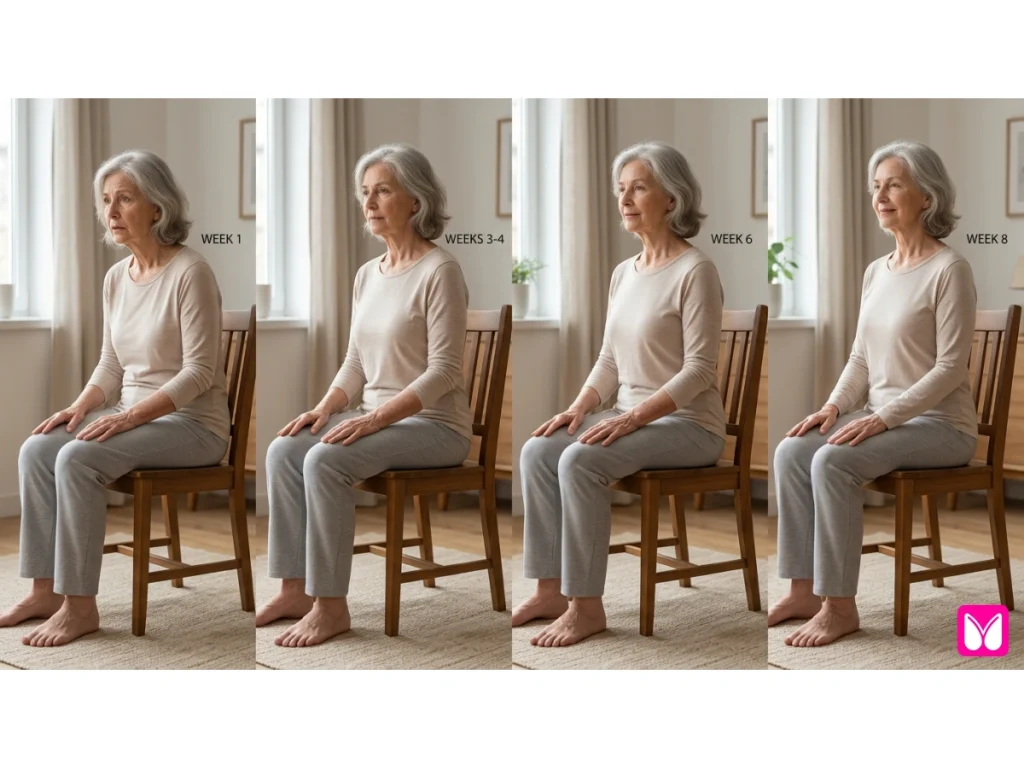
If you’re wondering “does chair yoga really work?” — the honest answer is yes, but in a steady, supportive way rather than dramatic overnight changes.
Within 4 to 8 weeks of consistent practice, many seniors begin to notice subtle but meaningful improvements in how their body feels and moves.
Reduced Stiffness and Easier Movement
One of the earliest changes is less stiffness, especially in the hips, shoulders, and lower back. Everyday movements like getting up from a chair or reaching overhead may start to feel smoother and less restricted.
Better Posture and Body Awareness
Gentle spinal movements and mindful positioning help improve posture over time. You may find yourself sitting and standing a little taller without forcing it — simply because your body feels more aligned.
Improved Breathing and Relaxation
Chair yoga places a strong focus on slow, controlled breathing. Many seniors notice they can take deeper breaths and feel calmer, especially if stress or anxiety was affecting their breathing patterns.
Modest Improvement in Endurance
While chair yoga isn’t intense cardio, regular practice can still build light endurance. You may feel slightly more energetic during the day and less fatigued after simple activities.
Gentle Support for Weight Management
Chair yoga alone is not a weight-loss program. However, it can support weight management indirectly by:
- encouraging consistent movement
- reducing stress-related eating
- improving mobility for other daily activities
When combined with balanced nutrition, some seniors may notice small, gradual changes over time.
The Honest Truth
Chair yoga results are gradual, safe, and sustainable — not dramatic transformations.
Instead of rapid weight loss or extreme changes, what most seniors gain is something far more valuable:
- less pain
- more confidence in movement
- and a body that feels a little lighter and more supported each day
And that’s exactly what makes it worth doing.
Final Verdict: Is Chair Yoga a Scam?

So, is chair yoga a scam?
No — chair yoga itself is a legitimate, research-supported form of gentle exercise. It has been shown to help improve flexibility, balance, mobility, and overall well-being, especially for older adults or those with limited movement.
However, where confusion often comes in is how chair yoga is marketed.
What’s True — and What’s Not
- ✔ Chair yoga is real and beneficial for seniors when practiced consistently
- ✔ It supports mobility, posture, and mental calmness
- ❌ It is not a rapid weight-loss solution
- ❌ It will not deliver dramatic “before-and-after” transformations in a few weeks
Some programs may use exaggerated claims like:
- “Lose belly fat in 14 days”
- “Transform your body in 28 days”
These are marketing promises — not realistic outcomes.
What’s Actually Happening
Chair yoga works best as:
- a low-impact movement routine
- a daily habit for joint health and flexibility
- a support system for overall wellness, not a shortcut to fast results
When approached with the right expectations, it can be incredibly helpful and sustainable.
The Smart Approach
If you’re considering chair yoga, focus on:
- programs with clear pricing and no hidden charges
- instructors with visible credentials or experience
- routines that prioritize safety over intensity
And most importantly, choose consistency over quick results.
Final Thought
Chair yoga is not a scam.
But like many things in the wellness space, some of the promises around it can be misleading.
If you approach it with realistic expectations and choose transparent, senior-friendly programs, chair yoga can become a safe, effective, and empowering part of your daily routine.
Frequently Asked Questions
Are chair yoga workouts a scam?
No, chair yoga workouts themselves are not a scam. They are a legitimate form of low-impact exercise designed to improve mobility and flexibility. However, some programs may use exaggerated marketing claims, so it’s important to choose transparent and realistic options.
Does the 28-day chair workout really work?
A 28-day chair yoga plan can be effective for building consistency and improving flexibility, posture, and comfort in movement. However, results are gradual. It won’t create dramatic transformations, but it can help you feel stronger, more mobile, and more confident over time.
Is chair yoga actually beneficial?
Yes, chair yoga is beneficial, especially for seniors or those with limited mobility. It can improve joint movement, reduce stiffness, support balance, and promote relaxation through breathing exercises. Many people also find it helps reduce stress and increases daily comfort.
Are any chair yoga programs really free?
Yes, many chair yoga resources are free, especially on platforms like YouTube or through community centers. However, some programs labeled “free” may require payment later, so it’s important to check pricing details, trial terms, and cancellation policies before signing up.
Does chair yoga work for weight loss?
Chair yoga alone is not a high-calorie-burning workout, so weight loss results are usually limited. However, it can support weight management by improving mobility, encouraging regular movement, and reducing stress, which may help when combined with a balanced diet.
Is chair yoga only for seniors?
No, chair yoga is not only for seniors. While it’s especially helpful for older adults, it can also benefit beginners, people recovering from injury, or anyone looking for a gentle, low-impact form of movement that supports flexibility and relaxation.
Helpful Guides to Get Started
If you’d like to explore further, here are some helpful resources:
- Start with a structured routine: 7 Day Chair Yoga Plan for Seniors
- Build consistency safely: 28-Day Chair Yoga Program for Beginners
- Learn safe movement principles: Chair Yoga Safety for Osteoporosis
- New to yoga? Begin here: Yoga Poses for Beginners
These guides are designed to help you move safely, build confidence, and understand what to expect from chair yoga without confusion or unrealistic promises.
Also:
Free 28-Day Chair Yoga for Seniors (Printable PDF & Chart + Daily Challenge Plan)
Yoga for Beginners: Complete Step-by-Step Guide to Start at Home 2026 (Poses, Routine & Free PDF)
10- Minutes Daily Yoga Routine For Emotional Release and Healing (7 Gentle Poses)
7 Yoga Ball Exercises for Back Pain: Simple Strategies to Prevent Pain Naturally
12 Basic Yoga Poses for Beginners (PDF, Steps & Pictures)
{ “@context”: “https://schema.org”, “@type”: “FAQPage”, “mainEntity”: [ { “@type”: “Question”, “name”: “Are chair yoga workouts a scam?”, “acceptedAnswer”: { “@type”: “Answer”, “text”: “No, chair yoga workouts themselves are not a scam. They are a legitimate form of low-impact exercise designed to improve mobility and flexibility. However, some programs may use exaggerated marketing claims, so it’s important to choose transparent and realistic options.” } }, { “@type”: “Question”, “name”: “Does the 28-day chair workout really work?”, “acceptedAnswer”: { “@type”: “Answer”, “text”: “A 28-day chair yoga plan can be effective for building consistency and improving flexibility, posture, and comfort in movement. However, results are gradual. It won’t create dramatic transformations, but it can help you feel stronger, more mobile, and more confident over time.” } }, { “@type”: “Question”, “name”: “Is chair yoga actually beneficial?”, “acceptedAnswer”: { “@type”: “Answer”, “text”: “Yes, chair yoga is beneficial, especially for seniors or those with limited mobility. It can improve joint movement, reduce stiffness, support balance, and promote relaxation through breathing exercises. Many people also find it helps reduce stress and increases daily comfort.” } }, { “@type”: “Question”, “name”: “Are any chair yoga programs really free?”, “acceptedAnswer”: { “@type”: “Answer”, “text”: “Yes, many chair yoga resources are free, especially on platforms like YouTube or through community centers. However, some programs labeled “free” may require payment later, so it’s important to check pricing details, trial terms, and cancellation policies before signing up.” } }, { “@type”: “Question”, “name”: “Does chair yoga work for weight loss?”, “acceptedAnswer”: { “@type”: “Answer”, “text”: “Chair yoga alone is not a high-calorie-burning workout, so weight loss results are usually limited. However, it can support weight management by improving mobility, encouraging regular movement, and reducing stress, which may help when combined with a balanced diet.” } }, { “@type”: “Question”, “name”: “Is chair yoga only for seniors?”, “acceptedAnswer”: { “@type”: “Answer”, “text”: “No, chair yoga is not only for seniors. While it’s especially helpful for older adults, it can also benefit beginners, people recovering from injury, or anyone looking for a gentle, low-impact form of movement that supports flexibility and relaxation.” } } ] }

Nandini Sharma
Nandini Sharma is the Co-Founder of Mindfullyoga and the leading philosophical voice of the Yoga Revolution, a movement focused on restoring the integrity of classical yoga.As a dedicated scholar of the original Yoga Sutras and an authority rooted in Jaipur, Rajasthan, Nandini's expertise is in Yoga Philosophy and Classical Texts, not secular fitness.Her content strategically tackles the core ethical crisis of the $125 Billion global yoga industry. Nandini uses keywords like Asteya (non-stealing) and Aparigraha (non-possessiveness) to challenge commercialization and educate readers on the full Eight Limbs of Yoga, including Pranayama and Dhyana.