
-
 by
Nandini Sharma
by
Nandini Sharma - January 29, 2026
- 0 Comments

Table of Contents
Redefining Mobility with Arthritis
For many, aging with joint pain feels like a slow retreat. If you are searching for chair yoga for seniors with arthritis, you’ve likely been told to “just keep moving.” You might find yourself avoiding the activities you once loved, not because you’ve lost interest, but because the “fear of the floor” has become a permanent mental barrier. When every step becomes a negotiation with inflammation, daily life can feel less like living and more like a struggle for independence.
The Hard Truth about Arthritis and Aging
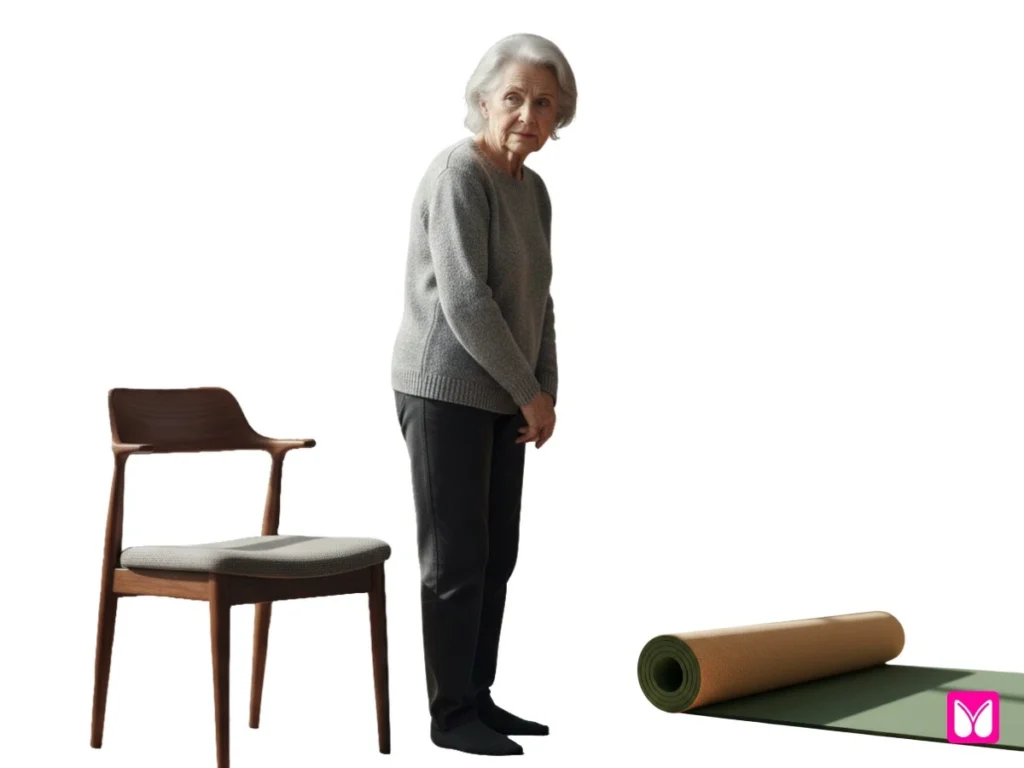
If you are living with stiff joints, you’ve likely been told to “just keep moving.” But when your knees throb, and your hips feel locked, traditional exercise can feel like an impossible demand. This frustration is real. For many, the transition to chair yoga for seniors with arthritis is stalled by a wellness industry that only celebrates the flexible and the young.
Is yoga good for 70-year-olds? For many seniors, the answer is yes, but only if the practice respects your body’s current reality. Traditional classes that require you to get up and down from a mat can be intimidating, or even dangerous, if you struggle with balance or severe inflammation.
The Mindfullyoga Stance: From “Yoga-Lite” to Joint Sovereignty
At Mindfullyoga, we reject the idea that you need to be on a mat to be “doing yoga.” We define chair yoga for seniors with arthritis not as a watered-down version of the practice, but as a sophisticated, high-level therapeutic tool.
We don’t move for the sake of the pose; we move to reclaim Joint Sovereignty. This means:
- Offloading the Weight: Using a chair to remove the strain of gravity from your hips and knees.
- Safety Over Sweat: Prioritizing your nervous system’s sense of security so your muscles can actually relax.
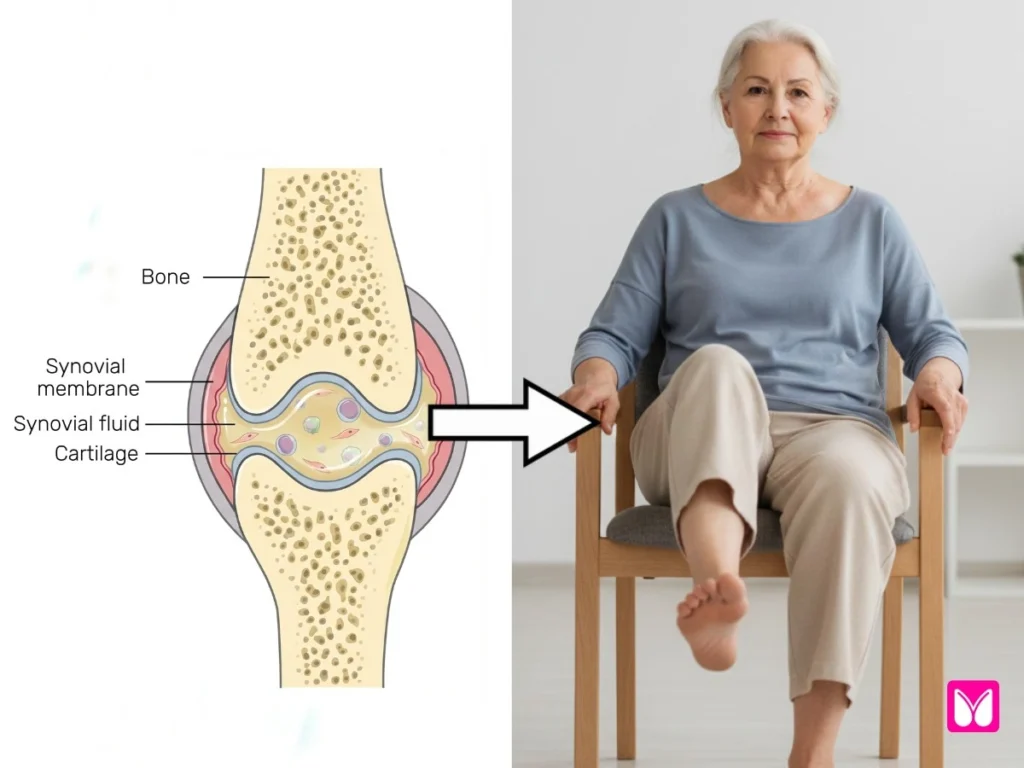
- Lubricating the System: Using micro-movements to encourage the flow of synovial fluid—the natural “oil” that cushions your joints.
This guide is for gentle movement education, not medical treatment. Always check with your doctor if you have severe arthritis or recent joint surgery.
The Science: Why Chair Yoga “Works” for Arthritic Joints
To understand why chair yoga is so effective, we have to look past the poses and into the biology of the joint itself. For a senior living with arthritis, movement isn’t just “exercise”—it is a form of mechanical medicine. By removing the strain of weight-bearing through the use of a chair, chair yoga for seniors with arthritis allows the body to access healing mechanisms that are often blocked by pain and gravity.
The Biological Connection: Synovial Lubrication
The most immediate benefit of gentle, seated movement is the stimulation of synovial fluid. Think of this fluid as the “engine oil” for your joints. Because cartilage does not have its own blood supply, it relies entirely on this fluid to deliver nutrients and wash away metabolic waste.
Research supported by the Johns Hopkins Arthritis Center suggests that regular, modified yoga practice can lead to a significant reduction in joint tenderness and swelling. When you perform rhythmic, low-impact movements in a chair, you are essentially “sponging” the joints. This process:
- Promotes Nutrient Delivery: Fresh synovial fluid is pumped into the cartilage.
- Reduces Friction: Lubricated joints move with less “grinding” and inflammation.
- Clears Inflammatory Markers: Movement helps clear out the chemical byproducts that contribute to morning stiffness.
Can chair yoga help with arthritis long-term? By maintaining this “oil flow,” you are actively working to preserve the joint space that remains, slowing the progression of wear and tear.
Nervous System Regulation: Lowering the “Inflammation Thermostat”
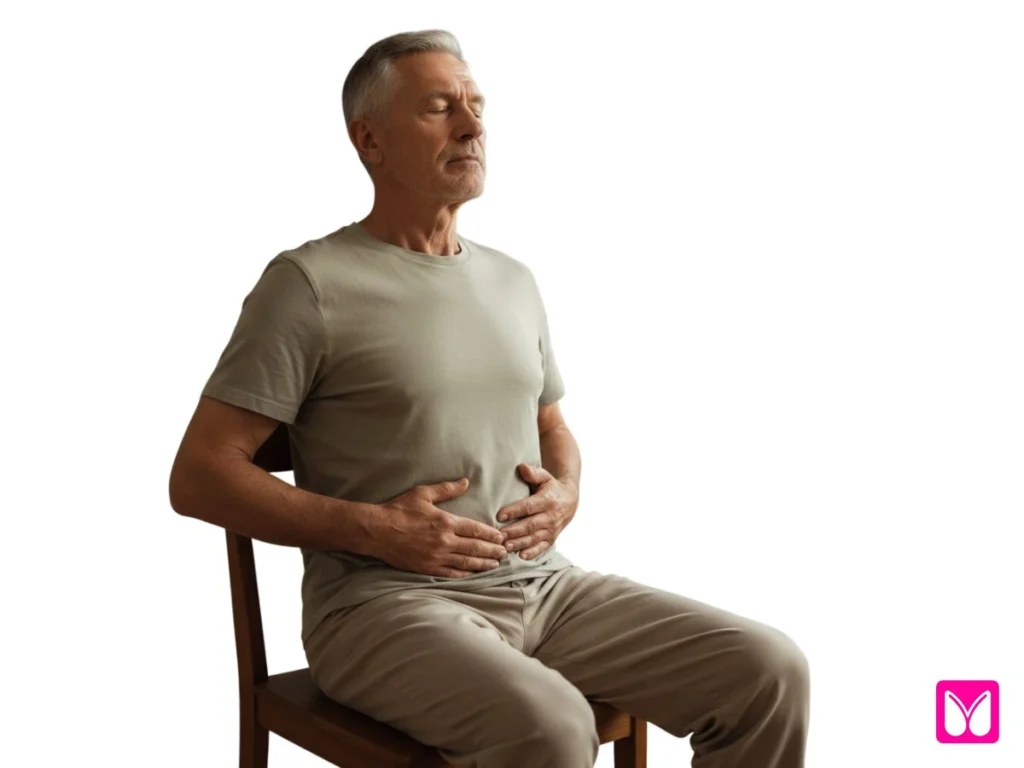
Arthritis is not just a physical condition; it is a systemic one. Chronic pain keeps the body in a state of “High Alert,” which spikes cortisol the body’s primary stress hormone. High cortisol levels act like fuel for the fire, further increasing systemic inflammation.
This is where Pranayama (focused breathing) becomes a clinical tool. Deep, diaphragmatic breathing stimulates the vagus nerve, which signals your nervous system to shift from “Fight or Flight” to “Rest and Digest.”
Can yoga reduce arthritis symptoms through breath? Recent clinical trials have shown that consistent mind-body practice can:
- Decrease C-Reactive Protein (CRP): A key marker of inflammation in the blood.
- Lower Cortisol: Reducing the chemical triggers that cause autoimmune “flare-ups.”
- Alter Pain Perception: By calming the nervous system, the brain becomes less reactive to pain signals, making chair yoga for seniors with arthritis feel safer and more fluid
Safety First: The Senior-Specific Audit
In the commercialized wellness industry, “safety” is often treated as a footnote. At Mindfullyoga, we treat it as the foundation. Before practicing even a single pose, we must establish a container of security. This is especially true for beginner yoga for arthritis for seniors, where the goal is to build confidence and strength without risking a setback.
The “Golden Rules” of Somatic Integrity
When you are over 70, your body’s sensory feedback is your most valuable teacher. To ensure your practice remains therapeutic, we follow these non-negotiable rules:
- Pain is a “Stop Sign,” Not a Challenge: In a showroom studio, you might be told to “breathe through the discomfort.” We disagree. If you feel a sharp, stabbing, or pinching sensation, stop immediately. We aren’t here to conquer the body; we are here to listen to it.
- The 80% Rule: Never push to your absolute maximum range of motion. By moving to only 80% of your capacity, you leave “buffer room” for your nervous system to feel safe, which actually allows for better long-term mobility.
- The Breath Test: If you cannot breathe smoothly through your nose, you are pushing too hard. Your breath is the ultimate auditor of your effort.
Important Boundary: If you experience sudden swelling, joint locking, or sharp pain that persists after movement, stop and consult a healthcare professional.
The Sturdy Chair Checklist
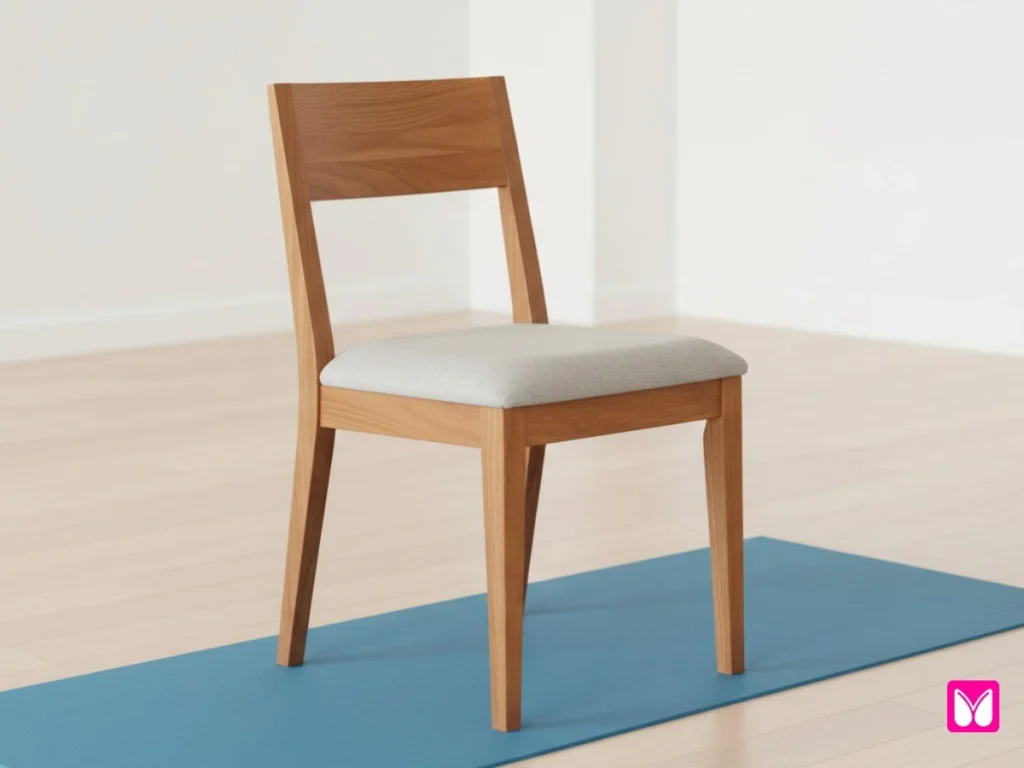
Is chair yoga safe for seniors? It is remarkably safe, provided your equipment is reliable. Your chair is your “altar” for this practice, and it must meet these criteria to ensure chair yoga for seniors with arthritis remains stable:
- No Wheels: Never use an office chair or anything that can roll away from you.
- Armless (Preferred): An armless chair allows for a full range of motion in your arms and torso.
- Stability: Use a four-legged, straight-backed dining chair or a folding metal chair.
- Non-Slip Surface: Ensure the chair is placed on a rug or a yoga mat to prevent it from sliding on hardwood or tile.
Footwear Wisdom: Stability Over Tradition
In classical yoga, being barefoot is the norm. However, for many seniors, barefoot practice can increase the risk of slips or foot strain.
If you have balance concerns or neuropathy, wearing supportive, non-slip shoes is often safer than being barefoot. A pair of clean, indoor sneakers or high-grip socks provides the sensory feedback your brain needs to feel grounded. By prioritizing your balance, you ensure that your focus stays on the movement, not on the fear of falling.
Targeted Chair Yoga Exercises for Seniors with Arthritis
When living with arthritis, the goal of movement is to create “space” within the joint capsule. These exercises are specifically designed for chair yoga for seniors with arthritis, focusing on the areas most commonly affected by stiffness, the hands, knees, and hips, while maintaining a stable, seated foundation.
Section A: Yoga for Arthritis in Hands & Wrists
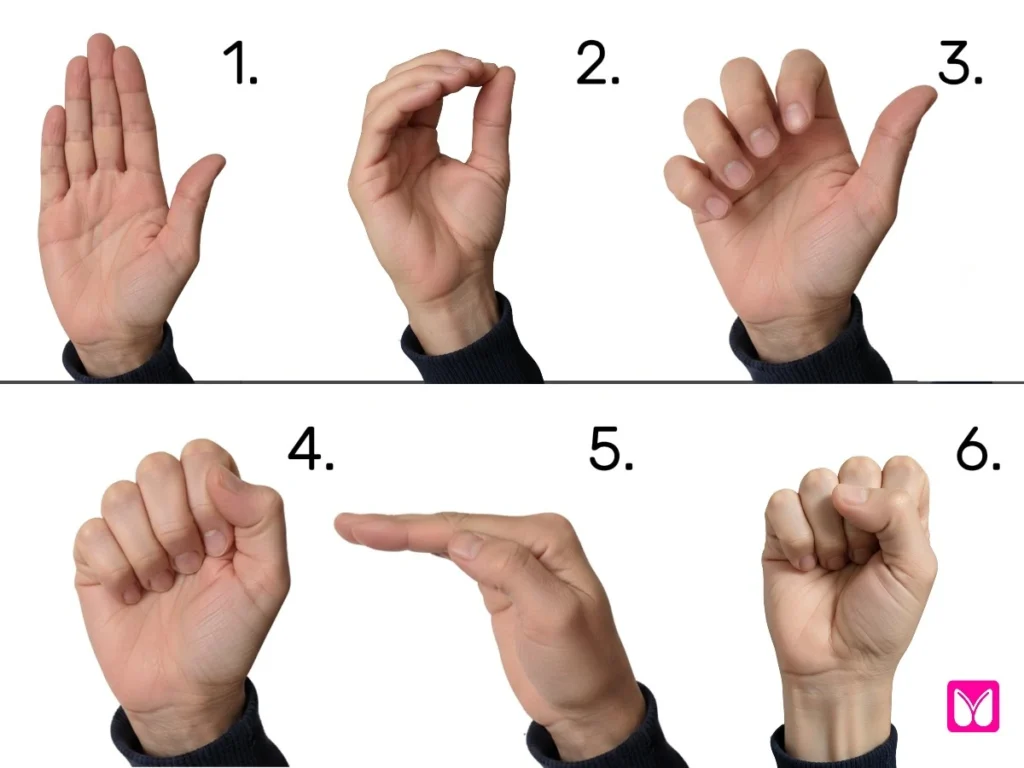
The small joints of the hands often bear the brunt of morning stiffness. Yoga for arthritis in hands focuses on “tendon gliding”—a technique that ensures the tissues move smoothly through the joint tunnels.
- Finger Tendon Glides:
- Extend your hand out, palm facing forward, fingers straight.
- The Hook: Bend just the top knuckles to create a “hook” shape.
- The Full Fist: Fold the fingers into a soft fist, tucking the thumb outside.
- The Fan: Open the hand comfortably, spreading the fingers like a fan.
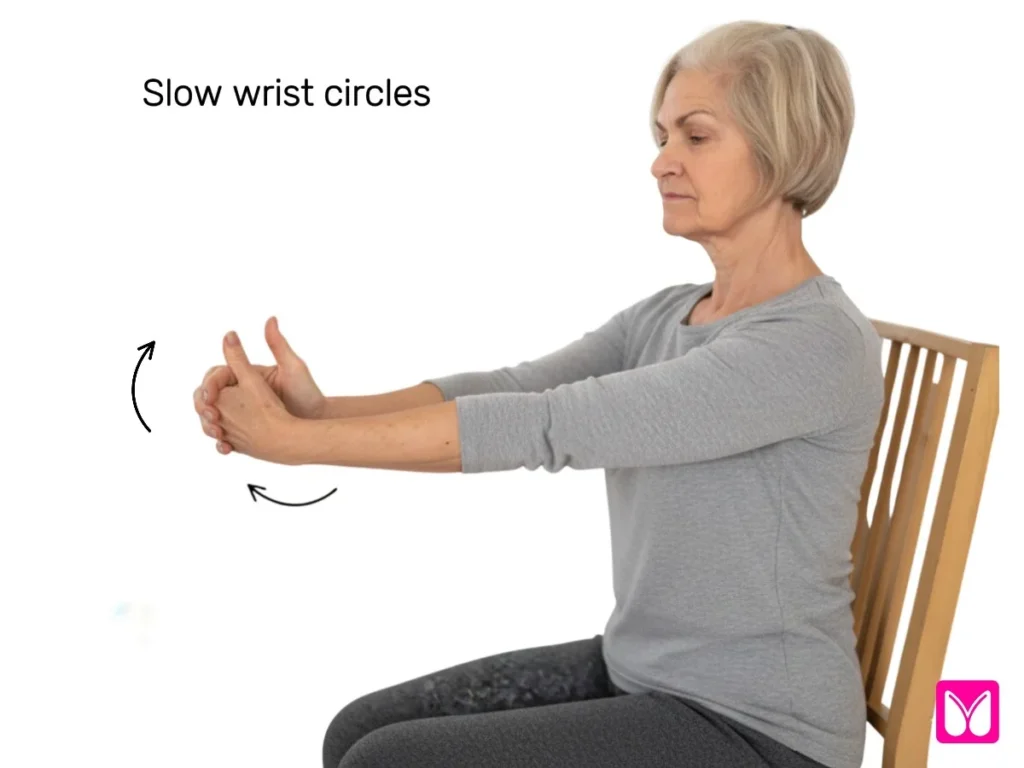
- Wrist Circles: With soft fists, slowly rotate your wrists in both directions. Imagine you are drawing the largest circle possible with your knuckles to encourage synovial flow.
Section B: Yoga for Knee & Hip Arthritis
For those searching for yoga for arthritis in knees or yoga for hip arthritis, the secret lies in strengthening the “supporting cast.” By toning the quadriceps and glutes, we take the physical load off the actual joint.
- Seated Leg Extensions: 1. Sit toward the front edge of your chair. 2. Slowly straighten one leg out in front of you, flexing your toes toward your face. 3. Hold for three breaths, feeling the muscle above your knee (the quadriceps) engage. This muscle acts as a shock absorber for the knee joint.
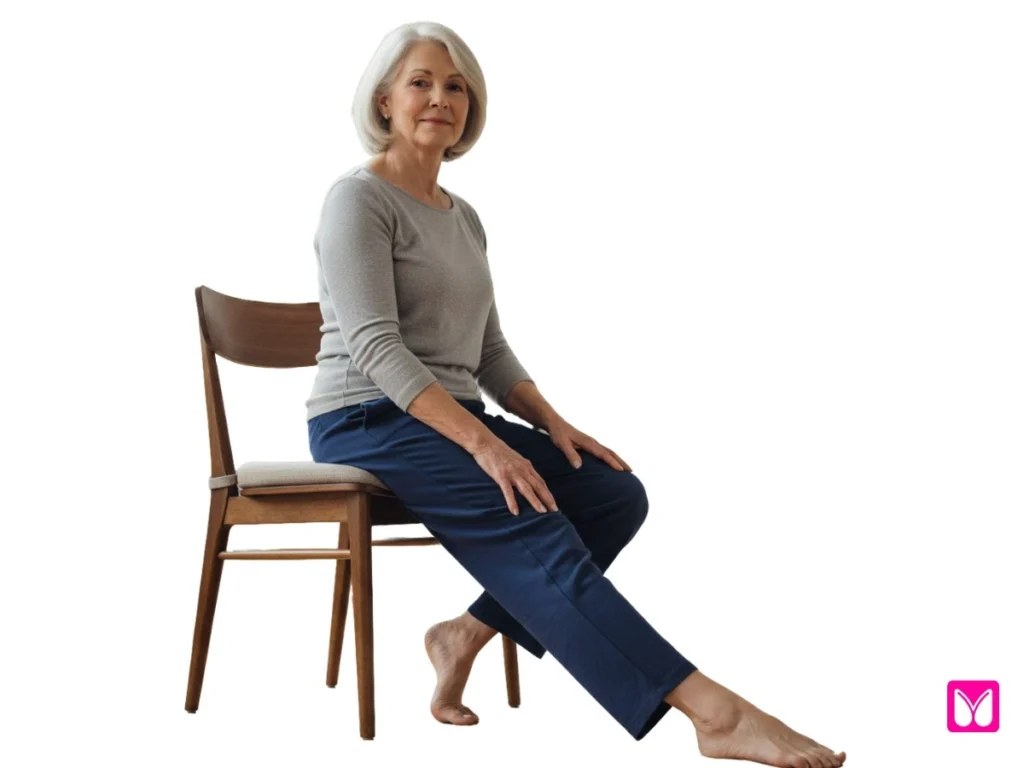
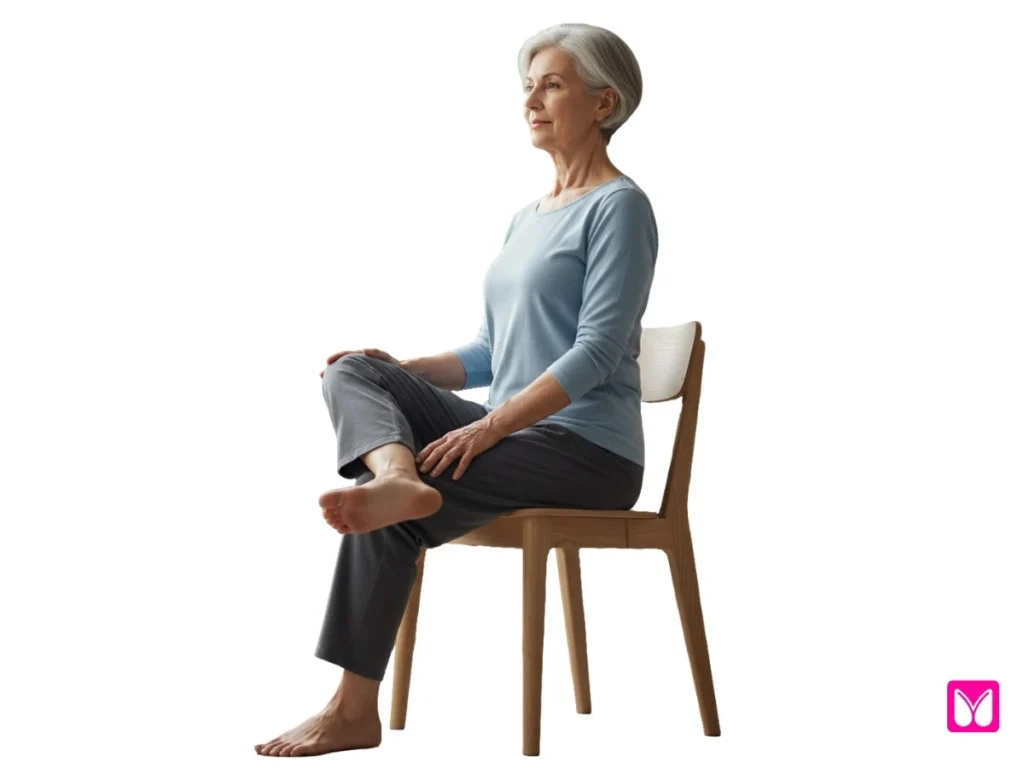
- Ankle-to-Knee Opener (Seated Pigeon): 1. Keep one foot flat on the floor. 2. Cross the opposite ankle over the knee (or across the shin if the hip is tight). 3. Keep the foot flexed to protect the knee. This creates a gentle external rotation that releases tension in the hip capsule. 4. Note: If you’ve been advised to avoid knee rotation or have a recent knee replacement, skip this movement.
Section C: Spinal Health & Posture
A stiff spine often leads to secondary pain in the hips and neck. These movements improve vertebral mobility without the risk of a fall.
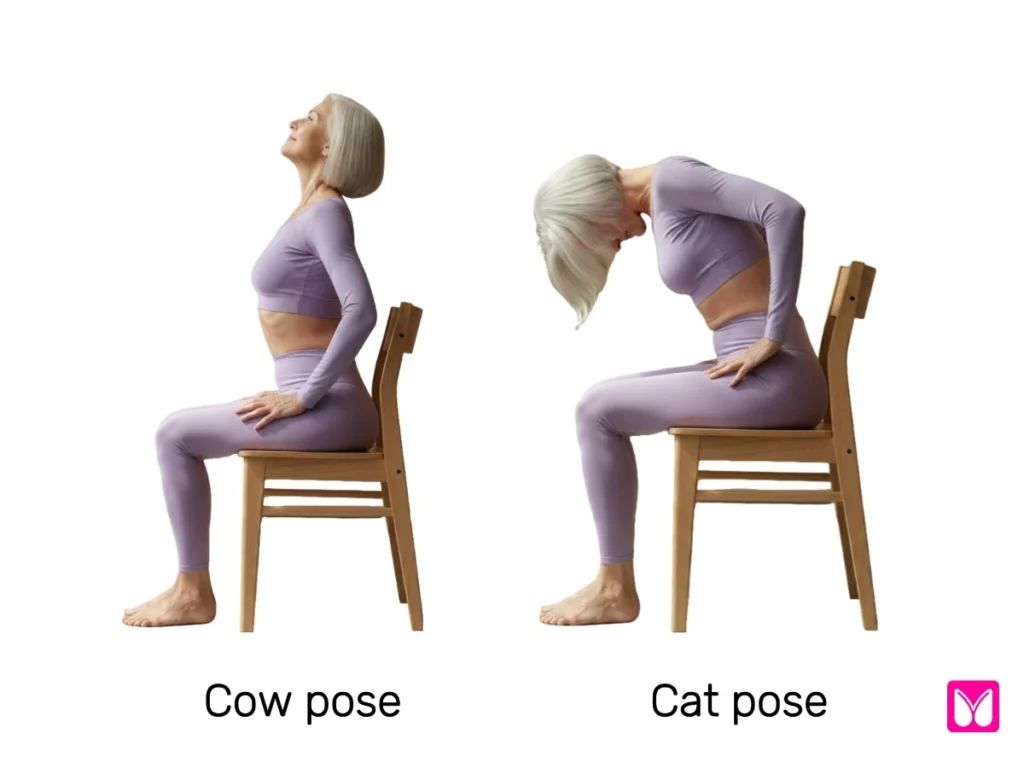
- Chair Cat-Cow:
- Inhale (Cow): Arch your back slightly, lifting your chest and looking gently upward.
- Exhale (Cat): Round your spine, tucking your chin and looking toward your belly button. This “waves” movement helps hydrate the spinal discs.
- Seated Gentle Twists: 1. Inhale to sit tall. 2. Exhale and place your left hand on your right knee, using the chair’s back for light support. 3. Note: Never force a twist. If you feel a “pinch,” back off by 20%.Ready to Move Offline
The Mindfullyoga 28-Day Arthritis Protocol
The biggest obstacle to managing joint pain isn’t a lack of effort; it is a lack of structure. Many seniors start a routine with great energy, only to stop when a flare-up occurs or because the movements feel disorganized. The Mindfullyoga 28-Day Arthritis Protocol is designed to bridge the gap between “trying a few exercises” and building a sustainable somatic habit through chair yoga for seniors with arthritis.
A Phased Approach to Progress
We do not believe in “no pain, no gain.” Instead, this protocol uses a phased approach that respects the biological timeline of joint lubrication and muscle adaptation.
- Phase 1: Joint Lubrication (Days 1–7): Focus on 10-minute sessions twice daily. The goal is simply to “oil the hinges” through the hand, wrist, and ankle movements we’ve discussed.
- Phase 2: Building Stability (Days 8–21): We gradually introduce 20-minute sessions that incorporate leg extensions and core engagement to support the spine.
- Phase 3: The Somatic Flow (Days 22–28): By the final week, your system is prepared for up to a full 45-minute chair yoga Sequence full-body routine. This integrates breath, movement, and deep relaxation to lower systemic inflammation. If 45 minutes feels like too much on any given day, listen to your body, 15 minutes of mindful presence is always better than 45 minutes of forced effort.
The Confidence Factor: Moving Offline
In a digital world, constant screen time can be an invisible barrier to healing. Squinting at a small phone screen or trying to pause a fast-moving video can increase neck tension and mental fatigue.
True confidence comes when you can move at your own pace, in your own space, without the distraction of an algorithm. If offline guidance helps you move with more focus and less eye strain, we have prepared a high-quality resource for you:
Free 28 Day Chair Yoga for Seniors with Pictures: Our comprehensive guide features large-print instructions and clear photos of every pose.
Free Printable Chair Yoga for Seniors PDF: You can download the full protocol to keep on your coffee table or desk, no WiFi required.
By removing the digital barrier, you reclaim your autonomy. You aren’t just following a video; you are learning the language of your own body.
The Anti-Inflammatory Kitchen: Supporting the Practice
Movement is only one side of the coin. To truly reduce joint stiffness, we must address the internal environment of the body. In the Mindfullyoga tradition, we bridge the gap between ancient Sattvic (pure, life-giving) nutrition and modern Anti-Inflammatory (ITIS) diet research. When you align your kitchen with your chair yoga practice, you create a powerful synergy that targets arthritis from both the outside in and the inside out.
What is the Best Breakfast for Arthritis?
How you break your fast sets the “inflammatory tone” for your entire day. A breakfast high in refined sugars and processed flours can trigger an insulin spike that flares up joint pain before you’ve even stood up.
The Best Breakfast for Arthritis focuses on three pillars: Omega-3 fatty acids, high-fiber antioxidants, and thermogenic spices.
- The “Joint-Lubricant” Oatmeal: A warm bowl of steel-cut oats topped with walnuts and chia seeds. The Omega-3s in the seeds act like a biological lubricant for your joints, while the fiber helps clear out pro-inflammatory toxins.
- Chia Seed Pudding with Berries: Blueberries and raspberries contain anthocyanins, powerful antioxidants that have been shown in clinical studies to reduce oxidative stress in arthritic joint tissues.
The “Anti-Ick” Spice Rack: Bioavailability Matters
Many seniors are aware that Turmeric (curcumin) is a potent anti-inflammatory. However, the body is notoriously poor at absorbing it on its own. To turn your spice rack into a pharmacy, you need to understand the “synergy of three”:
- Turmeric: The primary anti-inflammatory agent.
- Black Pepper (Piperine): Research shows that piperine increases the absorption of curcumin by up to 2,000%.
- A Healthy Fat: Curcumin is fat-soluble. Adding a touch of coconut oil, ghee, or avocado ensures the nutrients actually reach your bloodstream.
Clinical Note: If you are on blood thinners or have been advised to avoid certain spices, consult your healthcare provider before significantly increasing your turmeric or ginger intake.
Hydration: The Invisible Joint Support
Cartilage is roughly 70% to 80% water. If you are dehydrated, your joints lose their “bounce” and shock-absorption capabilities. We recommend sipping warm lemon water or herbal ginger tea throughout the morning to maintain cellular hydration and support the lymphatic system in flushing out the chemical byproducts of inflammation.
FAQ: Expert Answers to Senior Concerns (Chair Yoga for Seniors with Arthritis QA)
When managing chronic joint pain, the smallest adjustments often yield the most significant results. In this section, we address the common questions seniors ask when moving beyond the poses and into a lifestyle of mindful pain management.
Which pranayama is good for arthritis?
In the yogic tradition, Pranayama (breath control) is used to regulate the nervous system and manage the body’s inflammatory response. For arthritis, we recommend two specific techniques:
- Nadi Shodhana (Alternate Nostril Breathing): This is ideal for systemic balance. It calms the sympathetic nervous system (“fight or flight”), which is often overactive in those with chronic pain. By lowering stress, you lower the cortisol levels that can trigger arthritis flare-ups.
- Sheetali (The Cooling Breath): If you suffer from “hot” inflammation—where joints feel warm and red—Sheetali is traditionally used to “cool” the system. It involves inhaling through a curled tongue (or pursed lips) to bring a cooling sensation to the body’s internal environment. Note: If you have breathing difficulties or COPD, practice only for a few gentle rounds or skip this breath.
What is a simple trick to relieve arthritis pain easily?
One of the most effective, non-invasive ways to manage sudden stiffness is a technique we call the “Gentle Shimmy.” Instead of trying to “stretch” a painful joint, use micro-oscillations. Gently and rhythmically jiggle or “shimmy” the affected limb for 30 seconds. These tiny, rapid movements provide a constant stream of sensory input to the brain that “jams” the pain signals. It signals safety to the nervous system, allowing the muscles surrounding the joint to release their protective grip.
Is there a totally free chair yoga app?
Finding high-quality, non-commercial resources is a challenge in a $125 billion industry. While many apps claim to be free, they often hide the best content behind a “premium” paywall.
For a truly free experience, we recommend:
- YouTube (Mindfullyoga & Trusted Seniors Channels): YouTube remains the best source for free visual guidance. Look for channels that prioritize safety over “performance.”
- Insight Timer: While primarily a meditation app, it hosts thousands of free yoga nidra and gentle movement tracks that are excellent for pain management.
- The Mindfullyoga “Offline” Method: We believe the best “app” is your own intuition. Using our Free Printable Chair Yoga for Seniors PDF allows you to practice without a screen, subscription, or data tracking, giving you total sovereignty over your health.
Moving with Integrity
Mobility is a fundamental human right, not a luxury reserved for the young. Living with joint pain often makes your world feel smaller, but aging does not have to mean living in a cage of stiffness. By choosing chair yoga for seniors with arthritis, you are choosing a practice that prioritizes Somatic Integrity over performance. You aren’t just stretching; you are reclaiming your autonomy.

Whether you practiced for five minutes today or followed a full session, remember that every mindful movement is a vote for your health. Yoga for seniors with arthritis is about listening to the body’s wisdom, not conquering it. In the Mindfullyoga tradition, the most advanced practitioner isn’t the one who can reach their toes, it’s the one who has the clarity to move with Ahimsa (non-harming).
The Next Step: Join the “Awareness Advocate” Rebellion
The $125 billion wellness industry is often more interested in your data than your joints. If you are ready for a different approach to chair yoga for seniors—one that is slow, ethical, and grounded in Jaipur’s classical roots, we invite you to join our community.
Become an Awareness Advocate: Join our yoga community for Ethical Audits of the wellness industry. We pull back the curtain on commercial health trends and provide honest, non-sponsored guidance for aging with dignity.
And remember: If offline guidance helps you move with more confidence, our Free Printable 28-Day Guide for Chair Yoga for Seniors with Arthritis is always here to support your journey, one gentle breath at a time.
The Mindfullyoga Safety & Authority Footer
About the Author
Nandini Sharma – Co-Founder of Mindfullyoga & Scholar of the Yoga RevolutionBased in Jaipur, Rajasthan, Nandini Sharma is a scholar of the Yoga Sutras dedicated to restoring the integrity of classical yoga. Rejecting the commercial “fitness” model, she applies the Eight Limbs of Yoga, especially Ahimsa (non-harming) and Pranayama (breath), as therapeutic tools for somatic healing. Her work challenges the $125B yoga industry by returning the practice to its roots: a path of sovereignty, safety, and inner peace for the aging body.
A Note on Your Health & Sovereignty
The guidance shared here is for educational and informational purposes only. It is not a substitute for professional medical advice, diagnosis, or treatment. Because arthritis is a deeply individual journey, please consult your physician, physical therapist, or rheumatologist before beginning any new practice, especially if you have a history of joint replacement or severe inflammation.About the Mindfullyoga Editorial Team
This guide was crafted with care by the Mindfullyoga Editorial Team, a collective committed to somatic integrity and ethical wellness. Our mission is to dismantle the “No Pain, No Gain” myth and provide seniors with evidence-based, safety-first tools for reclaiming mobility. We don’t just teach poses; we advocate for the dignity of the aging body and guide readers toward mindful, autonomous movement.Ready to Move Offline?
Download your Free 28-Day Chair Yoga for Arthritis PDF here, designed with large print and clear illustrations for ease of use. Practice safely, at your own pace, and reclaim your mobility one gentle breath at a time.

Nandini Sharma
Nandini Sharma is the Co-Founder of Mindfullyoga and the leading philosophical voice of the Yoga Revolution, a movement focused on restoring the integrity of classical yoga.As a dedicated scholar of the original Yoga Sutras and an authority rooted in Jaipur, Rajasthan, Nandini's expertise is in Yoga Philosophy and Classical Texts, not secular fitness.Her content strategically tackles the core ethical crisis of the $125 Billion global yoga industry. Nandini uses keywords like Asteya (non-stealing) and Aparigraha (non-possessiveness) to challenge commercialization and educate readers on the full Eight Limbs of Yoga, including Pranayama and Dhyana.