
-
 by
Jai Mehta
by
Jai Mehta - February 21, 2026
- 0 Comments

Table of Contents
If your lower back tightens up after a long day at your desk or you catch yourself slouching in photos, your erector spinae muscles might be weaker than you think.
These deep spinal muscles run along both sides of your spine. They’re responsible for keeping you upright, supporting your posture, and helping you bend, lift, and move without strain. When they’re undertrained, your lower back often takes the hit.
The good news? You don’t need heavy weights or complicated machines to fix that. With the right erector spinae exercises, you can strengthen your lower back at home using simple, controlled bodyweight movements.
Below, you’ll find five effective exercises designed to build spinal stability, improve posture, and help reduce everyday back discomfort, all without equipment.
What Are the Erector Spinae Muscles (And Why They Matter for Lower Back Strength?)
The erector spinae is not just one muscle; it’s a group of three long muscles that run vertically along both sides of your spine: the iliocostalis, longissimus, and spinalis. Together, they extend from your lower back up through the thoracic spine and into the neck.
Their primary role is spinal extension, helping you stand upright after bending forward. But their function goes far beyond that.
The erector spinae muscles also:
- Stabilize your spine during lifting and daily movement
- Control forward bending (eccentric control)
- Support posture during prolonged sitting or standing
- Work with your core and glutes to protect the lumbar spine
When these muscles are weak or underactive, your lower back often compensates. That compensation can lead to stiffness, fatigue, and increased strain on the lumbar region, especially if you sit for long hours or lift improperly.
Strengthening the erector spinae improves spinal endurance, posture control, and overall lower back resilience — which is why targeted exercises matter more than random “back workouts.”
Why Strengthening Your Erector Spinae Muscles Helps Prevent Lower Back Pain
Your erector spinae muscles act like built-in support cables for your spine. When they’re strong and conditioned, your lower back doesn’t have to absorb unnecessary strain from everyday movements.
Here’s why strengthening them makes a real difference:
✔ Posture Support: The erector spinae help keep your spine upright and aligned. When they’re weak, your shoulders round forward and your lower back collapses into poor posture — especially during long hours of sitting.
✔ Spinal Stability: These muscles stabilize your spine during bending, lifting, and even simple tasks like reaching or turning. Better stability means less unwanted stress on your lumbar discs and joints.
✔ Reduced Lower Back Strain: Weak erector spinae muscles force other structures — including smaller stabilizing muscles — to compensate. Over time, that imbalance can lead to stiffness, fatigue, and recurring discomfort.
✔ Improved Everyday Movement: From tying your shoes to carrying groceries, strong spinal muscles make daily activities feel smoother and more controlled.
Strengthening your erector spinae isn’t just about building muscle — it’s about improving endurance, posture control, and long-term lower back resilience.
5 Effective Erector Spinae Exercises You Can Do at Home
Strengthening your back doesn’t require expensive gym memberships or fancy machines. Whether you’re a beginner, a senior, or recovering from an injury, these erector spinae workouts at home can help you improve strength and flexibility with little or no equipment.
1. Bird-Dog (Beginner-Friendly Erector Spinae Exercise)
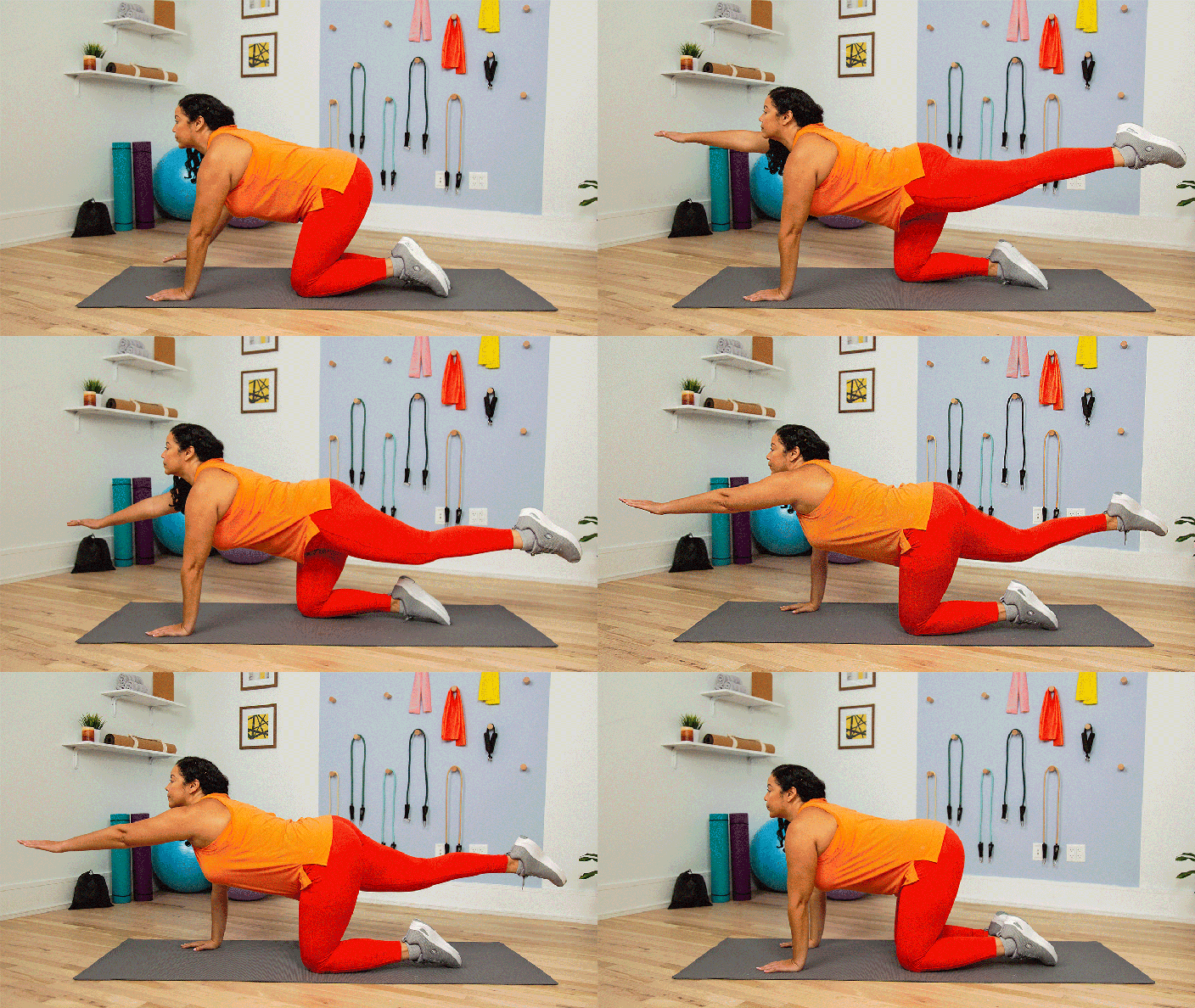
Equipment Needed: None (Bodyweight Exercise)
How to Do It:
- Start on all fours with your hands under your shoulders and knees under your hips.
- Extend your right arm forward and left leg back while keeping your hips square.
- Avoid arching or rotating your lower back.
- Hold for 2–3 seconds, then return with control.
- Switch sides.
Pro tip: To avoid arching your lower back, move slowly and in a controlled manner.
Benefits: Increases core stability, strengthens the erector spinae, and improves balance.
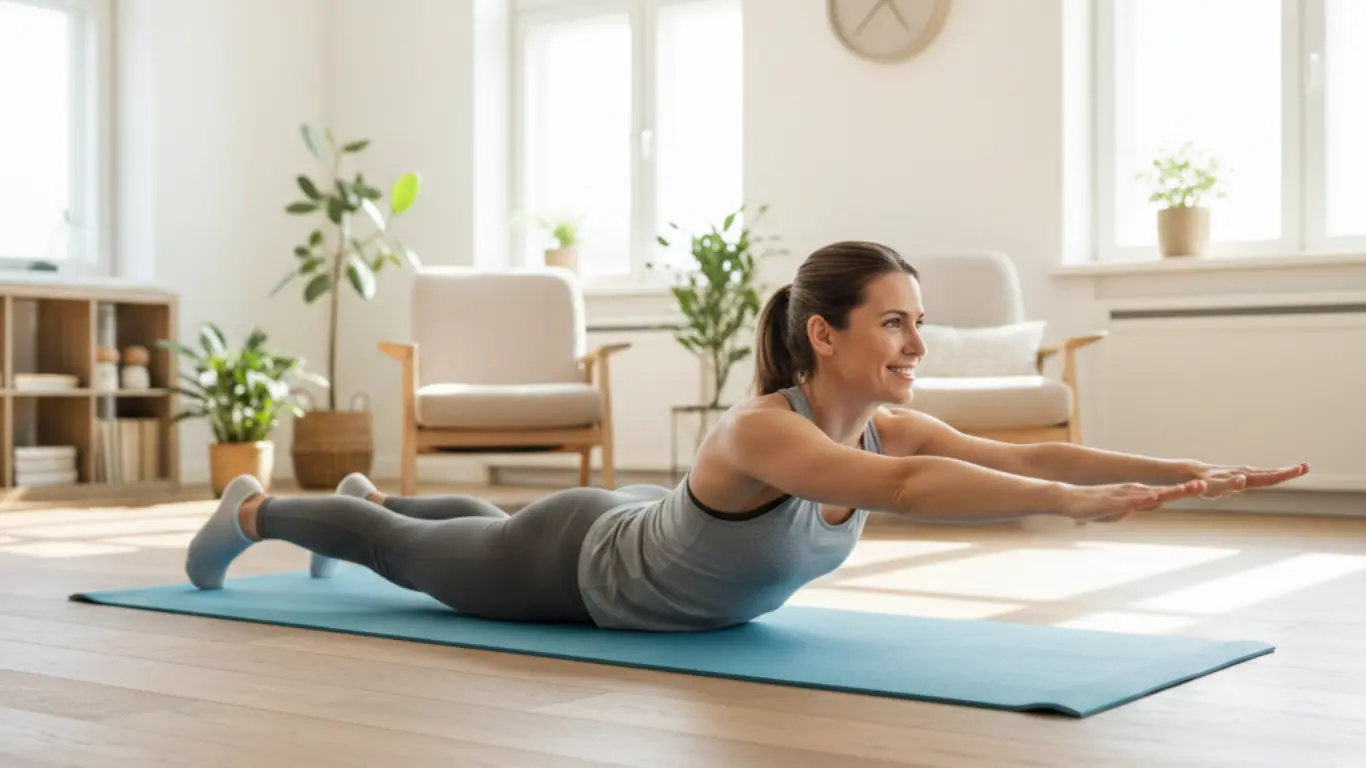
2. Superman Hold (Bodyweight Lower Back Strengthener)
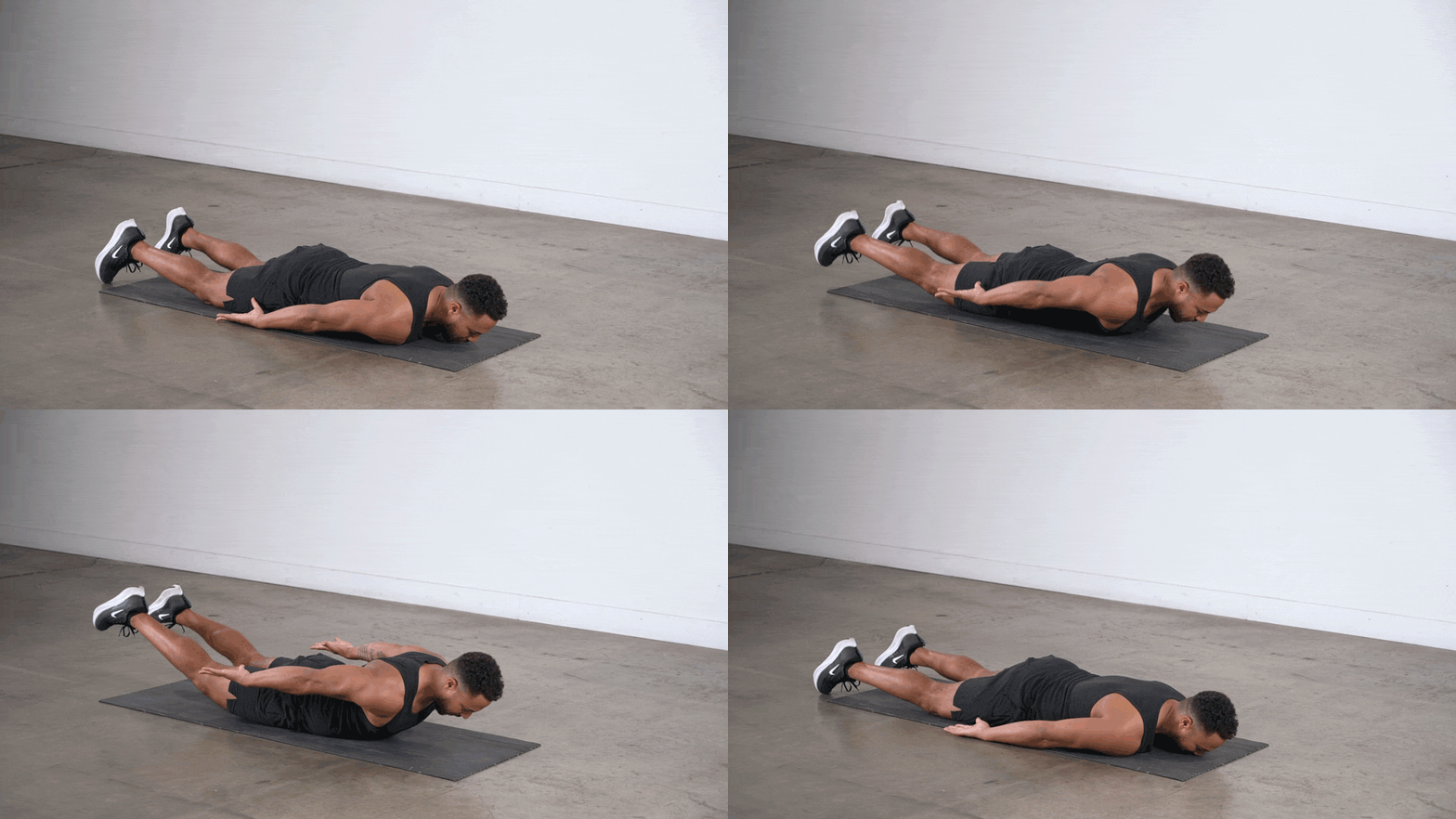
Equipment Needed: None (Bodyweight Exercise)
Optional: A yoga mat for comfort
How to Do It:
- Lie face down with arms extended overhead.
- Slowly lift your arms, chest, and legs a few inches off the ground.
- Keep your neck neutral — avoid looking up.
- Hold for 3–5 seconds, then lower with control.
Variations: If this is too difficult, lift your legs or arms individually.
Benefits: To avoid lower back discomfort, focus on the erector spinae, glutes, and hamstrings.
3. Glute Bridge (Supports the Erector Spinae and Hips)

Equipment Needed: None (Bodyweight Exercise)
Optional: Yoga mat, resistance band, or weights for added intensity
How to Do It:
- Lie on your back with knees bent and feet flat.
- Press through your heels and lift your hips until your torso forms a straight line.
- Avoid over-arching your lower back.
- Hold briefly, then lower slowly.
Pro tip: Contract your glutes at peak strength to increase muscle activation.
Benefits: It strengthens the lower back, hips, and glutes while increasing spinal stability.
4. Cat-Cow Stretch (Improves Spinal Mobility and Control)
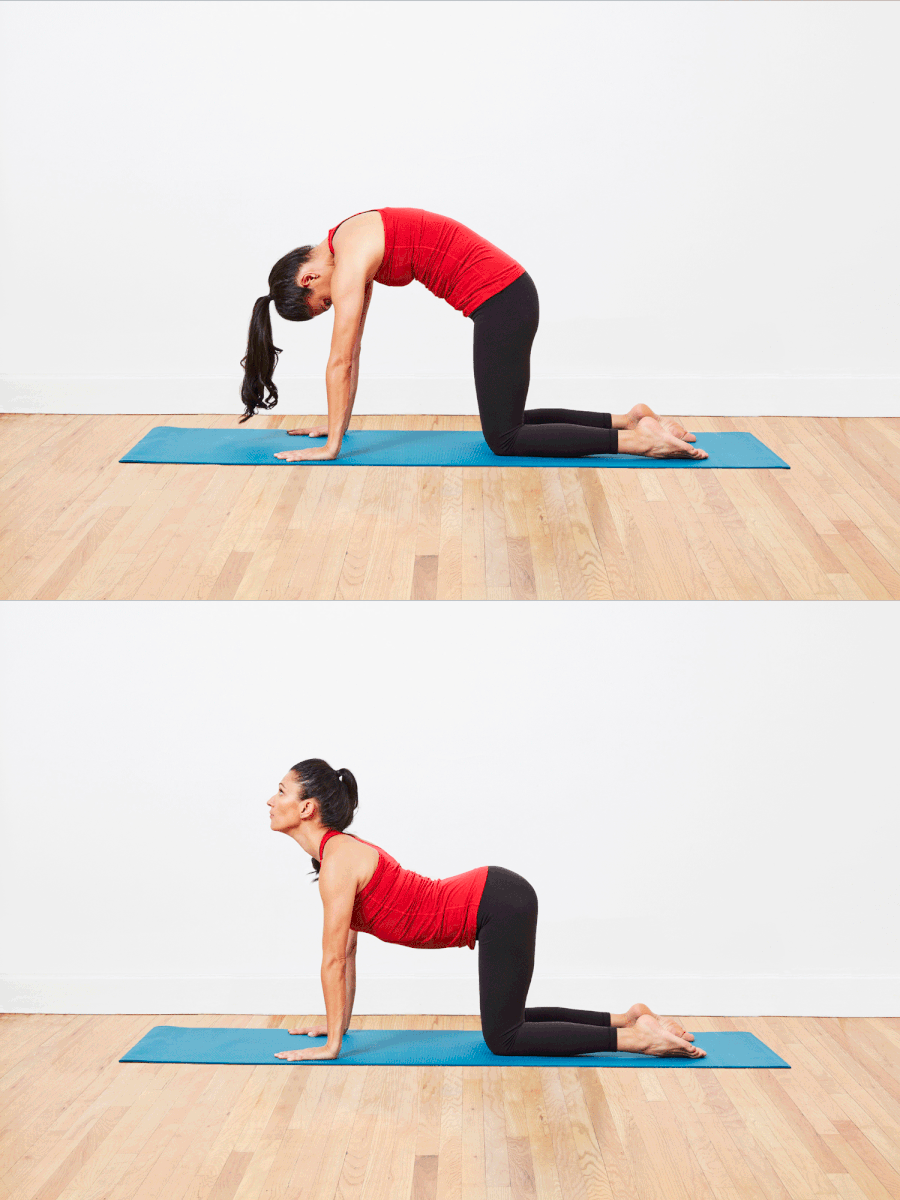
Equipment Needed: None (Bodyweight Exercise)
Optional: A yoga mat for comfort
How to Do It:
- Begin on all fours.
- Inhale as you arch your back (cow), lifting your chest slightly.
- Exhale as you round your spine (cat), drawing your navel inward.
- Move slowly and with control.
Benefits: Improves spine mobility, reduces stiffness, and relaxes the erector spinae muscles.
5. Forearm Plank (Core Stability for Lower Back Support)

Equipment Needed: None (Bodyweight Exercise)
Optional: A yoga mat for comfort
How to Do It:
- Position yourself on your forearms and toes.
- Keep your body in a straight line from head to heels.
- Engage your core and avoid letting your hips sag.
- Hold for 20–40 seconds.
Pro Tip: Contract your glutes while keeping your back straight to increase erector spinae activation.
Benefits: Improves general stability, core strength, and posture.
These movements are suitable for beginners, older adults, and even individuals following a rehabilitation plan, as long as they’re performed with proper form and control. When done consistently at home, they can help build a stronger, more resilient lower back.
That said, not all back exercises are appropriate for everyone. Avoid movements that involve excessive loading, poor technique, or aggressive spinal hyperextension — such as heavy deadlifts performed without proper form. These can place unnecessary pressure on the lumbar spine and increase the risk of strain.
To further support your spinal health, pair strengthening work with gentle erector spinae stretches and hip mobility exercises. Improving flexibility alongside strength helps maintain balance in the muscles that support your lower back.
How to Perform Erector Spinae Exercises Safely at Home
Strengthening your lower back should feel controlled — not aggressive. While these movements are beginner-friendly, proper execution matters.
Here’s how to protect your spine while training:
1. Warm-Up Properly
Before beginning any erector spinae exercises, spend at least 5-10 minutes doing light cardio and erector spinae stretches to warm up the muscles. Dynamic movements, such as moderate back extensions and cat-cow stretches, help prepare your spine for activity.
2. Maintain Proper Form
Good posture is essential, especially for erector spinae exercises for lower back pain. Keep your core engaged, your back straight, and do not overexert your lower spine. Poor posture can cause injury, especially in the elderly or those undergoing physiotherapy.
3. Progress Gradually
If you are new to these workouts, start with fewer repetitions and less resistance. As your erector spinae muscles grow, increase the intensity gradually. This strategy is essential for both beginners and seniors to avoid overexertion.
4. Listen to Your Body
Some activities can be dangerous, especially for those with back problems. Be mindful of erector spinae exercises to avoid, such as hard deadlifts and deep hyperextension, if they cause pain. If discomfort persists, see a physiotherapist before proceeding.
Following these safety precautions will allow you to successfully develop your erector spinae muscles and reduce the risk of injury.
How to Add Erector Spinae Exercises Into Your Weekly Routine
You don’t need to train your lower back every day to see progress. In fact, recovery is part of how muscles get stronger. Two to four focused sessions per week are more than enough for most people.
The goal isn’t constant volume, it’s consistent, controlled effort.
A Simple Beginner Plan for Lower Back Strength
If you’re new to targeted spinal training, start conservatively:
- 2–3 sets per exercise
- 8–12 slow, controlled repetitions (or 20–30 second holds)
- 3 sessions per week
Begin with foundational movements like the bird-dog, glute bridge, and cat-cow to build stability before increasing intensity. These exercises activate the erector spinae muscles without placing excessive compression on the lumbar spine.
Focus on form first. Strength follows good mechanics.
How to Progress Safely as You Get Stronger
As your lower back endurance improves, progression should feel gradual — not aggressive.
You can increase difficulty by:
- Extending hold times
- Slowing down the tempo
- Adding light resistance bands to bridges
- Increasing total sets slightly
If you’re recovering from injury or following a physiotherapy program, stick to exercises prescribed by your healthcare provider. Individuals with previous lower back pain should prioritize control and spinal alignment over heavier resistance.
Strength is built over weeks and months — not in a single session.
Recovery and Injury Prevention Tips
Your erector spinae muscles work closely with your core, glutes, and hamstrings. Supporting those muscle groups improves spinal stability and reduces unnecessary strain.
To protect your lower back:
- Avoid heavy lifting if your form is inconsistent
- Skip deep hyperextensions that cause compression
- Stretch tight hip flexors and hamstrings regularly
- Allow at least one rest day between intense sessions
Mobility plus strength is what keeps the spine resilient.
When to Stop and Reassess
Mild muscle fatigue is normal when performing erector spinae exercises. Sharp pain, numbness, tingling, or radiating discomfort is not.
If an exercise increases joint pain rather than muscle fatigue, stop immediately and reassess your technique. Persistent symptoms should be evaluated by a medical professional.
Training your lower back should feel controlled and progressive — not forced.
Who Should Avoid or Modify These Exercises?
While erector spinae exercises are generally safe when performed correctly, some individuals should proceed with caution or seek medical guidance first.
You should consult a healthcare professional before starting if you have:
- A recent lumbar disc injury or herniation
- Severe or radiating nerve pain (such as sciatica)
- Recent spinal surgery
- Unexplained or worsening back pain
- Structural spinal conditions requiring medical supervision
If any exercise increases sharp pain, tingling, or numbness, stop immediately. Mild muscle fatigue is normal — joint or nerve pain is not.
Strengthening your lower back should feel controlled and progressive, not aggressive.
Final Thoughts: Building a Stronger Lower Back at Home
Don’t delay—get started today! Even without equipment, basic movements like erector spinae stretches and bodyweight exercises can be effective. Be consistent, listen to your body, and increase the intensity gradually for long-term benefits.
Your lower back supports you every single day when you sit, stand, lift, bend, or even just walk. When the erector spinae muscles are weak, that support system slowly breaks down. Posture slips. Stiffness builds. Discomfort becomes “normal.”
But it doesn’t have to stay that way.
With consistent erector spinae exercises, you can rebuild strength exactly where your spine needs it most. These simple, at-home movements improve lower back stability, posture control, and long-term spinal endurance — without machines or heavy weights.
You don’t need to overhaul your entire routine. Start with a few focused sets. Prioritize control over speed. Progress gradually as your lower back becomes stronger and more stable.
Small, consistent effort compounds. And over time, that consistency is what turns a weak, tight lower back into one that feels supported, steady, and resilient.
Your spine carries you through life. Training it properly is not optional, it’s foundational.
Also Read:
4 Best Sauerkraut for Gut Health: Top Brands to Buy in 2025
6 Best Chair Yoga Apps for Seniors in US 2025(Free Download & iOS Options Included)
Kriya Yoga Breathing Techniques: 5 Powerful Methods for Inner Peace
Free 28-Day Chair Yoga for Seniors (Printable PDF & Chart + Daily Challenge Plan)
Yoga for Beginners: Complete Step-by-Step Guide to Start at Home 2026 (Poses, Routine & Free PDF)
Chair Yoga for Seniors with Arthritis: 28-Day Plan, Safe & Pain-Free Mobility
10- Minutes Daily Yoga Routine For Emotional Release and Healing (7 Gentle Poses)

Jai Mehta
Jai Mehta is the Co-Founder of Mindfullyoga and the technical revolutionary dedicated to restoring the ancestral gift of Yoga to the modern world.Rooted in his Indian heritage and a lifelong philosophical quest to understand the real meaning of Yoga, Jai's mission is driven by a powerful truth: that this profound science has been unjustly diminished.A qualified Mechanical Engineer (B.Tech) with rigor gained from a project internship at ISRO, Jai applies a scientific mindset to solve the "How" of the Yoga Revolution. His expertise is used to dismantle the inefficient and confusing instruction sold by the $125 Billion market by engineering delivery systems that are practical, scalable, and safe.Jai ensures that the philosophical truth championed by Co-Founder Nandini Sharma is accurately and purely transmitted. He leverages technology to make the core teachings of their ancestors accessible and clear, positioning Mindfullyoga as the definitive global authority where Ancient Wisdom meets Engineering Integrity.