
-
 by
Rahul Kulhari
by
Rahul Kulhari - March 15, 2026
- 0 Comments

Reviewed for safety, clarity, and accessibility by Nandini Sharma, Co-Founder of Mindfullyoga and a Chair Yoga Specialist focused on safe movement for seniors.
Table of Contents
You may be thinking, “I’m not sure yoga is for me anymore.” It is natural to feel this way, especially if you’re constantly worried about your balance and joint pain. As you worry more, you start to lose confidence in your movements; chair yoga can help you reclaim that lost confidence.
Chair yoga poses are designed to be safe, supportive, and comfortable for seniors and individuals with limited mobility. What makes chair yoga particularly well-suited for older adults is its adaptability and the safety net the chair provides throughout the practice.
Our Mindfullyoga team came up with this 7 day chair yoga plan for seniors that may support your flexibility, balance, and daily mobility when practiced slowly and at your own pace.
A Quick Note: Everything shared in this guide is for general wellness only and isn’t a substitute for professional medical advice. When in doubt, always ask your doctor first.
Think of these chair yoga exercises not as a workout to get through, but as seven small gifts you’re giving to your body for a little more ease, a little more strength, and a little more comfort in your daily life.
Who This 7 Day Chair Yoga Plan Is Designed For
Taking your first step toward a new movement routine is an act of self-care and well-being, and this 7 day chair yoga plan is crafted to meet you exactly where you are today, prioritizing your progress while keeping your comfort and safety in mind.
This beginner chair yoga plan may be just right for you if:
- You’re an adult over 60, new to exercise, and looking for something that you can ease into without feeling overwhelmed or overexerted.
- You’ve been feeling a little stiffer than usual. If you find that your joints are a bit rusty and stiff, or your flexibility is not what it used to be, these movements can help you lubricate your joints.
- You’ve been less active for a while, perhaps due to an illness, a recovery period, or simply life getting in your way. This 7 day plan offers you a gentle, no-pressure way to ease back into movement naturally.
- Caregivers supporting an older parent, spouse, or client: Chair yoga poses in this guide are well-structured, easy to guide, follow, and kind to the body at any level.
- Anyone seeking low-impact movement: If traditional yoga feels intimidating or inaccessible to you, the chair in this practice becomes a reliable partner so you can stretch and get all the benefits of traditional yoga.
One important thing before you begin: If you are living with specific medical conditions such as osteoporosis, vertigo, or recent joint replacements, please consult your healthcare professional or physical therapist before beginning.
Taking this step first means you can move through this guide feeling confident and secure throughout the 7 days.
What Is Chair Yoga?
You may have heard the term before and wondered, “Can yoga really be practiced in a chair?” The answer is yes, and for many older adults, it is considered one of the most comfortable and secure movement exercises.
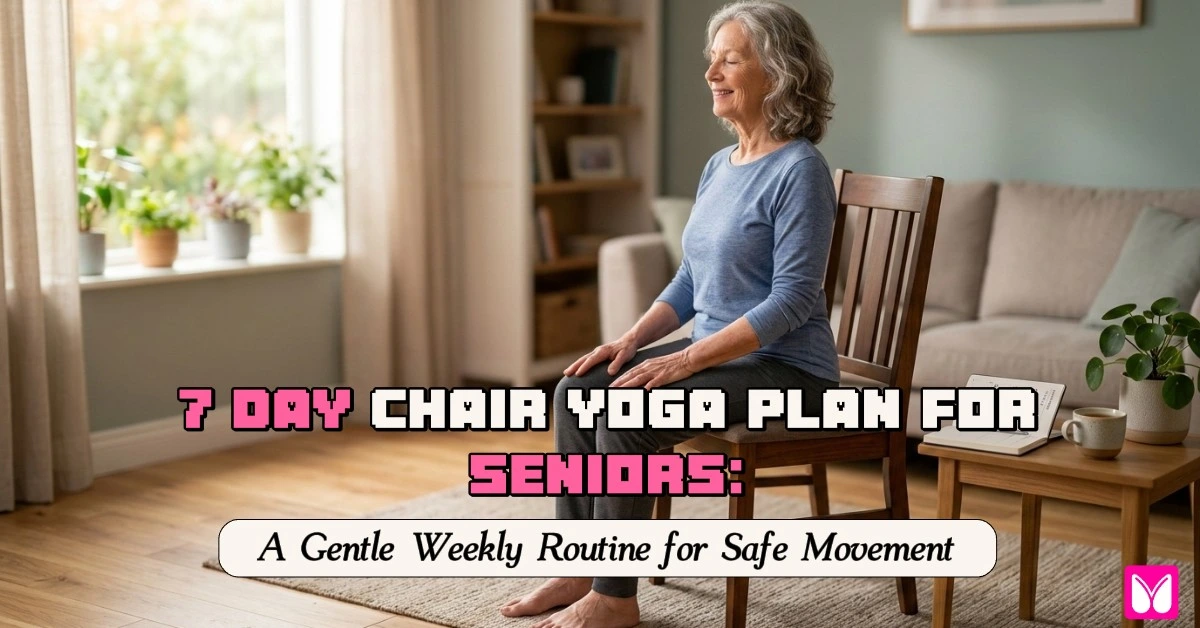
Chair yoga is simply a yoga practice that is performed while being seated in a chair. The gentle stretches, breathing exercises, and mindful movements that make traditional yoga so beneficial are all still there; they’ve simply been adapted so that you never need to get down on the floor or worry about losing your balance.
Chair yoga exercises for seniors were specifically developed for people who are dealing with limited mobility, joint discomfort, balance-related concerns, or who are just beginning to explore movement again.
Rather than pushing your body into difficult positions, gentle chair yoga for seniors works with your body through slow-paced,easy-to-follow sessions, and can be done from the comfort of your own home.
Is Chair Yoga Good for Seniors?
This is a fair and important question to ask, and the thoughtful answer is that for many older adults like you, chair yoga can be a genuinely positive addition to their daily life. When practiced carefully and with appropriate guidance, chair yoga may support flexibility and help you maintain your mobility.
That being said, everyone’s body and health condition are different, so what works beautifully for one person might need modification for another. That’s why it is wise to consult your healthcare provider before beginning any new routine.
Why Many Seniors Choose Chair Yoga
There are a few simple reasons why so many older adults find themselves drawn to chair yoga and why they stick with it.
- Low-Impact Seated Format: Chair yoga is considered a low-impact exercise. The seated format ensures that there is no unnecessary strain on your joints, and you can focus on stretching and strengthening the upper body and core in your comfort range without putting your full body weight on your sensitive joints.
- Reduced Fall Risk: Traditional yoga often requires floor work, which means you often need to move from one position to another. For those with balance concerns or vertigo, this can be daunting. Because you practice with a chair in chair yoga, it provides you with a constant, stable base and reduces the risk of falling.
- Adaptable to Your Level: The greatest strength of gentle chair yoga for seniors is its flexibility. Its movements can be easily adjusted to match your current ability, like if raising arms over your head feels uncomfortable, you can simply rest them on your shoulders.
The combination of safety, simplicity, and effectiveness makes chair yoga feel less like exercise and more like a small, kind act of self-care.
Potential Chair Yoga Benefits for Older Adults
According to the National Institute on Aging, regular gentle movement can support overall health and mobility in older adults. In chair yoga, practicing yoga by moving slowly and mindfully, you give your body the attention it deserves.
While it is not a medical treatment or a cure for chronic conditions, many seniors find that incorporating these gentle movements into their routine provides a sense of physical and mental well-being.
Let’s take a closer look at what a consistent, gentle practice may offer you over time.
- Gentle stretching: The slow, mindful stretches in chair yoga may help you ease the stiffness in your joints. This may help you improve support and mobility when performing simple tasks like reaching for a container or putting on a coat.
- Improved Circulation: Sitting for long durations can sometimes make you feel sluggish or heavy in your legs. In gentle seated yoga, even small movements like rotating your ankle or opening and closing your fist can improve your circulation.
- Kinder Relationship with Your Balance: You practice chair yoga with an erect spine, and by focusing on your posture and “center” while seated, you build a stronger mind-body connection. Over time, this gently encourages your body’s awareness.
- Relaxation and Stress Reduction: The deep, rhythmic, slow breathing in chair yoga can help you calm your nerves, which often leads to better sleep and a more relaxed outlook.
- Support for Daily Movement: If you practice consistently, it helps you strengthen your core and leg muscles, and helps in maintaining the stamina needed for small daily movements.
It is important to view chair yoga as a supportive movement practice, not a medical treatment.
Safety Tip: If you have been diagnosed with a specific condition, such as sciatica or severe arthritis, always prioritize the advice of your doctor or physical therapist.
Safety Tips Before Starting Your 7 Day Chair Yoga Plan
this 7 day chair yoga plan for seniors, let’s ensure your space is safe and supportive. Taking a few minutes to set up before starting your practice ensures that you focus entirely on your movement without worrying about anything else.
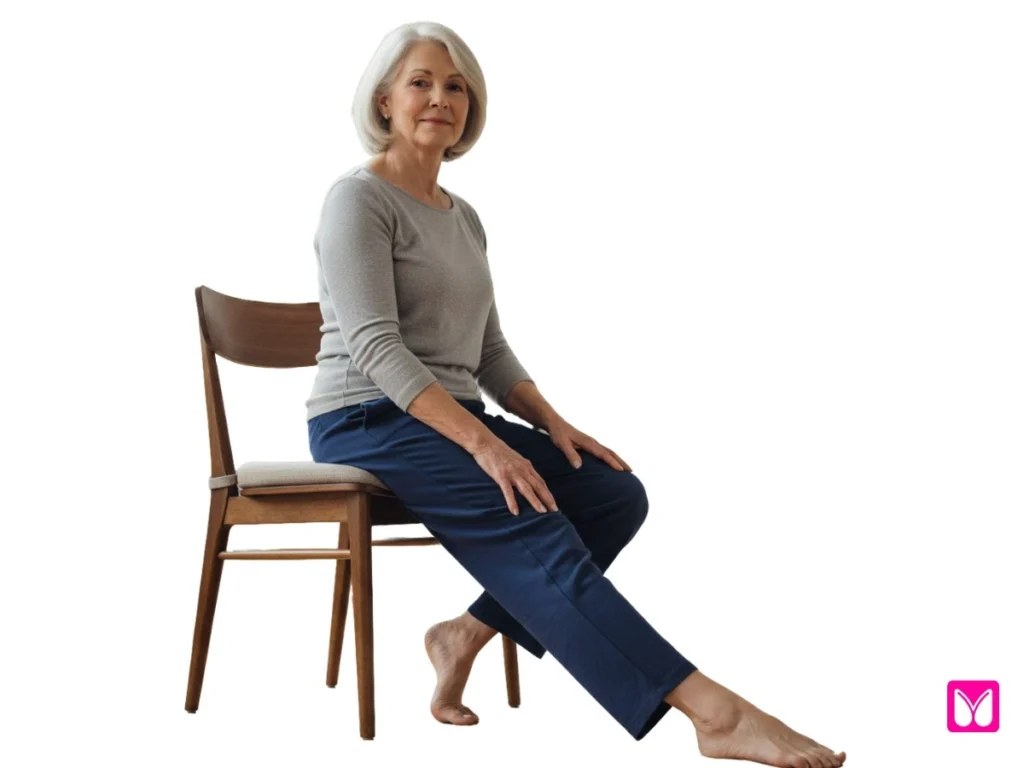
Preparing Your Space and Body
To get the most out of this printable chair yoga routine for seniors, keep the following safety guidelines in mind:
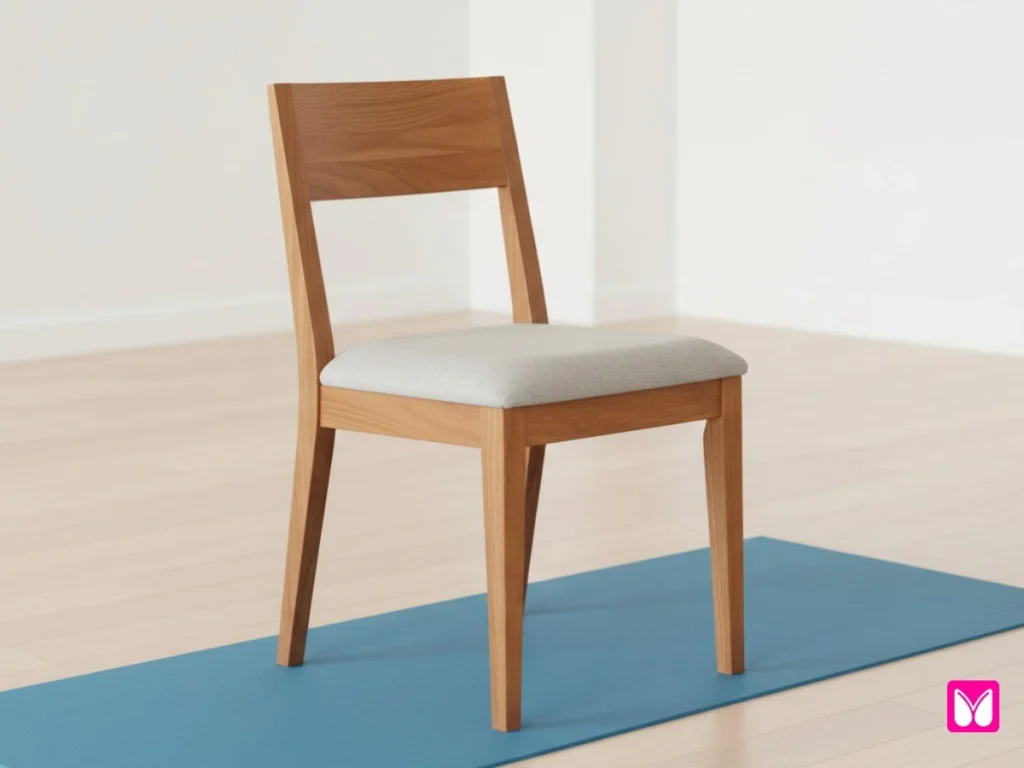
- Choose the Right Chair: Choosing the right equipment is the first step when you start a new routine, and here, your equipment is a chair. Your chair should allow your feet to rest flat on the floor with your knees at a comfortable 90-degree angle. You want something sturdy, stable, and a solid armless dining chair works beautifully. Especially avoid chairs with wheels or overstuffed cushions that might make your spine tilt.
- Check Your Surface: Place your chair on a non-slippery surface. If you have a slippery surface, use a carpet or yoga mat under the chair for more stability.
- Dress for Comfort: Wear loose, breathable clothing that allows you to move freely during stretches. And using sturdy, flat-soled shoes or bare feet (if your floor isn’t slippery) is usually best for maintaining a solid connection with the ground.
- Maintain a Neutral Spine: Aim to sit tall, imagine a thread pulling from the top of your head. This neutral spine position protects your back and helps each movement work the way it’s intended to.
- The “Slow and Steady” Rule: Move slowly and avoid any sudden jerky motion during the whole practice. Remember, chair yoga is about the journey of the movement, not the destination.
Listening to Your Body’s Signals
Your body is your best teacher and guide; you should never ignore its signals.
- The “No Pain” Principle: A gentle pull or warm sensation is normal during the stretch. However, if you feel sharp, pinching, stabbing pain, or intense discomfort, please stop immediately and return to a neutral seated position.
- Dizziness: If you feel dizzy at any point, especially during movements that involve tilting of the head, simply pause, tuck your chin slightly, and take a few deep breaths until the feeling passes.
A Final Safety Boundary
If you’re a senior living with chronic health conditions, ongoing joint pain, or a recent injury, it’s always wise to talk with a healthcare professional before starting any new exercise routine. A quick conversation with your healthcare provider can help ensure the movements you choose are safe and comfortable for you.
Also Read: Is Chair Yoga Safe for Seniors with Osteoporosis, Arthritis, or Sciatica?
The Complete 7 Day Chair Yoga Plan for Seniors (Beginner Friendly)
Before you begin your first session, here’s something worth holding onto: this is not a strict workout program. There are no performance targets to hit, no sessions to push through, and absolutely no pressure to do everything perfectly. This 7 day chair yoga plan for seniors is designed to be a gentle companion to your daily routine.
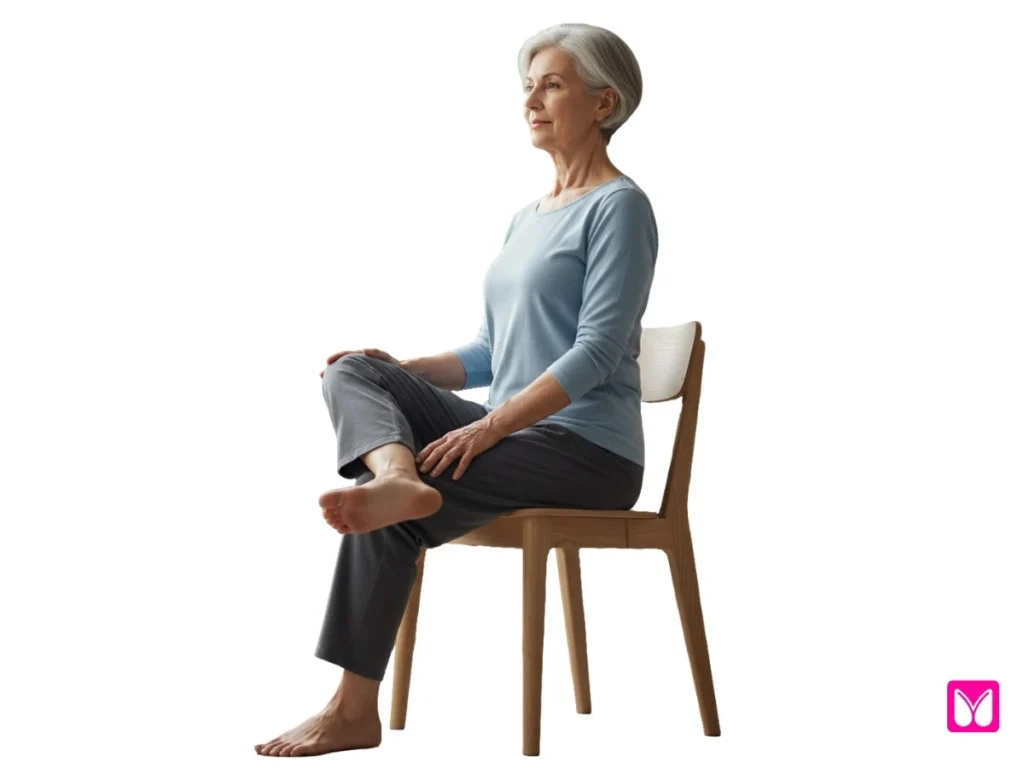
Each session is designed to last around 10 to 15 minutes, short enough to fit comfortably into your morning, afternoon, or whenever feels right for you. Always remember that your goal is consistency and comfort, not intensity.
How to Approach Your Daily Session
As you move through this week, always keep a safety-first approach to your practice.
- Start with a “Check-In”: Before starting, sit quietly for 1 minute. Notice how your body feels. Are you tired? Stiff? Energetic? This helps you determine how deeply you should move during each pose.
- Keep it Breath-Led: If you find yourself holding your breath, you may be pushing too hard. Calm yourself, relax your body, and let your breath guide your movement.
- The 70% Rule: In the beginning, only try to move 70% of your maximum range. This will leave a 30% buffer, protecting you from overstretching and getting hurt.
A Mindfullyoga Reminder: This chair yoga plan is a starting point in your yoga journey. So if your body tells you that Day 1 felt so good and you want to repeat it before moving to Day 2, please do so. Your intuition is your best guide during this whole practice.
Also Read: Free 28-Day Chair Yoga for Seniors (Printable PDF & Chart + Daily Challenge Plan)
Your 7 Day Chair Yoga Plan at a Glance
If you prefer to see the full week before starting, here is a simple overview of this gentle chair yoga routine. Each session takes about 10–15 minutes and focuses on a different area of the body.
| Day | Focus | Key Movements |
|---|---|---|
| Day 1 | Breathing & Posture | Seated Breathing, Neck Stretches, Shoulder Rolls |
| Day 2 | Upper Body Mobility | Arm Raises, Elbow Bends, Seated Side Stretch |
| Day 3 | Lower Body Movement | Seated Marching, Leg Extensions, Ankle Circles |
| Day 4 | Balance Awareness | Seated Weight Shift, Heel Lifts, Toe Lifts |
| Day 5 | Gentle Flexibility | Seated Forward Reach, Chest Opening Stretch, Side Stretches |
| Day 6 | Relaxation & Recovery | Slow Breathing, Neck Release, Shoulder Mobility |
| Day 7 | Full Body Flow | Opening Breath, Arm Flow, Seated Marching, Full-Body Reach |
This simple weekly structure allows your body to move gently while giving different muscle groups attention throughout the week.
If any movement feels uncomfortable, you can always repeat a previous day or reduce the range of motion.
Let’s walk through each day of this 7 day chair yoga plan for seniors step by step.
Day 1 of Your 7 Day Chair Yoga Plan for Seniors – Gentle Breathing and Posture Awareness
Welcome to your first day. Today is all about “setting the foundation.” We won’t be doing anything complex today; instead, we will focus on waking up your posture and easing the tension that often gathers in your upper body. This session is designed for relaxation and building a quiet posture awareness that will support you all week.
1. Seated Breathing (3–5 Minutes)
Before we start movements, we do some breathing exercises that settle your nerves and prepare your muscles.
- How to do it: Sit toward the front half of your chair with your feet flat on the floor, hip-width apart, and rest your hands palm-down on your thighs. Close your eyes and inhale slowly through your nose, feeling your chest and belly expand, and then exhale gently through your nose.
- Mindfullyoga Safety Tip: If you feel any lightheadedness or dizziness, return to your normal breathing pattern
2. Gentle Neck Stretches (1–2 Minutes)
A good, gentle neck stretch feels blissful, but these movements should be slow and natural.
- How to do it: On an exhale, slowly drop your right ear toward your right shoulder, not forcing it down, just letting gravity do the work softly. Hold for two breaths, then slowly lift your head back to center. Repeat on the left side.
- Mindfullyoga Safety Tip: Avoid rolling your head in a full circle, as this can put pressure on the cervical spine. Stick to side-to-side movements only.
3. Shoulder Rolls (1–2 Minutes)
This is wonderful for “undoing” the slouching of your posture.
- How to do it: Keep your arms hanging relaxed at your sides. Inhale as you lift your shoulders toward your ears. As you exhale, slowly roll them back and down, feeling your shoulder blades slide together slightly.
- Mindfullyoga Safety Tip: Keep the movement fluid. If you hear a little “crunching,” just make your movements smaller and slower.
When you’ve completed all three movements, take one final deep breath in and let it go slowly. Notice how your body feels now compared to when you sat down.
Day 2 of the 7 Day Chair Yoga Plan for Seniors – Upper Body Mobility
Today, we shift our focus slightly lower and move from the neck down into the shoulders and the length of your back. This session may help you support upper body flexibility, which can make your daily tasks, like reaching for a favorite mug on a high shelf or putting on clothes, easier for you.
1. Seated Arm Raises (2–3 Minutes)
This movement helps to wake up your shoulder joints and lubricate them.
- How to do it: Start with your arms resting at your sides, palms facing inward toward your chair. As you inhale slowly, raise your arms out to the sides and upward. Only go as high as feels comfortable; if your shoulders feel tight, reaching to shoulder height is perfectly fine. As you exhale, slowly lower them back down.
- Mindfullyoga Safety Tip: If you have had a recent shoulder injury or surgery, you can switch it to raising one arm at a time while holding the side of the chair with your other hand for extra stability.
2. Elbow Bends (2–3 Minutes)
This gentle movement helps improve mobility in your elbows and shoulders, which can make everyday activities like lifting light objects, brushing your hair, or putting on a jacket feel easier.
- How to do it: Sit comfortably with your spine tall and your feet resting flat on the floor. Let your arms relax by your sides. Slowly bend both elbows, bringing your hands toward your shoulders. Then gently lower your arms back down to the starting position. Move slowly and repeat this motion 8 to 10 times.
- Mindfullyoga Safety Tip: If you have arthritis or stiffness in your elbows or shoulders, keep the movement slow and controlled. Avoid locking the elbows when you lower your arms.
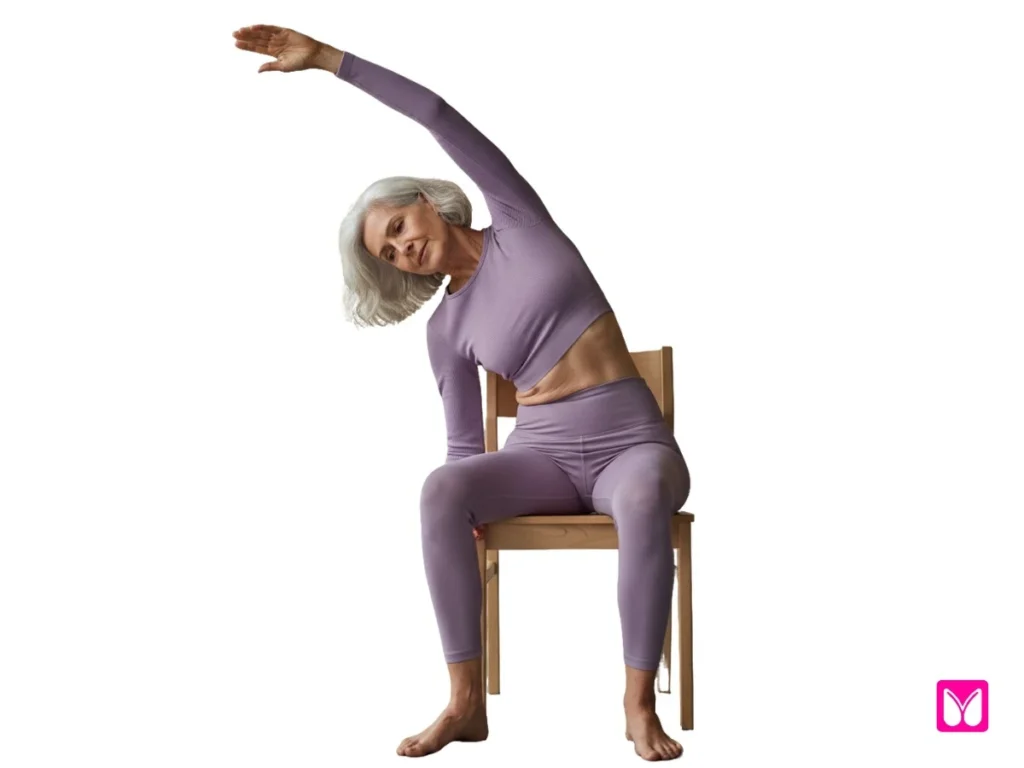
3. Seated Side Stretch (1–2 Minutes)
This movement gently stretches the muscles along the sides of your torso and ribcage, which may help improve posture and support comfortable breathing.
- How to do it: Sit tall with both feet firmly planted on the floor. Raise your right arm slowly overhead. Gently lean your upper body to the left side, keeping both hips grounded on the chair. Hold the stretch for two to three slow breaths, then slowly return to the center. Repeat the movement on the other side.
- Mindfullyoga Safety Tip: Move only as far as feels comfortable. Avoid leaning too deeply, and keep both sit bones resting on the chair for stability.
By focusing on upper body mobility, you are helping your ribcage to expand more fully. This not only supports your posture but also allows your lungs to take in more oxygen, which can naturally boost your energy levels.
Day 3 of the 7 Day Chair Yoga Plan for Seniors – Lower Body Movement
Today, we’re turning our attention to the lower body, your legs, ankles, and knees. These are the parts of your body that carry you through your day, and yet they’re often the first to feel stiff, heavy, or overlooked.
These movements are designed to gently support leg mobility and encourage healthy circulation in your legs.
1. Seated Marching (2 Minutes)
This gently seated movement engages the hip flexors and lower abdominals, which are vital for walking.
- How to do it: Hold onto the sides of your chair seat for stability. Imagine you are stepping over a very small book. Lift your right knee toward the ceiling just an inch or two, then set it back down softly. Repeat with the left knee.
- Mindfullyoga Safety Tip: Keep your spine tall. Try not to lean back as you lift your leg; if you find yourself leaning, try lifting the foot just a tiny bit lower.
2. Gentle Leg Extensions (2–3 Minutes)
This chair yoga exercise helps you strengthen the muscles around your knee cap without putting the stress of your full body weight on them.
- How to do it: Ensure your back is supported by the back of the chair. As you exhale, slowly straighten your right leg out in front of you. You don’t need to “lock” the knee; a soft bend is great. Hold for a second, then slowly lower it back down. Repeat 5 times on each side.
- Mindfullyoga Safety Tip: move your leg in a comfortable range, only until it feels comfortable. If you feel any “clicking” or discomfort in the hip, keep the movement very small.
3. Ankle Circles (2–3 Minutes)
- How to do it: While sitting securely, lift your right foot just an inch or two off the floor. You can keep your knee bent. Slowly “draw” a circle with your toes in the air. Go five times clockwise, then five times counter-clockwise. Lower the foot and repeat with the left side.
- Mindfullyoga Safety Tip: If lifting your foot feels heavy, you can keep your heel on the floor and simply lift your toes to make the circles.
These lower-body chair yoga movements help encourage blood flow back up toward the heart. Many seniors find that these specific chair yoga exercises for seniors help their legs feel “lighter” and more responsive during their daily walk.
By the middle of this 7 day chair yoga plan for seniors, many people begin to notice small improvements in posture and circulation.
Day 4 of the 7 Day Chair Yoga Plan for Seniors – Balance Awareness
Today’s focus is balance awareness, something that becomes increasingly important as you get older, and yet something that’s rarely talked about until it becomes a concern. We will focus on balance exercises for seniors, but we will approach them from the ground up. Balance isn’t just about standing on one leg; it starts with a strong core and an awareness of where your body is in space.
1. Seated Weight Shift (2–3 Minutes)
This gentle movement helps your body become more aware of how weight is distributed across your hips and spine, which plays a role in maintaining balance during daily activities.
- How to do it: Sit tall near the front of your chair with both feet flat on the floor. Slowly shift your weight slightly toward your right hip while keeping both feet grounded. Hold this position for a moment, then gently return to the center. Now shift your weight toward your left hip in the same way. Continue moving slowly from side to side for 8–10 repetitions.
- Mindfullyoga Safety Tip: Keep your movements small and controlled. Avoid leaning too far to either side and keep your feet firmly planted on the floor.
2. Heel Lifts (2–3 Minutes)
Heel lifts help strengthen the muscles in your calves and ankles, which are important for stability and walking.
- How to do it: Sit upright with your feet flat on the floor. Keeping your toes touching the ground, gently lift both heels upward. Hold for a moment, then slowly lower your heels back down. Repeat this movement 8–10 times at a comfortable pace.
- Mindfullyoga Safety Tip: Hold the sides of your chair if you need extra support. Move slowly and avoid bouncing your heels up and down.
3. Toe Lifts (1–2 Minutes)
This exercise activates the muscles at the front of your lower legs and ankles, which helps support balance and foot control.
- How to do it: Sit tall with your heels resting on the floor. Gently lift your toes upward toward the ceiling while keeping your heels grounded. Hold for a moment, then slowly lower your toes back down. Repeat this movement 8–10 times.
- Mindfullyoga Safety Tip: Move slowly and comfortably. If you feel any strain in your ankles, simply make the movement smaller.
When you’ve finished today’s session, sit quietly for a moment with both feet flat on the floor. Take one long, slow breath and notice how present and grounded your body feels right now.
Day 5 of the 7 Day Chair Yoga Plan for Seniors – Gentle Flexibility Routine
We often spend much of our day leaning forward, whether we are reading, eating, or using a phone.
This routine is designed to gently counteract that “closing in” by stretching the front of the body and reaching through the arms.
Today, we will focus on lengthening rather than bending. To keep your back safe, we will avoid deep spinal flexion (folding deeply at the waist), which can put unnecessary pressure on your spine.
1. Seated Forward Reach (2–3 Minutes)
This move helps stretch the space between your shoulder blades and the back of your arms without straining your lower back.
- How to do it: Sit tall with your feet flat and bring your hands together in front of your chest. On an exhale, slowly push your hands forward as if you are gently pushing a balloon away from you. Stop when your arms are straight; the whole time, your back should keep touching the chair. And then inhale to bring your hands back to your heart.
- Mindfullyoga Safety Tip: Keep your gaze forward. Do not lean your torso forward or “hunch” your shoulders.
2. Chest Opening Stretch (2 Minutes)
This is a wonderful “antidote” to slouching. It helps you open the muscles we generally use for breathing.
- How to do it: Rest your hands on the sides of your chair or behind your hips on the seat. Gently roll your shoulders back and down. Lift your chest slightly, feeling a pleasant stretch across the front of your shoulders.
- Mindfullyoga Safety Tip: Be very careful not to drop your head back too far. Keep your chin slightly tucked to protect your neck.
3. Side Stretches (2 Minutes)
This seated movement helps maintain the flexibility of the muscles between your ribs, which supports healthy lung capacity.
- How to do it: Let your right arm hang toward the floor. Reach your left arm toward the ceiling (or keep your hand on your shoulder if that feels better). Lean just a tiny bit to the right, feel your left ribs open up. Take two deep breaths here, then switch sides.
- Mindfullyoga Safety Tip: If you feel any “pinching” in your lower back, simply reduce the lean and you should feel the stretch in your sides, not your spine.
Maintaining flexibility in the chest and sides makes it easier to take deep, nourishing breaths for you. A gentle chair yoga session like this may make you feel more “upright” and have a bit more energy for the rest of your afternoon.
Safety Reminder: If you have been diagnosed with osteoporosis or arthritis, please keep these stretches very small. Focus on the feeling of “growing tall” rather than the feeling of “leaning far.”
Day 6 of the 7 Day Chair Yoga Plan for Seniors – Relaxation and Slow Stretching
The goal today isn’t to push for more flexibility, but rather to invite stress relief and gentle movement recovery into our routine.
1. Slow Breathing (3–5 Minutes)
A longer exhale tells your brain that you are safe and it is time to relax.
- How to do it: Sit back comfortably so the chair supports your spine fully, and now place one hand on your belly. Inhale through your nose for a count of four. Then, very slowly, exhale through pursed lips (like you’re blowing out a candle) for a count of six.
- Safety Tip: If you feel any shortness of breath, don’t worry about the count. Simply find a rhythm that suits you.
2. Neck Release (2 Minutes)
Tension often “hides” in the sides of the neck. We will use a very slow, passive stretch to encourage it to let go.
- How to do it: Sit tall and let your arms hang heavy like weights at your sides. Slowly drop your chin toward your chest rather than pushing it down; just let the weight of your head create a gentle length in the back of your neck. Take three slow breaths, then slowly roll your chin toward your right collarbone. Hold, then move to the left.
- Mindfullyoga Safety Tip: Move very slowly, and if you feel any sharp sensations, gently lift your head back to center.
3. Shoulder Mobility “Flossing” (2 Minutes)
This movement is designed to gently guide your shoulder joint through its natural range of motion without putting any extra strain on it.
- How to do it: Bring your fingertips to touch your shoulders (like bird wings). Slowly draw small circles in the air with your elbows. Make the circles as small or as large as feels comfortable.
- Safety Tip: If your shoulders “click,” make the circles smaller. Remember, chair yoga is about consistency, not about intensity.
Rest is not “doing nothing”; it is also an essential part of a routine for getting stronger. By slowing things down, you help lower your cortisol (stress hormone) levels and improve your body’s ability to recover. This session helps ensure that you finish your 7 day journey feeling refreshed rather than fatigued.
A Moment for You: While you practice today, try to let go of any “to-do” lists. For these ten minutes, your only job is to enjoy the sensation of your own breathing.
As you reach the final day of this 7 day chair yoga plan for seniors, the goal is simply to bring everything together gently.
Day 7 of the 7 Day Chair Yoga Plan for Seniors – Light Full-Body Chair Yoga Flow
Congratulations on reaching Day 7. Take a moment to let that sink in because it genuinely means something. Seven days ago, you decided to show up for yourself and your well-being, and here you are, having achieved exactly that.
Now all we have to do is wrap this 7 day chair yoga plan nicely. So today we will bring together the elements of breathing, upper body openness, and leg mobility into a cohesive, gentle flow.
1. The Opening Breath (2 Minutes)
How to do it: Sit tall with your feet grounded. Place your hands on your lap, palms up. Inhale and feel your spine grow an inch taller. Now exhale and feel your shoulders drop away from your ears. Repeat for five cycles to “land” in your practice.
2. Upper Body Harmonizing (3–5 Minutes)
Inhale your arms out to the sides like a bird’s wings. As you exhale, gently cross your arms over your chest as if hugging yourself. On your next inhale, open them wide again.
Mindfullyoga Safety Tip: Keep your movements fluid and soft. If your shoulders feel tired, try to keep your hands lower than your heart.
3. Lower Body Integration (3–5 Minutes)
While holding the sides of your chair for stability, gently “march” your feet in place. Lift one heel, then the other. If you feel strong, lift the entire foot an inch off the floor.
Mindfullyoga Safety Tip: Ensure your back stays in contact with the chair to support your spine while you move your legs.
4. The Full-Body Reach (2 Minutes)
Inhale and reach both arms forward. Exhale and pull your elbows back, gently squeezing your shoulder blades together. Finish by resting your hands on your thighs and taking three final, deep breaths.
5. Closing Breath (2 minutes)
Place one hand gently over your heart if that feels comfortable. Inhale slowly and deeply, feeling your chest rise beneath your hand. Exhale fully, feeling everything settle.
Repeat 4 to 5 times, and with each exhale, allow yourself to feel what you’ve accomplished this week.
Important Safety Reminder
This 7 day chair yoga plan is designed to be gentle and beginner-friendly for seniors. However, everyone’s body is different.
Please stop the exercise immediately if you feel:
- Sharp or sudden pain
- Dizziness or lightheadedness
- Chest pain or pressure
- Shortness of breath that feels unusual
- Numbness or tingling in the arms or legs
If any of these symptoms occur, sit comfortably and rest. If the symptoms continue, contact a healthcare professional or seek medical help right away.
If you have any existing medical conditions such as heart disease, severe arthritis, recent surgery, balance disorders, or high blood pressure, it is best to consult your doctor before starting this exercise routine.
Remember, the goal of chair yoga is gentle movement and comfort — never strain or push through pain.
Also Read: Powerful Meditation for Forgiveness and Letting Go
Where Do You Go From Here? Your Path Forward
After completing this beginner 7 day chair yoga plan for seniors, you may choose to repeat the weekly cycle as often as you like.
As your body adjusts, you can gradually extend your session length by repeating your favorite movements twice. It totally depends on your comfort and energy levels each morning.
Can Chair Yoga Help Seniors With Weight Management?
If you’ve searched for chair yoga for seniors to lose weight, here’s an honest and balanced answer.
The straightforward truth first: Chair yoga is a gentle, low-intensity form of a traditional yoga practice. On its own, it isn’t typically considered a primary weight-loss exercise, and it wouldn’t be fair to suggest otherwise.
But here’s what it may genuinely offer you:
- It keeps you consistently moving; even gentle daily movement is meaningfully better than staying still. Over time, that quiet consistency supports your body in ways that matter.
- It may support light calorie burn; nothing dramatic, but seated movement does engage your muscles and keeps your metabolism and blood circulation gently active throughout the day.
- It may improve your everyday movement habits; when exercise starts feeling enjoyable rather than difficult, you naturally tend to move more throughout your day.
- It works beautifully as part of a bigger picture. Chair yoga complements a healthy lifestyle that includes balanced nutrition, good rest, and staying active; it simply isn’t meant to carry that whole picture alone.
Many people discover that this 7 day chair yoga plan for seniors becomes the first step toward a more active lifestyle.
One important note: If weight management is a personal health goal for you, please speak with your doctor or a registered dietitian before making changes to your routine. Personalized professional guidance will always serve you far better.
How Often Should Seniors Do Chair Yoga?
When asking how often seniors should do chair yoga, the answer is rooted in a “safety-first” philosophy: consistency is much more valuable than intensity.
Your energy levels, your current mobility, your health history, and simply how your body feels from one day to the next all play a key role in finding the right rhythm for you.
That said, here’s a balanced approach to keep you limber and strong:
- 2 to 5 gentle sessions per week is a reasonable starting point for most seniors. If you’re just beginning, starting with 2 to 3 sessions and building gradually from there is a perfectly sensible approach.
- Keep sessions short and manageable: Somewhere between 10 and 20 minutes per session is generally considered appropriate for beginners. A shorter session done consistently and comfortably will always serve you better than a longer one that drains you.
- Rest days are not optional; they’re part of the practice. Your body does much of its quiet recovery and repair work on the days you’re not actively moving. Especially for older adults, honoring rest days is just as important as showing up for the sessions themselves.
- Let your body guide the pace. If you wake up feeling stiff, fatigued, or simply not yourself, it’s perfectly fine to rest, do less, or simply sit and breathe. Pushing through discomfort rarely can lead you anywhere good.
- Consistency matters far more than frequency. Comfortable, enjoyable sessions each week that you genuinely look forward to will do far more for your wellbeing than five sessions you’re forcing yourself to do.
As always, if you’re unsure what frequency is appropriate for your specific health situation, your doctor is the right person to ask. A quick conversation with them can give you confidence and assurance.
When Chair Yoga May Not Be Appropriate
Chair yoga is designed to be a gentle and suitable form of yoga for senior adults, but like any form of physical activity, it doesn’t automatically make it suitable for every person.
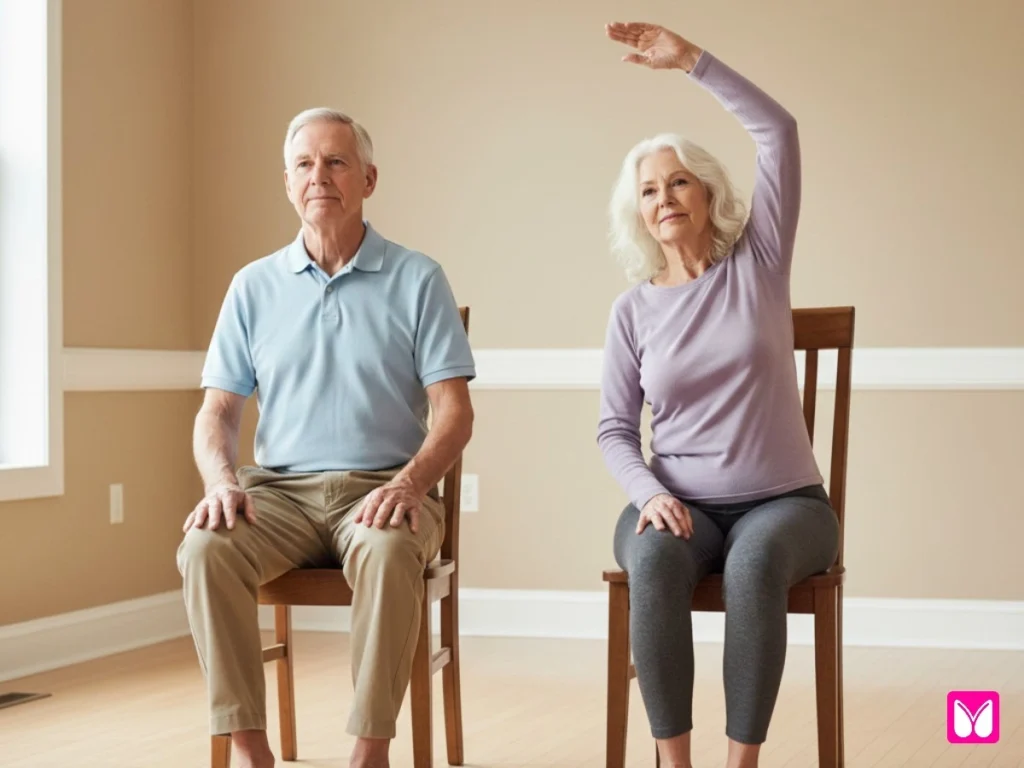
In some situations, chair yoga exercises for seniors may need to be postponed or modified under the direct supervision of a healthcare provider.
Also Read: Chair Yoga for Seniors with Arthritis: 28-Day Plan, Safe & Pain-Free Mobility
When to Pause and Consult Your Doctor
If you experience any of the following, please seek medical guidance before practicing:
- Severe Joint Pain: If you’re currently experiencing significant pain in your knees, hips, shoulders, or spine joints. Gentle movement may not be the right step for you right now.
- Recent Surgery: If you’ve had a recent surgical procedure, a fracture, or any physical injury recently, your body is still in a recovery process, and it deserves careful, professional guidance.
- Uncontrolled Balance Issues: If you’ve been experiencing frequent falls, unsteadiness, or balance problems, then it’s important to seek medical advice before starting any routine.
- Sudden Dizziness, Weakness, or Chest discomfort: If you experience any of these symptoms, whether during a session or in daily life, please pause your practice.
The most important thing to know is this: if you are in any doubt at all about whether chair yoga is safe for you or not. Please reach out to your healthcare provider before you begin. There is no movement session worth doing at the expense of your health and safety.
Download Your Free Printable 7 Day Chair Yoga Plan
We’ve put everything from this guide into one clean, easy-to-follow document for you.
Leave your name and email below, click the button, and I’ll send the 7-Day Chair Yoga Printable Plan to your inbox so you can start your practice gently at your own pace.
Print it out, keep it somewhere visible, and let it be your gentle daily reminder that a few quiet minutes of movement each day is one of the kindest things you can do for yourself.
Frequently Asked Questions
Here are some common questions many seniors ask when starting their journey with gentle chair yoga.
Is Chair Yoga Really Effective for Seniors?
Regular practice of chair yoga may support flexibility, mobility, and a greater sense of physical ease over time. This makes it somewhat effective for seniors with mobility and flexibility issues.
Does Chair Yoga Count as Exercise?
It’s considered a form of gentle physical activity because it engages your muscles, supports circulation, and encourages flexibility. For seniors returning to movement, it can be a genuine starting point.
Is Chair Yoga Better Than Walking for Seniors?
They serve different purposes. Walking supports cardiovascular health, while chair yoga focuses more on flexibility, breathing, and gentle strength. For seniors with balance or mobility concerns, chair yoga may feel more accessible. Where possible, a combination of both is ideal.
Can Chair Yoga Be Done Daily?
For many seniors, gentle daily chair yoga practice is perfectly reasonable, especially when sessions are short, and you’re listening to your body. That said, rest days matter too.
What Is the Single Best Balance Exercise for Seniors?
There isn’t one universal answer. Within chair yoga, supported standing and gentle core engagement may help support balance awareness over time. If balance is a specific concern for you, please speak with your doctor or physiotherapist for guidance tailored personally to you.
Final Thoughts on a 7 Day Chair Yoga Plan for Seniors
If there’s one thing worth taking away with you from this blog, it’s this: gentle, consistent movement has real value at any age, and you don’t need to do anything dramatic to start feeling the difference.
Chair yoga offers older adults a quiet, accessible way to keep their bodies moving without any strain, stress, or worry of overdoing it. A few things to always keep in mind as you move forward:
- Modifications are not compromises; they’re good sense. There is no version of chair yoga you’re supposed to be doing other than the one that feels right and safe for you.
- A 7 day chair yoga plan for seniors is a starting point, not a finish line. The real benefit comes from what happens after Day 7 when gentle movement quietly becomes part of your weekly rhythm.
- Your health always comes first. If you have an existing medical condition, have experienced recent pain or injury, or are simply unsure about anything in this plan, please speak with your doctor before or during your practice.
This 7 day chair yoga plan for seniors is meant to be repeated weekly at your own pace.
You’ve taken the time to read this, to consider it, and perhaps to try it. That already says something about the care you’re willing to give yourself. Whatever your next step looks like, we hope it’s a gentle one.
Also Read:
5 Easy Snacks for Balancing Insulin Resistance Naturally
5 Simple Erector Spinae Exercises to Relieve Lower Back Pain at Home (No Equipment Needed)
Yoga for Beginners: Complete Step-by-Step Guide to Start at Home 2026 (Poses, Routine & Free PDF)
Is Puppy Yoga Ethical? Benefits, Risks, and What No One Tells You
10- Minutes Daily Yoga Routine For Emotional Release and Healing (7 Gentle Poses)
Is Yin Yoga a Waste of Time? The Vṛtti Nirodha Sequence for Surrender, Stillness, and Mental Clarity
How This Guide Was Prepared
This guide was developed using publicly available research and conservative senior fitness recommendations from trusted health organizations such as the National Institutes of Health, the National Institute on Aging, and the Arthritis Foundation, along with peer-reviewed clinical studies on conditions commonly affecting older adults, including osteoporosis, osteoarthritis, and lower-back pain.
The movement guidance in this article follows a safety-first, low-impact approach designed specifically for seniors. Each recommendation prioritizes spinal protection, joint stability, fall prevention, and gradual improvements in mobility and range of motion.
Because every person’s health history and mobility level are different, the information in this guide is intended for educational and general wellness purposes only. It should not replace personalized medical advice, diagnosis, or treatment from a qualified healthcare professional.
Our goal is to help older adults feel more confident and informed about gentle movement, while always encouraging readers to prioritize their personal health needs.
About the Author
Rahul Kulhari is a wellness writer who focuses on senior mobility, mindful movement, and safe at-home fitness practices for older adults. His work centers on translating research-backed health information into practical, easy-to-understand guidance that seniors and caregivers can apply in daily life.
Rahul writes with a strong emphasis on clarity, safety, and accessibility, helping readers explore movement practices that support healthy aging without unnecessary strain or complexity.
About the Reviewer
Nandini Sharma is the co-founder of Mindfullyoga and a chair yoga specialist dedicated to helping seniors move safely and confidently. After leaving her corporate career due to burnout, she committed her work to mindful living and gentle movement education.
Through Mindfullyoga, she focuses on creating supportive wellness resources that encourage older adults to reconnect with their bodies through safe, accessible movement practices.
Her review of this article focused on:
- safety alignment of each exercise
- clarity of instructions for beginners
- suitability for seniors with joint, balance, or spine concerns

Rahul Kulhari
Rahul Kulhari is a wellness content specialist at Mindfullyoga, focusing on senior health, therapeutic yoga, and sustainable lifestyle practices for healthy aging. His work centers on evidence-based research, medically reviewed sources, and safe movement principles tailored specifically for older adults.He writes in-depth articles on chair yoga, joint mobility, arthritis-friendly exercises, balance training, fall prevention, and low-impact strength routines. Rahul ensures that all health-related content follows responsible wellness guidelines, avoids exaggerated claims, and prioritizes safety, accessibility, and clarity.With a strong emphasis on research accuracy and practical application, his goal is to help seniors and caregivers make informed decisions about movement, pain management, and daily wellness habits.