
-
 by
Emmanuel Okafor
by
Emmanuel Okafor - January 9, 2026
- 0 Comments

The Ultimate Guide to Connection, Trust, and Play
Table of Contents
I still remember my first partner yoga class. I walked in expecting the usual – my mat, my breath, my personal bubble of zen. Instead, the instructor paired us up and said, “Today, you’re going to fall, and someone’s going to catch you.”
That’s the thing about yoga.
Most of us roll out our mats for a journey inward. We close our eyes, tune out the world, and find that quiet space where it’s just us and our breath. But yoga poses for 2 flip that script entirely. They turn the journey outward, toward another human being, and suddenly your practice becomes less about perfection and more about connection.
What is two-person yoga called?
It goes by a few names, actually.
Most people call it Partner Yoga, where you and another person support, stretch, and balance together.
When lifts and acrobatic elements come into play, it becomes AcroYoga: a blend of yoga, acrobatics, and trust.
But if you want to get poetic about it? It’s a somatic practice of “Shared Prana,” where two people synchronise their energy and breath.
Here’s what surprised me most: partner yoga isn’t just a workout; it’s a transformative experience.
It’s a communication workshop disguised as a stretching session. You learn how much pressure is too much, when to push and when to yield, how to say “I need help” without words. Theseyoga poses for 2 teach you things about trust that no solo Downward Dog ever could, and research from Harvard Medical School confirms that synchronised physical activities like partner yoga can significantly reduce stress and improve emotional well-being
The Expert Insight: Addressing the Myths
Before we dive into the poses themselves, let’s address some common questions that frequently arise in yoga circles.
Are there only 84 yoga poses?
Here’s what the old texts say:
The Hatha Yoga Pradipika, written around the 15th century, describes 84 classical asanas. That number appears frequently in yoga philosophy, and 84 is considered sacred, representing the 84 cycles of life.
But here’s the beautiful part: Lord Shiva, the original yogi, is said to have taught 8.4 million poses; one for every living soul on Earth.
Every time two people come together, they create new variations.
Your partner’s height changes the pose, and their flexibility creates different angles.
The way you both breathe together shifts the entire experience. So no, there aren’t “only” 84 yoga poses. There are as many as we can imagine together.
What is a 4 shape yoga pose?
People search for this one constantly.
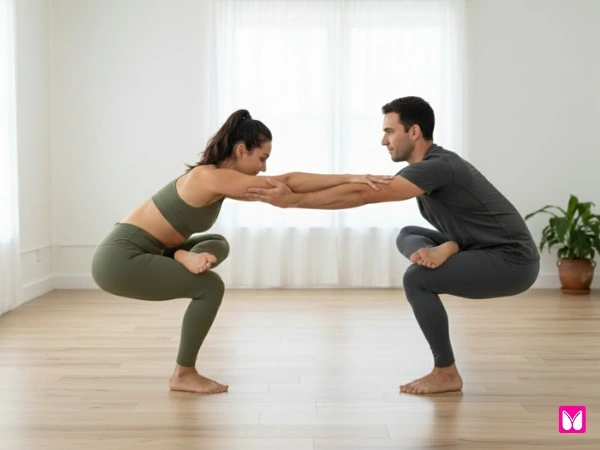
The “4 shape” refers to the Standing Figure-4, also known as Partner Pigeon.
It’s that hip-opening pose where your bent leg creates the number 4 against your standing leg.
In partner yoga poses, you can mirror each other—both of you creating matching “4” shapes while holding hands for balance.
Alternatively, you can stack the pose, with one person lying on their back in a reclined Figure-4 position while their partner leans into their raised foot for a deeper stretch. Either way, it’s a hip-opener that’ll make you wonder why you’ve been hoarding all that tension in your hips for so long.
Are yoga poses suitable for couples?
Yes. And I’m not just saying that because it sounds romantic.
Relationships accumulate what yoga philosophy calls “Relational Vṛtti- basically, the mental turbulence that builds between two people.
Old arguments, unspoken frustrations, the way they always leave dishes in the sink. Partner yoga cuts through all that noise by bringing you back to two fundamental things: synchronised breathing and physical vulnerability.
When you’re both balancing in Partner Boat Pose, trembling and trying not to topple over, you can’t hold onto your grudge about who forgot to take out the trash. You’re too busy being present, supporting one another, and laughing when you fall.
These yoga poses for 2 couples create what therapists call “co-regulation”, you literally sync your nervous systems through breath and movement.
Plus, there’s something powerful about physically supporting your partner’s weight.
It’s a non-verbal way of saying, “I’ve got you.”
And sometimes, that message lands deeper than words ever could.
Download the Partner Yoga Poses for 2 (PDF, 25+ Images)
Easy Yoga Poses for 2 (Beginner & Friends)
Let’s start gently.
These easy yoga poses for 2 are perfect if you’re new to partner work, or if you’re looking to connect with a friend without, you know, ending up in the emergency room. They pair beautifully with beginner yoga poses at home.
1. Twin Trees (Vrksasana Variation)
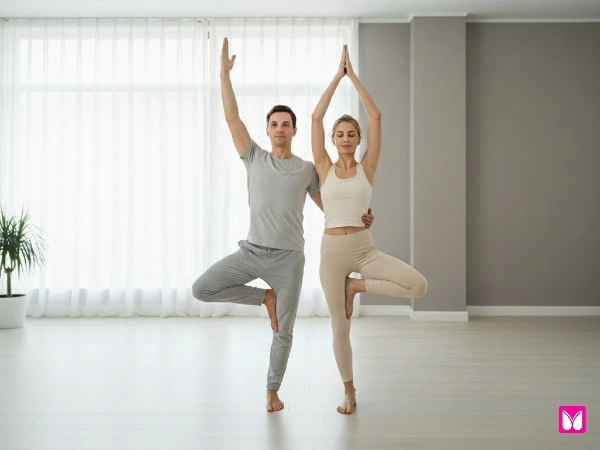
Stand hip-to-hip with your partner. Wrap your inside arms around each other’s waists.
Now, both of you lift your outside leg, bringing the sole of your foot to your standing leg’s inner thigh (or calf, or ankle, wherever feels stable). Press into each other slightly.
What’s happening here: You’re creating a shared centre of gravity. When one person wobbles, the other compensates.
It’s a tiny microcosm of friendship; you keep each other upright.
Tip: Pick a point on the wall to stare at together. Seriously. When you both focus on the same spot, you balance better. It’s weirdly magic.
2. Partner Seated Twist
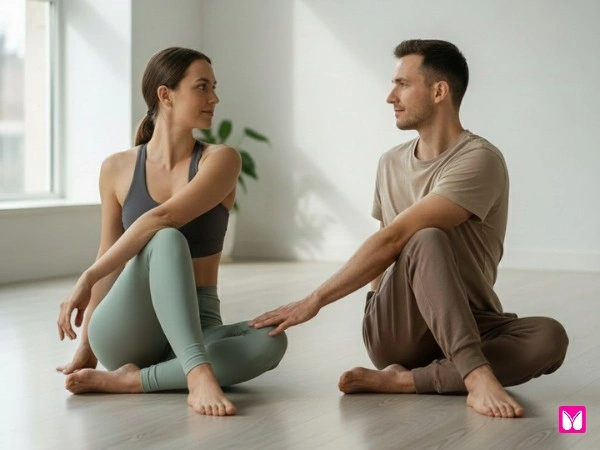
Sit cross-legged, back-to-back with your partner. Take a deep breath in. As you exhale, both of you twist to the right, reaching your left hand to your partner’s right knee and your right hand to your own left knee.
The twist is one of those poses that feels good on your own but becomes incredible with help.
Your partner’s body gives you something solid to twist against. You can go deeper without straining.
Hold for five breaths, then switch to the other side.
A friend of mine does this pose with her daughter every morning. Her daughter is nine. They twist, they breathe together, and somehow it sets the tone for their entire day. That’s the power hidden in these simple partner yoga poses; they’re relationship rituals disguised as a form of stretching.
3. Temple Pose (Partner Prasarita Padottanasana)
Stand facing your partner, about three feet apart. Both of you step your feet wide and fold forward from your hips. Reach your arms forward and press your palms together with your partner’s palms. Lean into each other’s hands.
Your shoulders will open.
You’ll feel your hamstrings protest a little.
And you’ll realise how much easier it is to fold deeper when someone’s gently pressing back against you.
The adjustment: If you’re of different heights, the taller person can step their feet wider or bend their knees slightly.
This is where props, such as yoga blocks under the hands, can help bridge the gap.

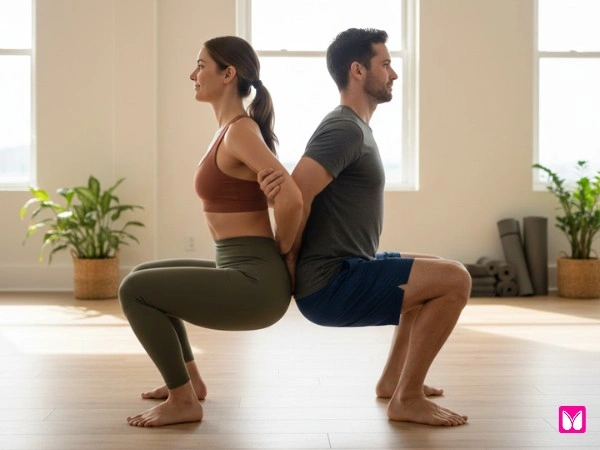
4. Back-to-Back Chair (Utkatasana)
This is the ultimate “lean on me” trust exercise, and it looks simpler than it feels.
Stand back-to-back with your partner, about a foot apart. Link arms at the elbows.
Now, both of you start to sit down into Chair Pose, pressing your backs together for support.
You’ll feel your thighs burn.
Your partner will too.
But here’s the thing, you can’t cheat.
If one person gives up, you both collapse. So you stay in it together, breathing through the shake, proving to each other that you can hold the weight.
The lesson: Sometimes the only way through something hard is together. Your legs are burning, but you’re not alone in it.
Intermediate & Couple Yoga Poses (The Trust Builders)
Once you’ve mastered the basics, these partner yoga poses for couples and friends take things to the next level. You’ll need communication, core strength, and a willingness to be a little vulnerable.
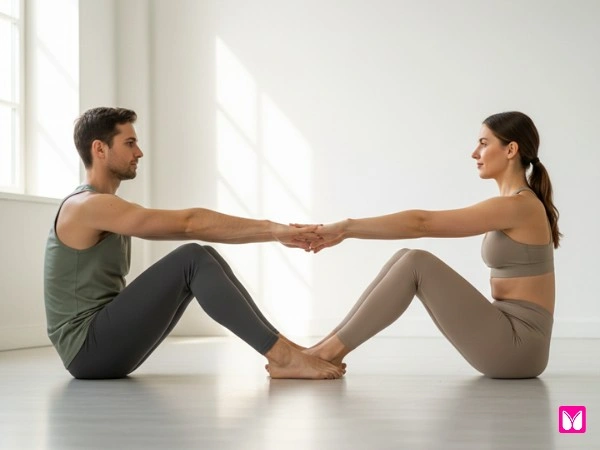
5. Partner Boat Pose (Navasana)
Sit facing your partner, with your knees bent and toes touching.
Hold each other’s wrists or hands.
Now both of you lean back slightly and lift your legs, pressing the soles of your feet together.
Straighten your legs if you can—you’ll both be in a V-shape, creating a little diamond of space between you.
Your core will be screaming within seconds.
But the interesting part is the micro-adjustments you’re constantly making together.
One person pulls too hard, the other compensates. Someone starts to tip, and you both rebalance without even discussing it.
Pro tip: Start with knees bent. Get stable first. Straight legs can wait until you’ve found your rhythm together.
6. Double Downward Dog
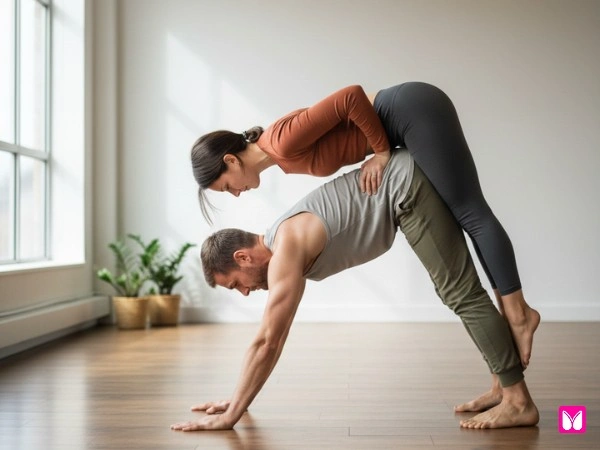
One person comes into Downward-Facing Dog (hands and feet on the ground, hips lifted, body in an upside-down V).
The second person places their hands about a foot in front of the first person’s hands, then carefully steps their feet onto the first person’s lower back or hips, coming into their own Downward Dog—stacked on top.
This pose looks impressive, and honestly, it is.
The base person needs solid shoulder stability.
The top person needs trust and core engagement.
Together, you create this beautiful stacked inversion.
Safety note: The base person should confirm they’re ready before the top person steps up.
Use words. “Are you stable? Okay, stepping up now.” Communication isn’t optional in 2-person yoga poses—it’s the foundation.
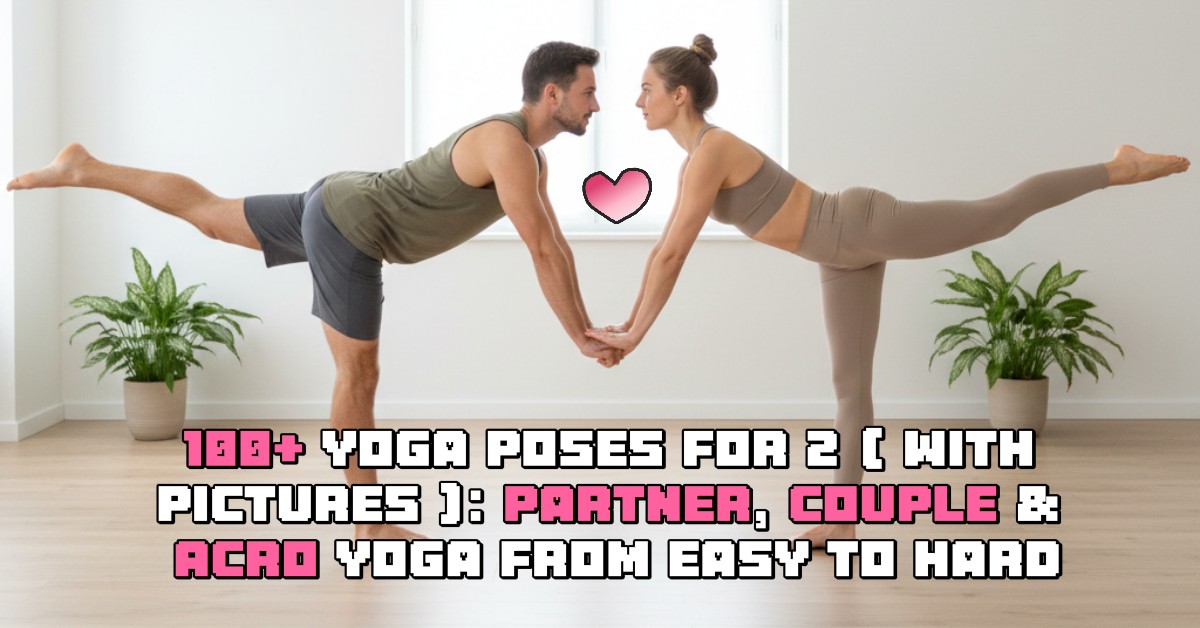
7. Partner Warrior III (Virabhadrasana III)
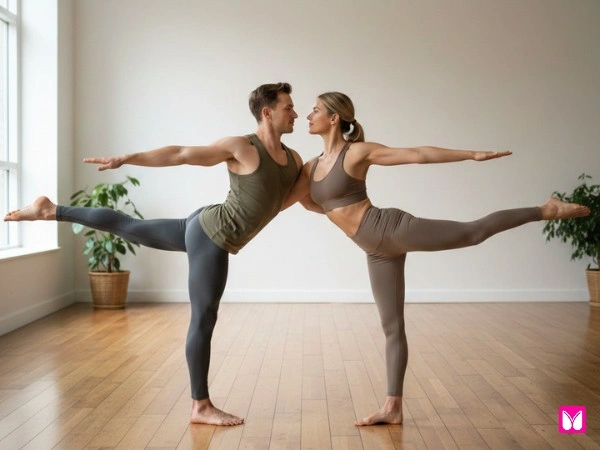
Stand facing your partner at arm’s length.
Both of you hold each other’s forearms or wrists.
Now, simultaneously lift your outside legs behind you while hinging forward at the hips.
You’ll both be in Warrior III, creating a perfectly mirrored shape.
This pose reveals everything about partnership. If one person leans too far forward, you both lose balance. If someone doesn’t engage their core, you both topple.
You find what yogis call “your third leg”- that invisible point of balance that exists between two people when they’re working together.
The modification: Can’t hold Warrior III for long? That’s normal. Come out, reset, try again. The point isn’t perfection. It’s the shared effort.
Hard Yoga Poses for 2 (AcroYoga & Challenges)
Now we’re getting into the poses that make people stop and stare.
These challenging yoga poses for two require strength, trust, and ideally some prior experience with partner work.
Not all partner yoga is AcroYoga. Acro involves lifts and should be practised with spotting and consent.
If you’re new to this, consider taking a class before attempting these at home.
8. Front Bird (The Classic Flyer Pose)
This is the iconic AcroYoga pose you see all over Instagram.
The base person lies on their back, legs straight up in the air, feet flat (like they’re standing on the ceiling).
The flyer stands facing the base’s feet, leans forward, and places their hips onto the base’s feet.
The base’s feet should be right in the flyer’s hip creases. Arms extend, hands connect, and the flyer soars into the air.
The reality check: This takes practice. The base needs strong legs and a core. The flyer needs to engage their entire body—no noodle-ing out.
And both people need to communicate constantly.
Spotting is crucial here. If you’re trying this for the first time, have a third person ready to support the flyer. Falls happen, and they hurt less when someone’s helping you down.
9. Double Plank
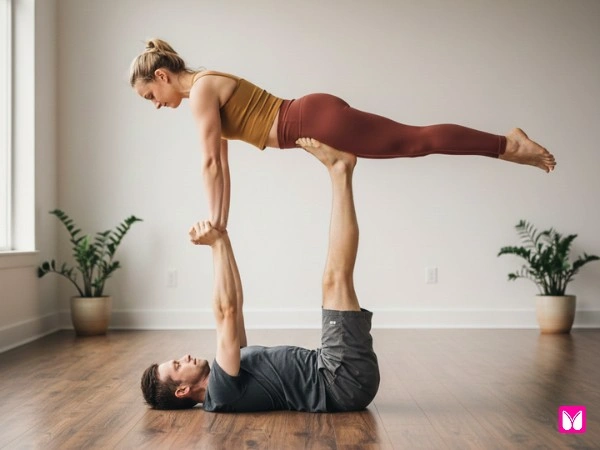
One person holds a strong Plank Pose.
The second person places their hands on the first person’s ankles, then carefully lifts their feet onto the first person’s shoulders, creating a stacked plank.
Your cores will hate you. Your arms will shake. But you’ll also feel absurdly strong, like you’re building a human bridge together.
This is pure functional strength training disguised as yoga.
Progression tip: Start with the top person just placing their feet on the base’s hips (lower stacked plank) before moving to the shoulders. Build up to it.

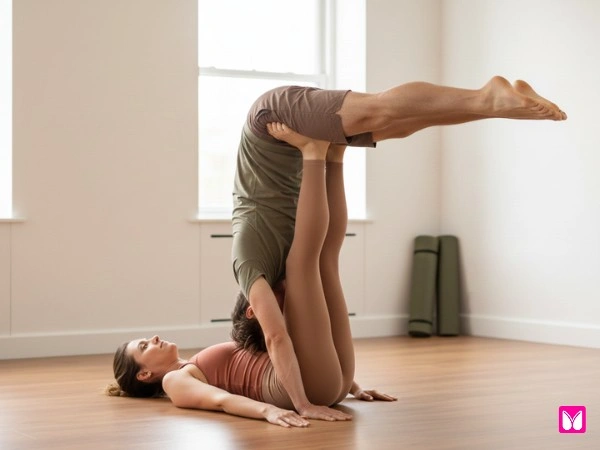
10. Folded Leaf
This is an inverted restorative pose that feels like the opposite of Double Plank—it’s deeply relaxing for the flyer.
The base person lies on their back, legs lifted and bent at a 90-degree angle, with shins parallel to the ground.
The flyer lies carefully face down across the base’s feet, with their feet on either side of the base’s shins, draping their body over the base’s bent legs.
The flyer’s arms hang down, and their head relaxes, allowing gravity to do all the work.
It’s an intense backbend for the flyer, and a gentle inversion.
The base is doing quad work, just holding their legs steady.
Both people derive different benefits from the same pose; that’s the beauty of these yoga poses, which often surprise you with their effects.
The “25+ Poses” Challenge: A Categorised Library
You came here for 25 yoga poses for two people, and I’m going to deliver. Here’s the full library, organised by category. Each category has endless variations depending on your height, flexibility, and creativity.
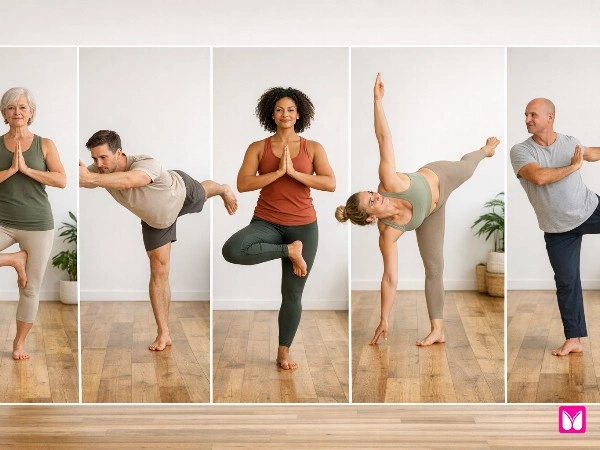
20 Standing Balance Poses
- Twin Trees (Vrksasana)
- Partner Eagle (Garudasana)
- Partner Dancer’s Pose (Natarajasana)
- Standing Hand-to-Big-Toe Hold (Utthita Hasta Padangusthasana)
- Partner Warrior III
- Standing Figure-4 (Partner Hip Opener)
- Standing Side Bend with Partner Support
- Partner Standing Splits
- Half Moon with Partner Assist (Ardha Chandrasana)
- Standing Bow with Counter-Balance
- Partner Extended Hand-to-Big-Toe Side Variation
- Double Aeroplane Arms Balance
- Standing Straddle with Partner
- Twin Warriors (Warrior I facing the same direction)
- Mirrored Warrior II
- Standing Forward Fold with Partner Back Support
- Partner Triangle Pose (Trikonasana)
- Standing Y- Scale Pose Together
- Partner Revolved Triangle
- Standing Pyramid with Partner
20 Seated Stretches
- Partner Seated Twist (Ardha Matsyendrasana)
- Double Boat Pose (Navasana)
- Seated Forward Fold with Partner Push
- Butterfly Pose with Partner Press
- Seated Straddle with Partner
- Seated Partner Spinal Twist with
- Bound Angle with Partner Back Support
- Partner Seated Pigeon
- Head-to-Knee with Partner Assist (Janu Sirsasana)
- Double Hero’s Pose (Virasana)
- Partner Cow Face Pose (Gomukhasana)
- Staff Pose with Partner Shoulder Opener (Dandasana)
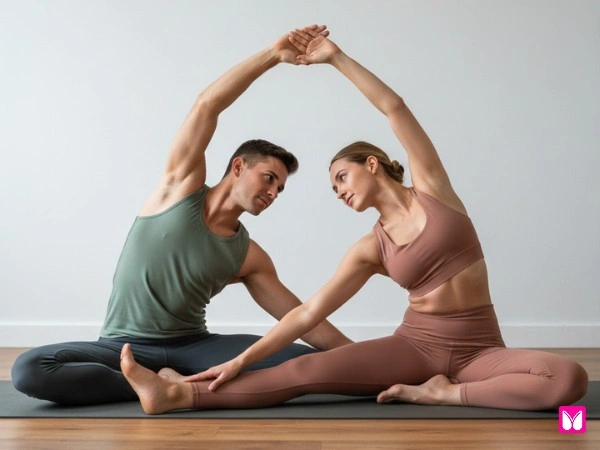
- Seated Side Stretch Together
- Cross-Legged Forward Fold with Partner Weight
- Partner Compass Pose
- Seated Spinal Twist Face-to-Face
- Wide-Legged Seated Fold with Partner
- Revolved Head-to-Knee Partner Version
- Seated Cat-Cow Synchronised
- Partner Tortoise Pose (Kurmasana)
20 Inversions & Stacks
- Double Downward Dog
- Downward Dog with Partner Shoulder Stand
- L-Shape Handstand Against Partner
- Supported Headstand with Partner Holding Legs
- Partner Shoulder Stand
- Front Bird (Flyer)
- Folded Leaf
- Stacked Forward Fold
- Supported Scorpion with Partner
- Partner Plough Pose (Halasana)
- Downward Dog Split with Partner
- Throne Pose (Seated Base with Standing Flyer)
- Reverse Warrior Stack
- Partner Forearm Stand with Leg Hold
- Star Inversion (AcroYoga)
- Stacked Dolphin Pose
- Folded Inversion with Hip Support
- Partner Tripod Headstand
- Floating Whale (AcroYoga)
- Inverted Straddle Hold
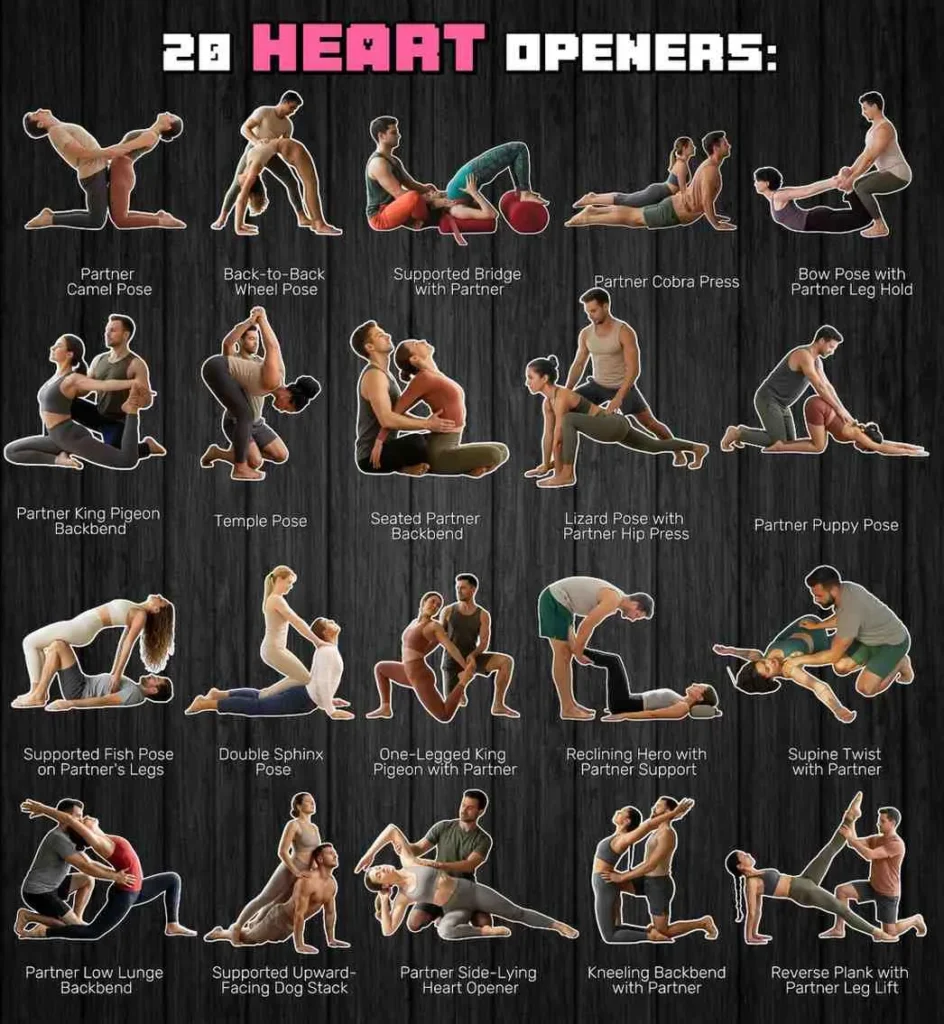
20 Heart Openers (Backbends)
- Partner Camel Pose (Ustrasana)
- Back-to-Back Wheel Pose (Urdhva Dhanurasana)
- Supported Bridge with Partner
- Partner Cobra Press (Bhujangasana)
- Bow Pose with Partner Leg Hold (Dhanurasana)
- Partner King Pigeon Backbend
- Temple Pose (Forward Fold Heart Opener)
- Seated Partner Backbend
- Lizard Pose with Partner Hip Press
- Partner Puppy Pose (Anahatasana)
- Supported Fish Pose on Partner’s Legs
- Double Sphinx Pose
- One-Legged King Pigeon with Partner
- Reclining Hero with Partner Support
- Supine Twist with Partner
- Partner Low Lunge Backbend
- Supported Upward-Facing Dog Stack
- Partner Side-Lying Heart Opener
- Kneeling Backbend with Partner Counter-Balance
- Reverse Plank with Partner Leg Lift
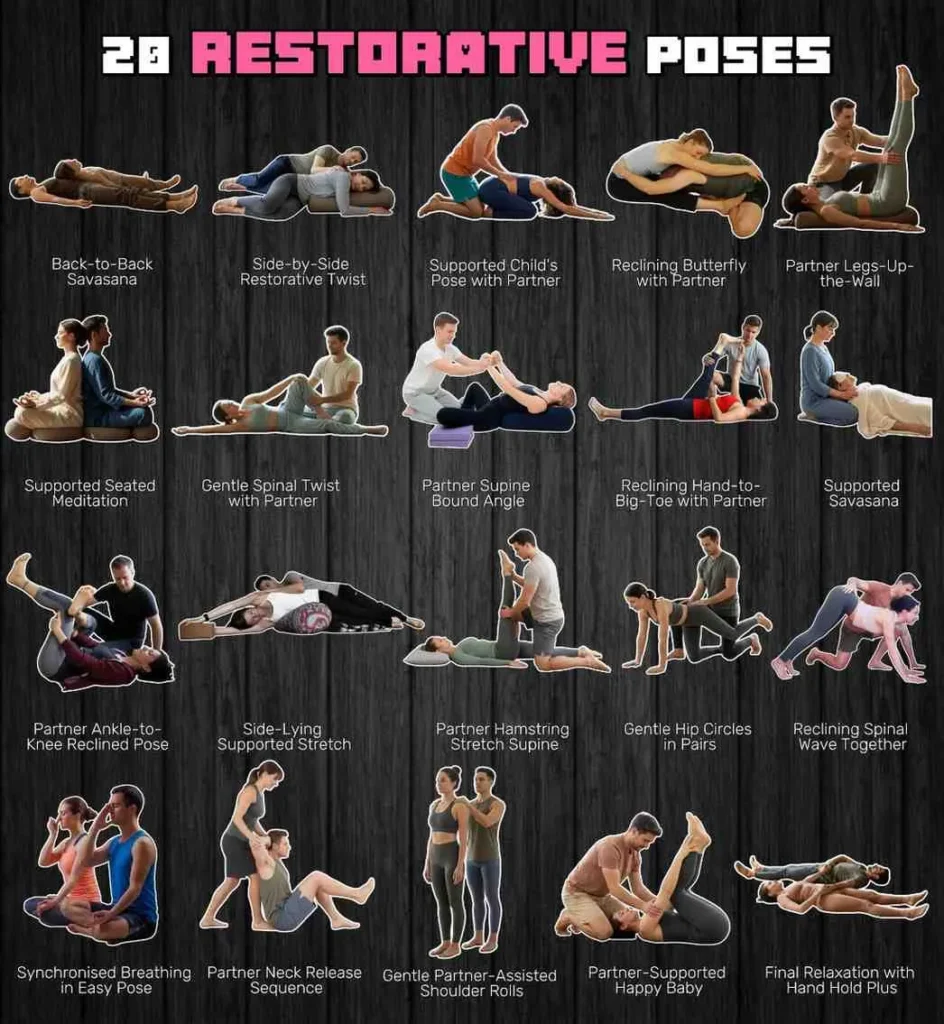
20 Restorative/Cool Down Poses
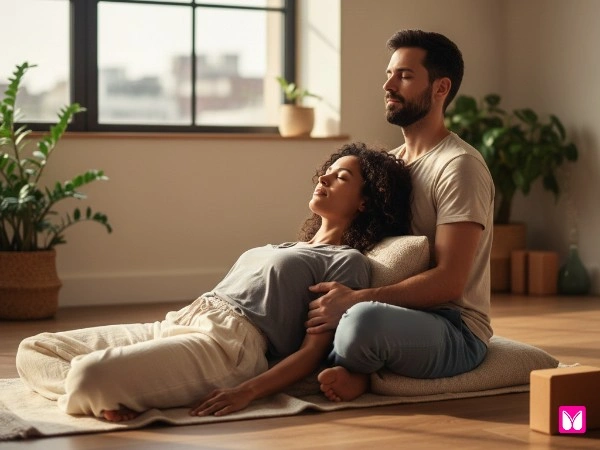
Many of these poses overlap with classic restorative yoga poses, designed to calm the nervous system and help the body fully unwind.
- Back-to-Back Savasana (Corpse Pose)
- Side-by-Side Restorative Twist
- Supported Child’s Pose with Partner Back Weight
- Reclining Butterfly with Partner
- Partner Legs-Up-the-Wall (Viparita Karani)
- Supported Seated Meditation Back-to-Back
- Gentle Spinal Twist with Partner
- Partner Supine Bound Angle
- Reclining Hand-to-Big-Toe with Partner
- Supported Savasana (One Partner as Bolster)
- Partner Ankle-to-Knee Reclined Pose
- Side-Lying Supported Stretch
- Partner Hamstring Stretch Supine
- Gentle Hip Circles in Pairs
- Reclining Spinal Wave Together
- Synchronised Breathing in Easy Pose
- Partner Neck Release Sequence
- Gentle Partner-Assisted Shoulder Rolls
- Reclining Goddess Pose Side-by-Side
- Final Relaxation with Hand Hold Plus: Infinite variations and flows created by you and your partner
Safety, Props, and Preparation
Before trying any of these two-person yoga poses, let’s discuss how to stay safe and make this experience enjoyable by using safe yoga modifications rather than risking an accidental injury that could lead to a trip to the urgent care centre.
The “Tap Out” Rule: Communication is the First Pose
Here’s what they don’t tell you in those pretty Instagram photos: partner yoga requires constant communication. Y
ou need to establish a tap-out system before you start.
A gentle tap on your partner’s body means “ease up” or “I need out.”
A verbal “stop” means stop immediately, without question.
I learned this the hard way during a Partner Boat Pose when my hamstrings decided they’d had enough.
I tried to “power through” because I didn’t want to ruin the pose—bad idea. I cramped up, we both fell, and I spent the next five minutes writhing on the floor like a dramatic fish out of water.
Don’t be me. Use your words. Partner yoga isn’t about impressing anyone—it’s about connection. And that starts with honest communication.
Check-in phrases to use:
- “How does this feel for you?”
- “Can you take more weight?”
- “Ready? I’m coming down now.”
- “Let’s try that again, but easier.”
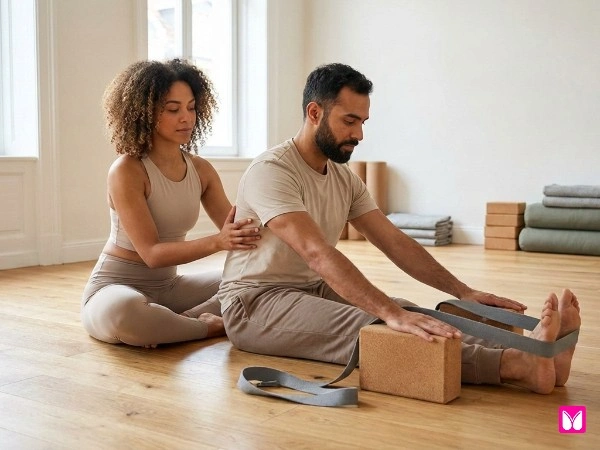
Props for 2: Using Bolsters or Blocks to Bridge Differences
Real talk: you and your partner might not be the same height or have the same flexibility level, and that’s where using yoga props safely makes partner yoga accessible for everyone.
Yoga blocks can go under the hands if one person can’t reach the floor. They can support feet in certain lifts. They can even be the “third partner” that makes a pose accessible.
Bolsters are ideal for supported restorative poses, where one person may need extra cushioning.
Straps help bridge the gap when hands don’t meet in stretches.
I’ve done partner yoga with someone a foot taller than me. We used blocks constantly. Did it look like the magazine photos? Nope. Did we still get all the benefits of connection and stretching? Absolutely.
Yoga Poses for 2 Kids: Adapting for Play and Motor Skills
Kids are natural partner yogis because they haven’t yet developed self-consciousness. They want to play. These yoga poses for two kids should be fun and game-like, not rigid or perfect.
Best starter poses for kids:
- Twin Trees (they’ll love the challenge of not falling)
- Back-to-Back Chair (turn it into a “who can hold longer” game)
- Double Boat (their giggles will break the hold, and that’s fine)
- Partner Downward Dog (the tunnel version where one goes under the other)
- Seated Twist (perfect for after-school wind-down)
Make it playful. Add animal sounds. Let them fall, laugh, and try again.
The goal isn’t perfect alignment—it’s about body awareness, cooperation, and constructively releasing energy.
One parent I know does “partner yoga story time” with her twins. They act out a story using different poses.
The dragon is Cobra Pose, the mountain is Partner Mountain Pose, and the bridge is Double Plank. Her kids don’t even realise they’re exercising.
Conclusion: From Two to One
After you’ve tried these partner yoga poses, whether all 25 or just a handful, something shifts.
You start to notice patterns. Maybe you’re the one who always braces first, gripping tight before your partner even moves. Perhaps you’re the one who collapses too quickly, apologising before trying again. Maybe you realise you’ve been holding tension in places you didn’t even know existed.
In partner yoga, you become aware of where you brace, where you hesitate, and where you finally allow support to take hold. The body tells the truth before the mind does.
That’s the real gift here. These yoga poses for 2 people with pictures and names, the whole elaborate library of 25+ variations, the easy ones and the acrobatic ones—they’re all teaching the same fundamental lesson: you don’t have to carry the weight of your practice (or your life) alone.
I think about that first class again, when the instructor said we were going to fall.
She was right.
We did fall.
But we also caught each other, over and over, until falling didn’t feel scary anymore. It just felt like part of the process.
Partner yoga teaches you that sometimes strength isn’t about holding yourself up, it’s about knowing when to lean, when to support, and when to trust that the person across from you is doing their best, too. You learn that the wobble isn’t failure; it’s the conversation your bodies are having as they find balance together.
Whether you’re trying these 2-person yoga poses with a romantic partner, a best friend, or your kiddo, the practice is the same. Show up. Breathe together. Support what needs supporting. Let go of what needs to be let go. And laugh when you inevitably tumble onto the mat, because that’s part of it too.
The solo mat will always be there for your inward journey. But when you’re ready for the outward one, when you’re prepared to practice yoga as a verb that includes another human, these poses will be waiting.
Ready to Start Your Partner Practice?
Download our “Partner Yoga Poses for 2 with Pictures” PDF or book a live partner session with certified instructors who can guide you through these poses safely and playfully.
Remember: The best partner yoga practice isn’t the one that looks perfect. It’s the one where you both leave feeling more connected than when you started.
Now roll out those mats, both of them, and see what happens when your practice includes a little trust, a lot of communication, and another human willing to try this messy, beautiful thing with you.
Also Read: Free 28-Day Chair Yoga for Seniors (Printable PDF & Chart + Daily Challenge Plan)
Also Read: Safe Prenatal Yoga at Home: The 2026 Guide to Poses to Avoid During Pregnancy
Also Read: Printable Chair Yoga for Seniors: The Only 5-Minute Daily Routine You’ll Need

Emmanuel Okafor
Emmanuel Okafor is a skilled SEO specialist and content writer with hands-on experience in optimizing websites for visibility, traffic, and authority.Emmanuel has contributed to the growth of several startups across various niches, including AI, technology, health, and mental well-being. He is passionate about storytelling, digital marketing, and helping brands meaningfully connect with their audience online.