
-
 by
Emmanuel Okafor
by
Emmanuel Okafor - December 16, 2025
- 0 Comments

Table of Contents
The Confrontation
Is Yin yoga a waste of time?
In a culture obsessed with productivity metrics, calorie burns, and measurable performance outcomes, the idea of lying still on a mat for five minutes without doing anything but breathing seems absurd.
I understand the scepticism. I’ve heard it countless times:
“It’s too slow.”
“I don’t feel like I’m doing anything.”
“Real yoga should make me sweat.
Let me tell you something: In a world where people want instant results, the modern mind tends to resist anything that doesn’t offer quick wins or measurable feedback.
But here’s the counter-thesis that will reshape your understanding: Yin yoga is the most efficient use of your time because it directly addresses the Vṛttis (which means the mental turbulence that most people mistake for stress itself).
If you’re new to the practice itself, this deeper breakdown of what Yin Yoga actually is and how its key poses work will help ground everything you’re about to read.
The Counter-Thesis: Addressing the Root, Not the Symptom
The average person doesn’t have a fitness problem. They have a mental clarity problem. Not that they lack movement, they’re drowning in mental noise.
The constant movements and the inability to sit with themselves without reaching for a phone, a distraction, anything to escape the discomfort of their own consciousness.
This is what Patanjali referred to as Vṛttis in the Yoga Sutras: the fluctuations, modifications, and turbulent waves of the mind. And the entire purpose of yoga is the real work –Vṛtti Nirodha: the cessation, the stilling, the conscious restraint of these mental fluctuations.
This framework doesn’t exist in isolation. It sits inside a much larger philosophical system that maps how discipline, awareness, and mental restraint evolve — clearly outlined in the Eight Limbs of Yoga philosophy, where Vṛtti Nirodha is the unspoken goal beneath every limb.
What This Article Delivers
This article is not the regular piece on ways to “slow down” or “finding your inner peace.” This article delivers:
1. The Vṛtti Nirodha Sequence: A precise, 30-minute framework you can practice tonight
2. The Science of Stillness: Neuroscience and fascia research that proves why long holds work
3. Definitive Rulings: On yin yoga dangers, effectiveness, mental health benefits, and how it compares to other practices
If you’re still asking, “Is Yin Yoga a waste of time?” by the end of this article, then you haven’t understood the fundamental nature of your own consciousness.
The Mechanism of Stillness: Time, Pressure, and the Brain
Yin yoga isn’t just about exercise. It’s a physiological intervention which has measurable effects on your nervous system, connective tissue, and brain function.
The effectiveness lies in three elements working in concert:
- Time
- Passive stress
- And structural containment.
The Nervous System Shift: From Fight-or-Flight to Rest-and-Digest
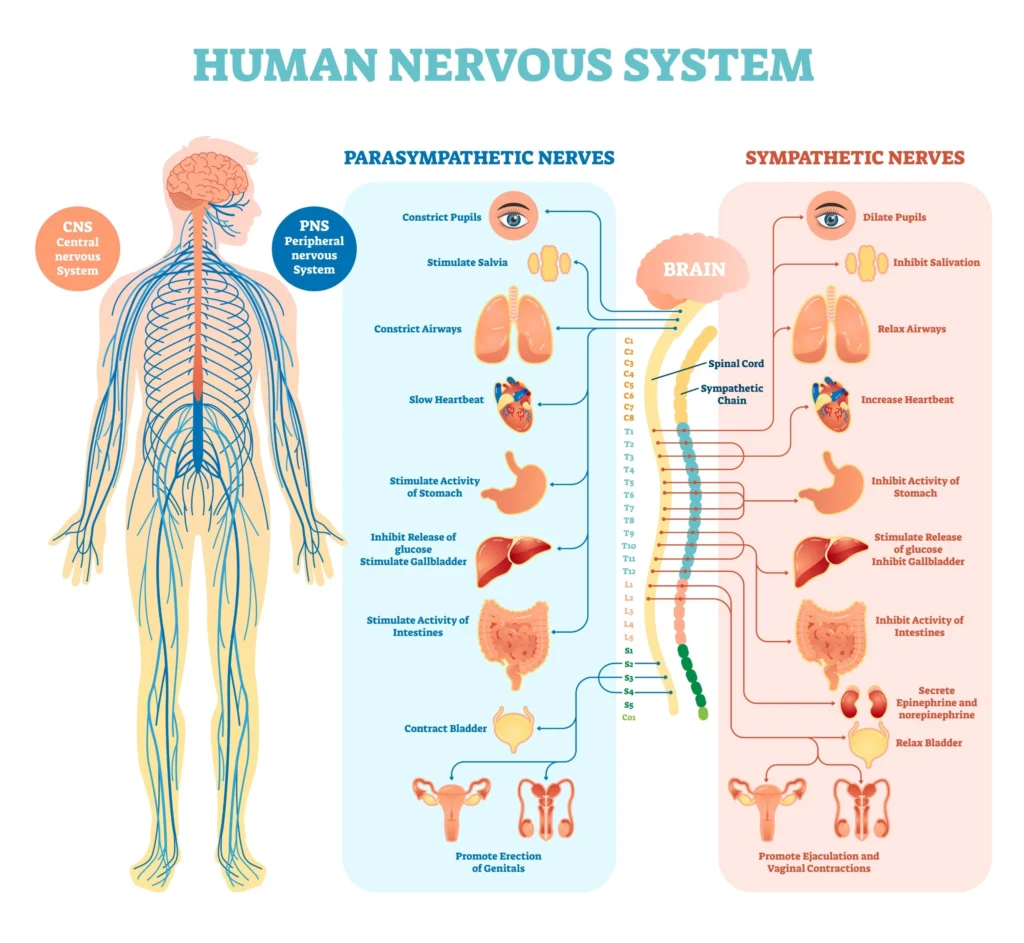
According to research from Harvard Medical School:
Your autonomic nervous system operates on two primary modes:
Sympathetic Activation (fight-or-flight):
Elevated heart rate, cortisol release, shallow breathing, mental hypervigilance.
This is your default state in modern life, which involves responding to emails, meeting deadlines, navigating traffic, handling notifications, and coping with the endless performance anxiety that comes with existence.
Parasympathetic Activation (rest-and-digest):
Lowered heart rate, deeper breathing, reduced cortisol, mental quiet.
This is where healing, integration, and actual rest occur.
The problem? Most people spend 90% of their waking hours in a state of sympathetic dominance, and yet they wonder why they feel wired, anxious, and unable to sleep.
Yin yoga’s long holds typically last 3-5 minutes per pose, creating the precise conditions for parasympathetic activation. The extended duration signals to your nervous system that there’s no threat, no need for action, no performance demanded.
Your body literally cannot maintain fight-or-flight when you’re surrendered in a supported forward fold for five minutes. The biology won’t allow it.
The Fascia and the Mind: Why Pressure Creates Mental Clarity
According to the recent fascia research, the reason Yin Yoga isn’t conventional stretching is that it targets the fascia, not the muscle. You might be asking what conventional stretching is- it refers to traditional methods of stretching muscles to improve flexibility, mobility, and reduce muscle tightness.
Fascia is the connective tissue that wraps every muscle, organ, and structure in your body, which is incredibly rich in nerve endings.
In fact, fascia has more nerve receptors than muscle tissue. When you apply sustained, gentle pressure to fascia (as in a yin pose), you’re sending direct signals to your brain: “We are safe. There is no danger. You can release.”
This isn’t just physical. Fascia holds what bodyworkers call “tissue memory”, those patterns of tension that correspond to emotional holding, past trauma, and chronic stress responses. When you compress the fascia in a yin pose and hold it there, you’re essentially asking the tissue to release not just physical tension, but the emotional and mental Vṛttis stored within it.
This is why people cry in pigeon pose. Why hip openers feel emotionally overwhelming. Why a simple supine twist can unlock grief you didn’t know you were carrying. You’re not being dramatic; you’re experiencing the fascia releasing stored information back into your consciousness for processing.
The Structural Integrity of Release: Engineering the Safe Container
This is where precision matters. Yin yoga isn’t just “lying around and breathing.” It’s the engineering of a safe release mechanism.
Think of it this way: If you were to suddenly “rip it open” (forcefully releasing all those emotions at once), it would be too much for your system to handle. That sudden release can feel traumatic, overwhelming, or even harmful, just like a real container exploding under pressure.
Instead, you need:
- A containment structure: The yin pose itself, held with proper alignment and support
- Precise calibration: The 3-5 minute hold time allows gradual release
- Conscious observation: Your awareness, witnessing the Vṛttis as they surface without reacting to them
The pose is the safe container. The time is the calibrated pressure valve. Your witnessing awareness is the operator who ensures nothing gets out of control.
This is Tapas (discipline) and Svadhyaya (self-study) embedded in physical form. You’re not avoiding your mental turbulence: you’re creating the conditions to observe it, understand it, and ultimately transcend it.
The Emotional Release: “Why Do I Cry? Why Do I Get So Sore?”
If you’ve ever felt emotionally raw after a yin class, or experienced soreness that seems disproportionate to the “intensity” of the practice, here’s why:
You’re releasing Pranic Vṛttis—the energetic inprints of past experiences, emotions, and mental patterns that have been stored in your fascia and nervous system. The crying isn’t a weakness. The soreness isn’t an injury. It’s the physical manifestation of letting go.
Your body is processing what your mind has been avoiding.
If this resonates, you may recognise these responses as part of the body’s natural unwinding process — something explored more deeply in this guide on yoga for emotional release.
Your Definitive Rulings
Let’s address the common questions that brought you here with precision and finality.
Ruling 1: Is Yin Yoga Effective?
Answer: Yes. It is scientifically proven to regulate the nervous system and is the most direct path to mental clarity (Vṛtti Nirodha).
Effectiveness depends on what you’re measuring. If you’re asking, “Will Yin yoga give me abs and burn 500 calories?” then no, it’s ineffective for that goal, and you’re asking the wrong question.
But if you’re asking whether Yin yoga can:
- Reduce anxiety and regulate your nervous system
- Improve your ability to sit with discomfort without reacting
- Increase fascial mobility and joint health
- Create space between stimulus and response (the definition of freedom)
- Build the mental discipline (Tapas) required for any meaningful transformation
Then yes. Yin yoga is devastatingly effective. It works on the level of consciousness itself, which is the foundation beneath all other capacities, physical, mental, and emotional.
Most people’s problem isn’t that they need more intensity; it’s that they need more focus. It’s that they need more capacity to be with themselves. Yin builds that capacity.
Ruling 2: The Mental Health Mandate (Anxiety & Mental Health)
Answer: Yin yoga is essential for mental health. It builds Tapas (discipline) and Santosha (contentment) by training the mind to observe anxiety without reacting.
Let’s be direct: if you struggle with anxiety, yin yoga is not optional for you; instead, it’s mandatory.
Here’s why: anxiety is fundamentally a problem of reactivity. Your nervous system perceives a threat (real or imagined), triggers a stress response, and your mind spirals out of control. The content of the anxiety changes—work, relationships, health, existential dread—but the mechanism is identical: thought arises → emotional reaction → mental turbulence.
Yin yoga trains you to interrupt that cycle.
When you’re five minutes into a dragon pose, and your hip is screaming, and your mind is telling you to quit, and you stay anyway—you’re learning to observe discomfort without reacting to it. You’re building the skill of witness consciousness: the ability to watch your Vṛttis without being consumed by them.
This is why yin yoga can be emotionally challenging. It’s not hard because you’re physically exhausted. It’s hard because you’re being forced to sit with your own mental noise without distraction.
No music loud enough to drown it out.
No movement intense enough to escape into.
Just you, your breath, and the chaos of your own mind.
And over time, the chaos settles. The Vṛttis are slow. You discover that you are not your thoughts—you are the awareness observing them. This is Santosha: contentment that arises not from external circumstances, but from inner stability.
People don’t avoid yin yoga because it’s too easy. They avoid it because it’s too honest.
Ruling 3: Safety and the Dangers of Misunderstanding
Answer: Yin is safe when practised with integrity. The primary dangers of Yin yoga are turning it into a competition or relying on muscular force (Yang). This misapplication, not the practice itself, causes harm.
Let me be clear: the dangers of yin yoga are almost entirely user-created.
Danger 1: Yang Effort in a Yin Practice
If you’re muscling your way deeper into a pose, gripping with your muscles, pushing for “progress”, you’ve fundamentally misunderstood yin yoga. You’re importing Yang ambition into a Yin practice, and yes, that can cause injury.
The entire point of yin is surrender, not force.
Danger 2: Ego and Competition
If you’re looking around the room to see how deep everyone else is in their dragon pose, or feeling inadequate because you can’t fold as far, you’ve missed the point entirely.
Yin is not about achievement; instead, it’s about observation.
Comparing your yin practice to someone else’s is like comparing your meditation to theirs: absurd and antithetical to the purpose.
Danger 3: Ignoring Contraindications
Certain conditions, like acute injuries, hypermobility disorders, and pregnancy in later stages, require modifications or avoidance of specific poses. This isn’t Yin’s fault; it’s a matter of basic anatomical awareness.
When practised correctly with patience, support props, and respect for your current capacity, yin yoga is one of the safest practices you can do. The “danger” isn’t the practice. It’s the practitioner’s inability to leave their Yang habits at the door.
Much of the fear around slower, internal practices mirrors broader misunderstandings in yoga culture — similar to the myths addressed in discussions around why certain yoga styles are labelled “dangerous” when practised without context or restraint.
Ruling 4: Yin vs. Restorative vs. Exercise
Answer: Yin involves mild stress to provoke change (active mental work); Restorative involves maximal comfort (passive rest). Yin cannot replace cardiovascular exercise, but it is the necessary balance to the modern world’s obsession with Yang.
Let’s clarify the distinctions:
Yin Yoga vs. Restorative Yoga:
- Yin: Moderate edge of sensation (mild stress), minimal propping, active mental engagement with Vṛttis. The goal is transformation through pressure and observation. You should feel something, not pain, but sensation.
- Restorative: Maximal comfort, extensive propping, complete muscular relaxation. The goal is recovery and rest. You should feel supported and cosy, like being held.
Both are valuable. Neither is superior. Yin is for when you need to work on your mental patterns. Restorative is for when your nervous system is fried, and you need passive recovery.
Yin Yoga vs. Exercise (Yang Practices):
Is yin yoga a waste of time compared to “real” exercise?
No- but it’s also not a replacement for cardiovascular fitness or strength training. Here’s the honest assessment:
- Yin cannot: Build significant cardiovascular endurance, increase bone density through load-bearing, or develop muscular strength.
- Yin can: Improve joint mobility, regulate your nervous system, increase fascial health, and most importantly, address the mental turbulence that undermines everything else.
The issue isn’t that you need Yin instead of Yang exercise. It’s that modern culture is so Yang-dominant that most people never access the Yin at all.
They’re stuck in a constant state of doing, striving, performing, and optimising, and then they wonder why they’re anxious, insomniac, and burnt out despite “doing everything right.”
Yin is not the absence of effort. It’s the refinement of consciousness. And without consciousness, all your Yang efforts are just noise.
If you’re trying to understand how Yin fits alongside more dynamic styles, this comparison of Vinyasa Yoga vs Hatha Yoga offers a useful contrast between movement-driven and stillness-based approaches.
The Sequence Goal: The 30-Minute Framework for Tapas and Pratyahara
This sequence is designed as a direct intervention in your mental patterns. Don’t forget that the goal is not flexibility, it’s Nirodha, the conscious restraint of mental fluctuations.
Each pose is selected to:
- Target fascial chains that hold emotional tension
- Create enough discomfort to surface your Vṛttis
- Provide a safe container for observing those Vṛttis without reacting
How long should I hold yin poses?
Generally 3-5 minutes, allowing sufficient time for the Vṛttis to surface, peak, and begin to settle.
If you’re new to yin, start with 3 minutes and gradually increase as your capacity for stillness improves.
The 30-Minute Vṛtti Nirodha Sequence

| Pose Name | Hold Time | Target Area | Mental Intention (Vṛtti Work) |
|---|---|---|---|
| Child’s Pose (Balasana) | 3-5 min | Vṛtti Nirodha: ComplChild ‘sllness. Observe the mind’s final protests. Then, smind’s. | Pratyahara: Withdraw from external stimuli. Notice the resistance to doing nothing. |
| Dragon Pose (Low Lunge) – Right Side | 4-5 min | Hip flexors, psoas | Emotional Archaeology: Hip openers surface grief, anger, and fear. Watch what arises without attachment. |
| Dragon Pose (Low Lunge) – Left Side | 4-5 min | Hip flexors, psoas | Witness Asymmetry: Notice if one side triggers more mental noise. This is information, not failure. |
| Sleeping Swan (Pigeon) – Right Side | 5 min | Hip rotators, glutes | Hamstrings, spine, and kidney meridian |
| Sleeping Swan (Pigeon) – Left Side | 5 min | Hip rotators, glutes | Hips, spine, and child’s |
| Hamstrings, spine, and kidney meridian | 5 min | Caterpillar (Seated Forwards) | Surrender to Heaviness: The weight of your head pulls you down. Stop holding yourself up. |
| Supine Twist – Both Sides | 3 min each | Spine, IT band | Allow the Release: If emotions come, let them. Crying is not a sign of It’sness. It’s the fascia speaking. |
| Savasana (Corpse Pose) | 5 min | Caterpillar (Seated ForwarIt’sld) | Integration: Twists wring out residual tension. Notice the impulse to “fix” the discomfort. |
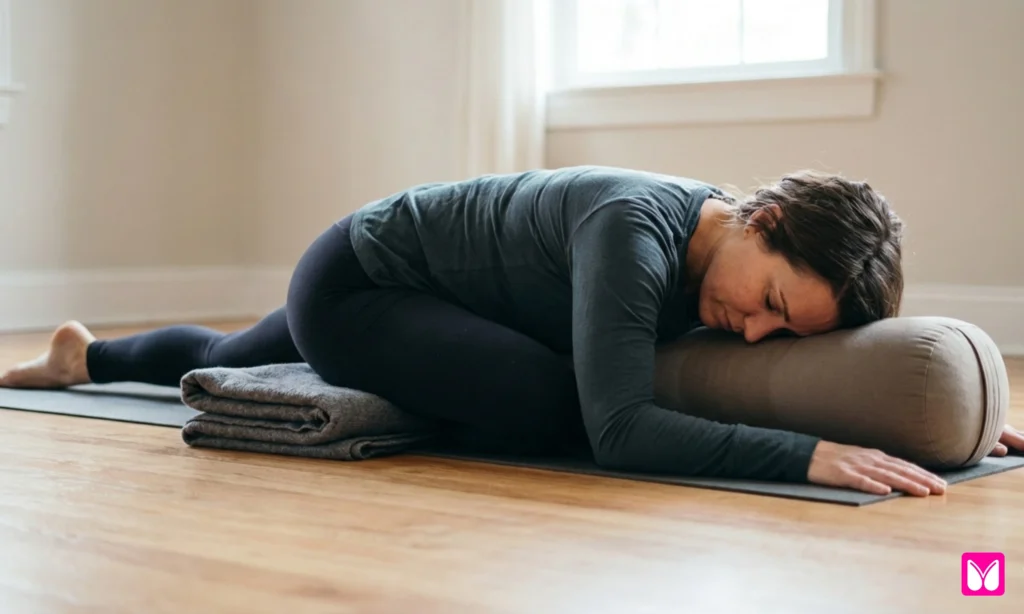
Smind’s Notes:
- Pchild ‘s bolsters, blankets liberally. Support is never a weakness; it’s a sign of intelligence.
- Bit’shing: Focus on extending your exhale (longer than your inhale). This activates the parasympathetic nervous system.
- Temperature: Keep yourself warm. Use blankets. Cold muscles resist; warm fascia releases.
- Edges: Find sensation, not pain. You’re looking for a 6/10 item. That is present. It is sustainable.
Most Important: During each hold, your job is not to “fix” the pose or make it feel” better. Your job is to” witness” your Vṛttis.
Notice the thoughts:
“This is too hard.”
“I’m bored.”
“My hip hurts.”
“”I’mould be”d”ing so”e”I’mg”p”odu”t”ve.”
Don’t fi”h” these thoughts. “lDon’tdon’t believe t”eDon’tst watchdon’t arise and pass ldon’tlouds. This observation is the practice.
Final Conclusion: It Is Never a Waste of Time
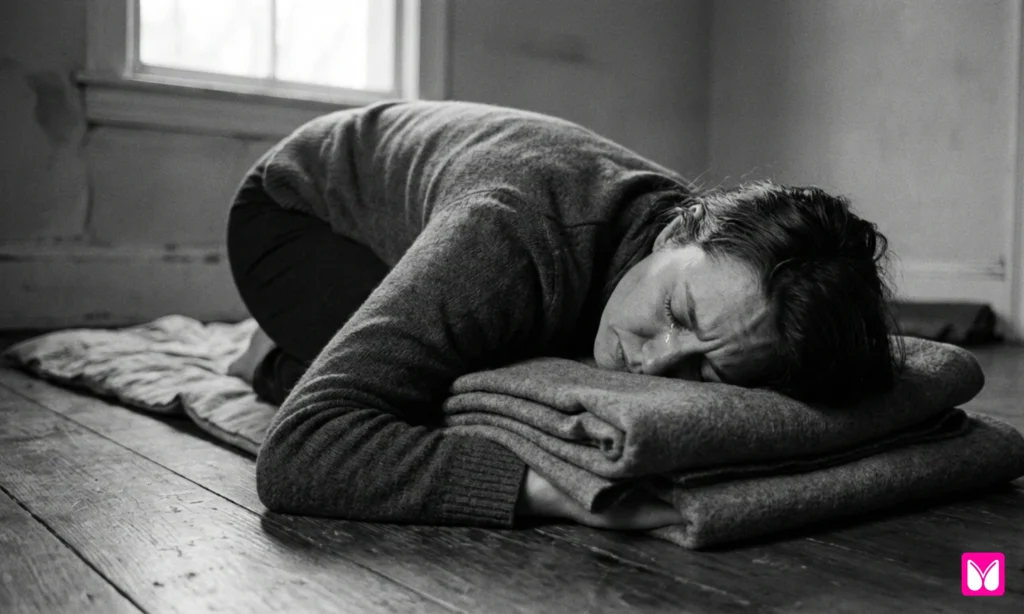
So, is Yin yoga a waste of time?
Only if you believe consciousness itself is a waste of time.
Just like I have emphasised already, Yin yoga is not about flexibility. It’s not about burning calories.
It’s not even primaIt’s about It ‘sical health, thoughIt’s sose are welcome side effects.
Yin yoga is about the fundamental work of consciousness: learning to observe your mental patterns without being consumed by them.
The people who call Yin yoga a waste of time are often the same individuals who struggle to sit still for five minutes without checking their phones. They’re not critiquingYin yoga. They’re revealing that they’re for stillness.
If you practice the Vṛtti Nirodha Sequence above consistently, honestly, without ego, you will discover something profound: the person you were afraid of being alone with (yourself) is not actually the problem. The problem was never being taught how to be with yourself.
Yin yoga teaches you that. And once you know it, you know it forever.
1. How often should I practice yin yoga?
Ans: 2-4 times per week is ideal for most people. Balance it with Yang practices (strength training, cardio, vinyasa). Listen to your body. If you’re constantly in Yang mode, you’re actually easing your Yin frequency.
2. Can beginners do yin yoga?
Ans: Yes. Yin is accessible to all levels. Use props generously and start with 3-minute holds. The challenge is mental, not physical.
3. Why do I feel so emotional during yin yoga?
Ans: You’re releasing stored Pranic energy from past experiences held in your fascia. This is normal, healthy, and a sign the practice is working.
4. Is yin yoga good for weight loss?
Ans: No. Yin does not burn significant calories. If weight loss is your goal, consider combining yin yoga with cardiovascular exercise and strength training to achieve your objectives. However, don’t discount stress, as it is crucial for sustainable weight.
5. Can I do yin yoga every day?
Ans: You can, but most people benefit from alternating yin and yang practices. Pure yin daily can make you too Yin-dominant (lethargic, unmotivated). Balance is key.
6. What’s the difference between yWhat’sa and just streWhat’s?
Ans: Stretching targets muscles and is typically held for 30-60 seconds. Yin targets fascia and is held for 3-5+ minutes, creating neurological and emotional effects that stretching does not.
Also read: 12 basic yoga poses for beginners.
This article brings together three voices to give you the complete picture of Yin Yoga:
Nandini Sharma provides the classical yoga foundation. A dedicated student of the Yoga Sutras and traditional Yogic texts, Nandini brings the philosophical depth and spiritual framework that makes this practice more than just stretching. She focuses on authentic teachings rooted in ancient wisdom, ensuring the practice honors its true purpose: Vṛtti Nirodha—the stilling of mental turbulence.
The structural clarity and scientific precision come from Jai Mehta, Co-Founder of Mindfullyoga and a Mechanical Engineer (B.Tech). With training in biomechanics and nervous system function, Jai ensures every explanation is grounded in how the body actually works; fascia, nervous system, connective tissue. This isn’t mysticism; it’s measurable science applied to practice.
Content Strategy & SEO Optimization: This article was strategically structured and optimized by Emmanuel Okafor, Content Strategist. Emmanuel ensures the teachings on Yin Yoga, stillness, and mental clarity are delivered with clarity, depth, and reach, making this a trusted and authoritative resource for anyone seeking authentic Yoga knowledge.

Emmanuel Okafor
Emmanuel Okafor is a skilled SEO specialist and content writer with hands-on experience in optimizing websites for visibility, traffic, and authority.Emmanuel has contributed to the growth of several startups across various niches, including AI, technology, health, and mental well-being. He is passionate about storytelling, digital marketing, and helping brands meaningfully connect with their audience online.