
-
 by
Emmanuel Okafor
by
Emmanuel Okafor - November 22, 2025
- 0 Comments

Table of Contents
I once thought yoga was all about bending the body until I learned the hard way on a hospital bench.
On one of those days, the world felt like it was pressing down on me, and the weight of stress was unbearable. As I sat there hoping for clarity, an elderly woman whispered to me, “Come on, your breath is running faster than your thoughts.”
This simple statement led me into the realm of Patanjali’s Eight Limbs of Yoga philosophy.
This path teaches not only how to manage your body but also how to discipline your habits, calm your mind, and even find inner peace amidst chaos.
So, let me be clear, yoga is not all about bending the body to reach the toes; it’s all about unbending your life.
In this article, you’ll discover the Eight Limbs of yoga philosophy, explained step-by-step, clearly and concisely, so that even beginners can start incorporating these teachings into their daily routine immediately.
What Are the Eight Limbs of Yoga Philosophy?
The very first day I heard the phrase “eight limbs of yoga,” it felt so complicated.
Let’s use this analogy. See life as a tree.
Some days, you are standing tall.
Some days, your branches feel heavy.
And some days, just one single breeze can swing you so much that you begin to question everything.
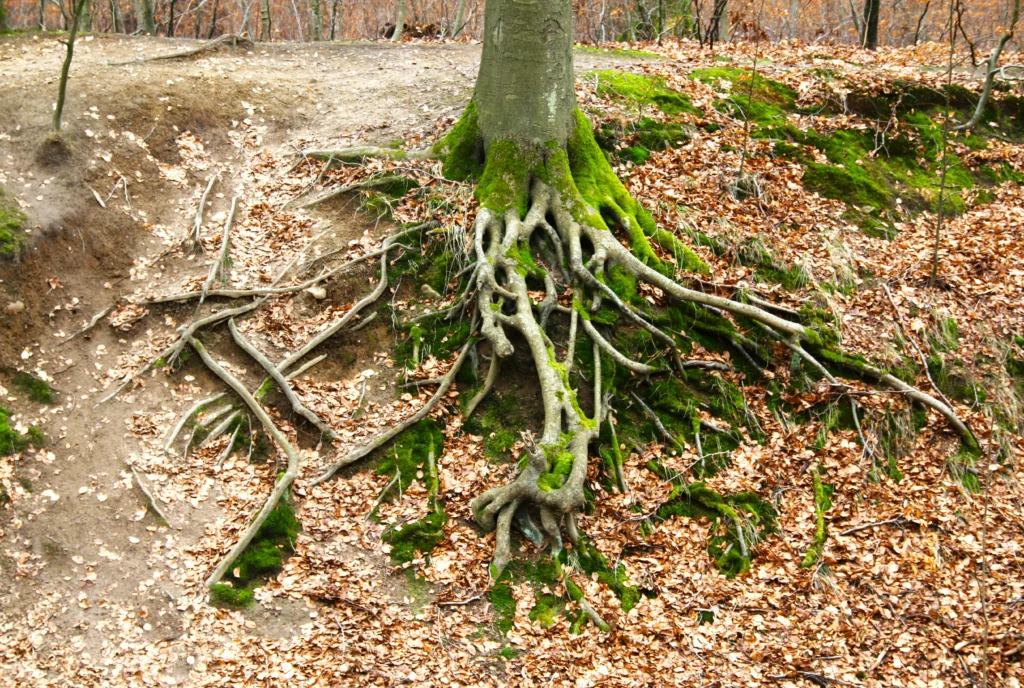
Now, we know that trees are anchored and held by their roots. The ei ht limbs of yoga philosophy are just like the roots of that tree, holding you firmly so that you won’t be easily swayed when the winds of life become intense.
Most of us are familiar with the standard pose, known as Asana. But Patanjali, one of the ancient yoga philosophers, never meant yoga was only about touching your toes. He meant it to help you feel your life… your habits, your thoughts, your relationships, and your choices, even in your darkest moments.
The Eight Limbs Are a Simple Step‑by‑Step Path
Here’s the simplest way to understand them.
- How do you see the world?
- How do you see yourself?
- How you move your body
- How you breathe
- How do you turn inward
- How you focus
- How you meditate
- How do you find deep inner peace
When I finally learned this, something within me sprang to life. I realised something. Yoga is not only designed to be performed, but we’re meant to live by that.
Who knows, just maybe… that’s why you’re reading this now
Because some part of you is tired of living life on the surface and is ready to go deeper
Explore simple breathwork techniques that prepare you for the eight limbs
Origin of the Eight Limbs: Patanjali’s Yoga Sutras
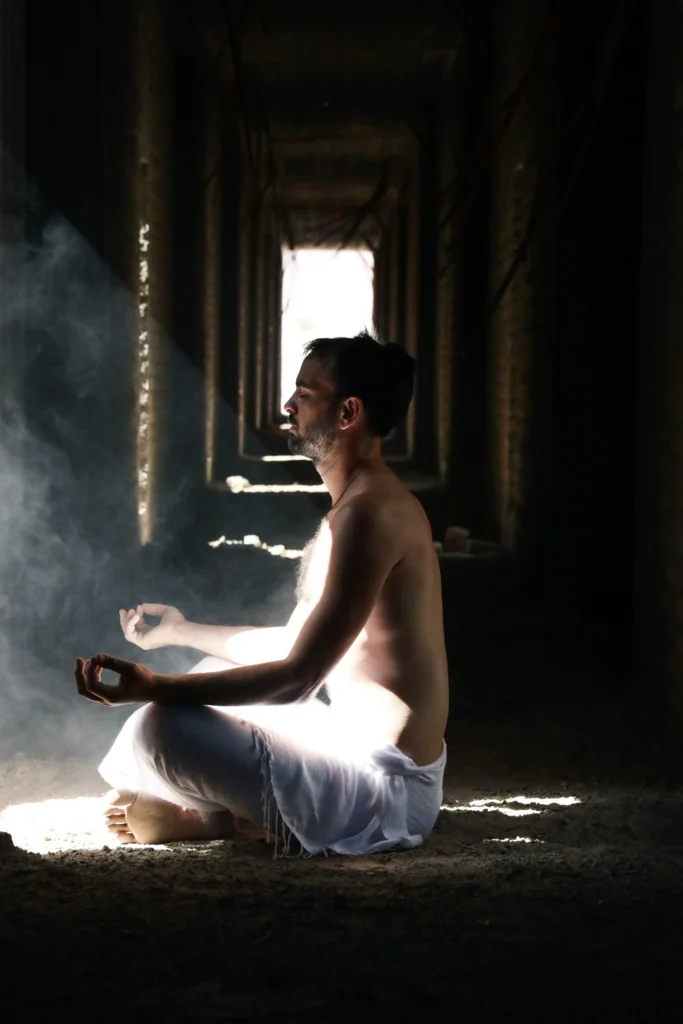
I can’t forget that first night I opened a copy of the Yoga Sutra.
It wasn’t in a yoga studio.
It was on a night when sleep went into exile and refused to visit, and my mind felt like a large room full of restless children.
Someone had once told me, “If you ever feel lost, go back to the beginning.”
That beginning was Patanjali.
Pantajali wasn’t just a physical fitness instructor; he was a philosopher who deeply understood how people suffered long before the emergence of stress, anxiety, and burnout. He also observed the world and saw the same pattern we still see today.
- People are drowning in their thoughts.
- People repeat habits that hurt them.
- People are searching for peace everywhere.
And so, he created the Yoga Sutra, a collection of just 196 short, simple sentences; yet, each sentence feels as if it were written directly for you.
Inside these Sutras was the treasure we now call the Eight Limbs of Yoga philosophy step-by-step:
- Not rules
- Not commandments
- Not perfection
But a roadmap for anyone who feels disconnected, overwhelmed, or stuck in a life moving too fast.
“If you can guide the mind, you can guide life.”
Even after thousands of years, many people still return to the eightfold path of yoga because it offers something the modern world often forgets: a way back to yourself.
Now, let’s dive into the first link: Yama, where yoga truly begins in the heart, not on the mat.
Learn beginner meditation techniques to calm your restless mind.
Limb 1 – Yama: How you treat the world (where yoga truly begins)
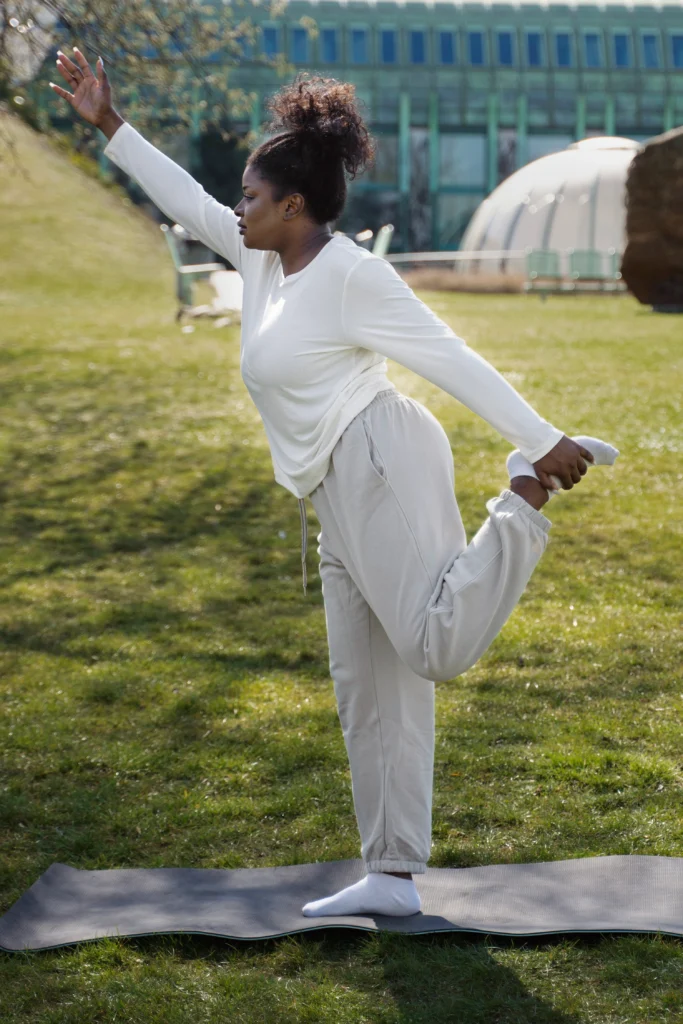
The first time I learned about Yama, my instructor said:
“Before you fix your posture, fix your life.”
And honestly…it hit hard.
As I mentioned earlier, it’s not about pos s. It’s the kind of energy you give your life…the energy that shapes your peace, your clarity and even your happiness.
If you want to stay calm and meet a kinder version of yourself, consider Yama as five gentle reminders within the Eight Limbs of Yoga philosophy, presented step-by-step.
The Five Yamas (Your First Step in the Eight Limbs of Yoga Philosophy Step-by-Step)
1. Ahimsa – be gentle.
- With others
- With yourself, especially in those dark thoughts that try to wear you down
2. Satya – tell the truth
- The truth that sets you free
- Not the kind that cuts harshly
3. Asteya -Don’t take what isn’t yours
And I’m not talking about objects alone
I’m talking about time, attention and emotional energy that you have no right to drain from others.
4. Brahmacharya – choose balance
- Not extremes
- Not burnouts
- Just a simple steady balance
5. Aparigraha – let o. Don’t
- Don’t be too hard on yourself (release the grip)
- Don’t hold on to what is already slipping
- Not everything is yours to carry
When you practice Yama, life stops feeling like a weight
You start seeing life like a flow. This is where yoga truly begins, the part many people skip without realising.
Come to think of it…..
If Yama is about how you treat the world, Niyama is the whisper asking.
“And how do you treat yourself?”
Because sometimes, the hardest person to show kindness to … is you.
“These Yamas are the first step in the Eight Limbs of Yoga for beginners, especially if you want a practical, grounded practice.
Limb 2 – Niyama: The practices that strengthen your Inner world
See this analogy: Niyama is like cleaning a small room in your building.
That room is your heart
The building … your entire body and your entire life
Niyama teaches you to grow from within, so your peace isn’t easily shaken
This is the second step in the Eight Limbs of Yoga philosophy, a step-by-step approach that focuses on the habits that make your inner world feel lighter, more transparent, and more grounded.
The Five Niyamas (Your Inner Practices in the Eight Limbs of Yoga)
1. Saucha – keep your space clean
- clean your mind
- clean your body
- clean your environment
Because clutter outside creates noise inside.
2. Santosha – practice contentment
Not”I have everything.”
Just what I have right now is enough.
3. Tapas- stay disciplined
Even on days when motivation is low
Repeat small efforts
That’s where transformation hides
4. Svadhyaya- know yourself
Reflect
observe
Ask yourself the questions you avoid when the world gets loud
5. Ishvara pranidhana- surrender
Releasing control is not a weakness
It’s trust.
And sometimes, trust is the strongest thing you can carry.
Niyama is where your inner strength begins to grow. The part of yoga that doesn’t ask for your perfection….just your presence
When you build these habits, your life becomes lighter… and suddenly, movement feels easier.
“These Niyamas are essential for anyone following the Eight Limbs of Yoga philosophy step-by-step, especially beginners looking for inner stability.”
Now, let’s move to the limb most people think yoga begins with: Asana — the physical postures.
Limb 3 – Asana: The Movement That Connects Your Body and Mind
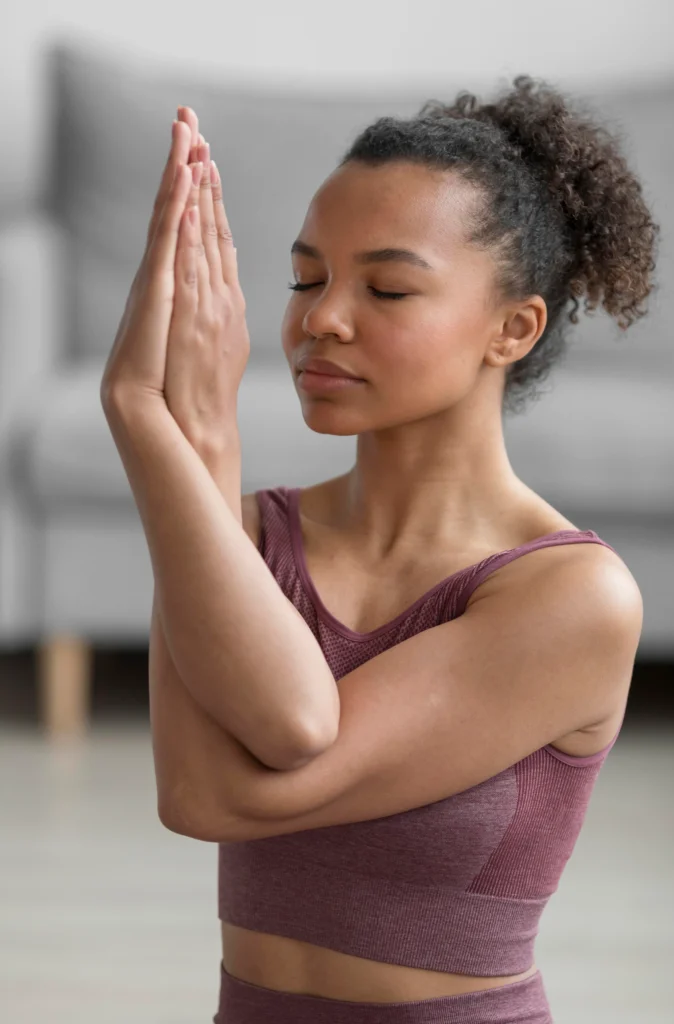
By now, you should already know that Asana is the third step in the Eight Limbs of yoga philosophy, not the first.
And honestly… that’s part of its magic.
Because once you finally arrive at Asana, your heart has already been softened by Yama, and your inner world strengthened through Niyama.
Only then does the body become ready to speak.
Many people still believe that Asana is all about picture-perfect poses or Instagram-level flexibility.
But no, Asana is about creating a moment where your body stops arguing with your mind, and both begin to work together.
As a beginner, here’s what Asana offers:
- A place to breathe again: With every stretch, you release a story you have kept inside for too long. Movement becomes medicine
- A place to listen: your body tells the truth, your mind often avoids. Asana teaches you to hear it without judgment.
- A place to return home: Even one gentle pose can reset your entire day.
There’s a powerful yoga philosophy that says:
A steady, comfortable posture opens the door to peace.
That’s all Asana wants: stillness, comfort, and awareness, not performance.
You don’t need a flexible body; you need a willing one.
Because when the body learns stillness through movement, the breath becomes your guide… and the mind begins to settle.
Limb 4 – Pranayama: Using your breath to calm your mind
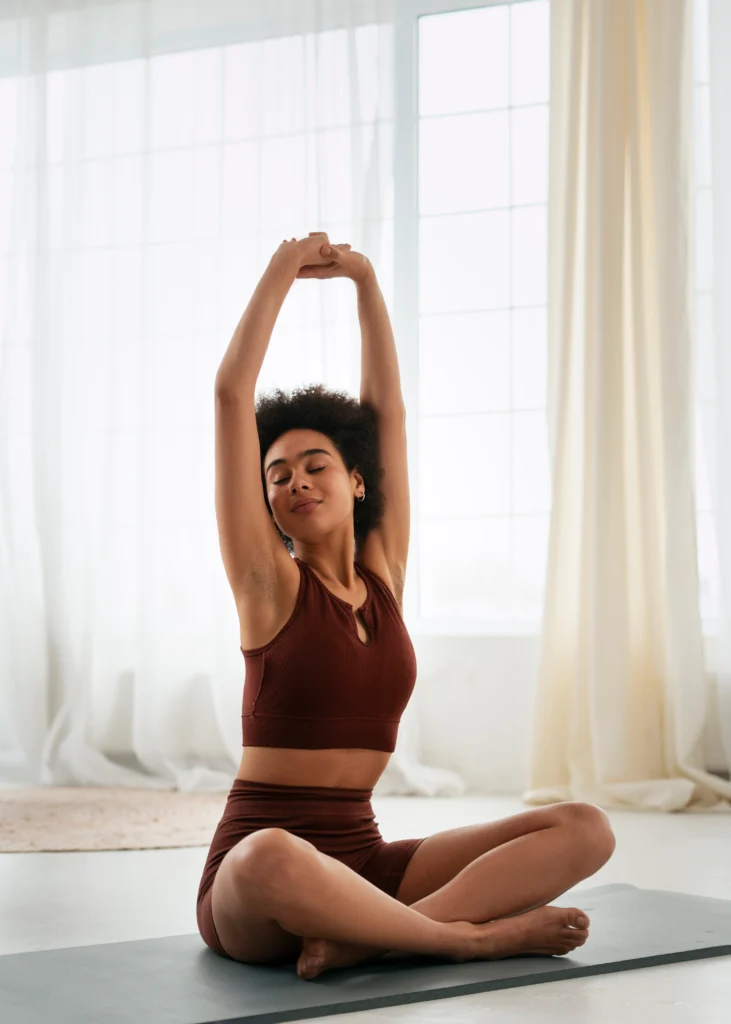
Pranayama will help you control your breath, steady your emotions, and soften the chaos inside your mind.
This is the fourth limb of the Eight Limbs of Yoga Philosophy, and it teaches something many of us forget: your breath can save you long before your thoughts can.
Here’s what Pranayama really offers, especially for beginners still learning how to breathe with awareness:
1. It reduces stress instantly.
When you breathe slowly, your nervous system relaxes, your heart rate drops, and those racing thoughts begin to soften.
2. It helps you take control in overwhelming moments.
Anxiety, frustration and anger often come with fast, shallow breathing.
Pranayama reverses that pattern and shows you how to take back control gently.
3. It improves focus
Before you start a task, take a soft breathing exercise, and I bet you that mental fog will clear in less than 1 minute
4. It increases energy naturally.
Some Pranayama techniques can wake your body more efficiently than caffeine, without the crash.
5. It prepares you for meditation.
When your breath becomes steady, and your mind becomes quiet, meditation stops feeling like a battle and starts feeling like a rest.
Here are the two simple beginner-friendly techniques you can use anytime
Beginner-Friendly Pranayama Techniques
These two simple techniques can help anyone anytime, even if you’re entirely new to the Eight Limbs of Yoga Philosophy.
- Box breathing (4-4-4-4)
Very simple, inhale 4 sec →hold your breath 4 sec → exhale 4 sec → hold 4 sec again
- Extended exhale (4-6):
Inhale 4 sec – exhale 6 sec
If you want to release tension, this is the best option.
Pranayama doesn’t teach you how to control everything around you; it teaches you how to control the way you respond, starting with your breath.
And once your breathing becomes steady, the next limb becomes easier.
Limb 5 – Pratyahara: Turning Inward when the World gets Too Loud

Do you know that feeling when you’re tired, not that physical tiredness, but the kind that comes from too many opinions, too much noise, and too many expectations?
That strange moment when your phone is finally silent, but somehow…your mind is still restless?.
This is the loud world we live in today, and Pratyahara, the fifth limb in the Eight Limbs of Yoga Philosophy, step-by-step, teaches you how to retreat from the noise without abandoning your life.
Pratyahara means:
“Turn Inward”
Not dramatically
Not forever
Just long enough to reconnect with yourself.
How Pratyahara Helps Beginners
- You reduce outside noise
- You give your senses a break:
- You reconnect with what you genuinely feel
- You replace panic with pauses
Beginner-Friendly Ways to Practice Pratyahara
- Sit down in your room for 2-3 minutes with your eyes closed.
- Eat your meal without a phone, TV, or music.
- Take a silent break: no calls, no scrolling
- Try a 5-minute Digital detox every evening
- These tiny inward steps build the foundation for more profound calm, and once the noise inside you settles, the next limb naturally becomes possible
Limb 6 – Dharana: Learning to Focus When Your Mind Keeps Wandering
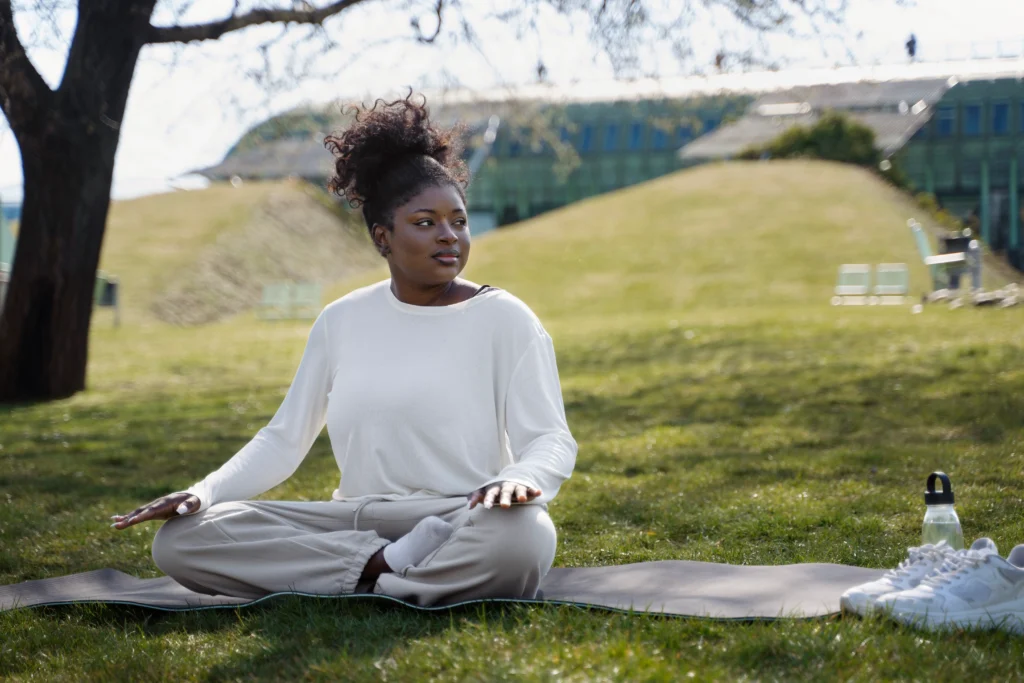
When I first learned about Dharna, the sixth limb of yoga, one question came to me:
“When was the last time you focused on just one thing?”
I wanted to answer.
But honestly, I couldn’t remember.
Our mind jumps from one thought to another. Dharna is the limb that teaches how to hold your attention on one thing.
Not perfectly
Not permanently
Just long enough to feel present again.
How Dharana Helps Beginners
- It reduces mental chaos: Instead of 20 thoughts fighting for attention, you choose one. Instant relief
- It calms your nervous system through focus: When your attention is not scattered, your body relaxes as well.
- It improves clarity and productivity: One task at a time suddenly becomes easier.
- It prepares you for meditation: Meditation becomes impossible when your mind is restless. Dharana slows it down.
Beginner-Friendly Dharana Practices
- Focus on your breath for 30 seconds
- Gaze at a candle flame to observe its movement
- Fix your eyes on a single point during a yoga pose
- Repeat slow, calming words and affirmations.
Try these small practices. You’ll notice something surprising:
Your mind becomes quieter than you expected.
And once you learn how to focus gently, the next limb unfolds naturally.
Limb 7 – Dhyana: Meditation That Feels Natural, Not Forced
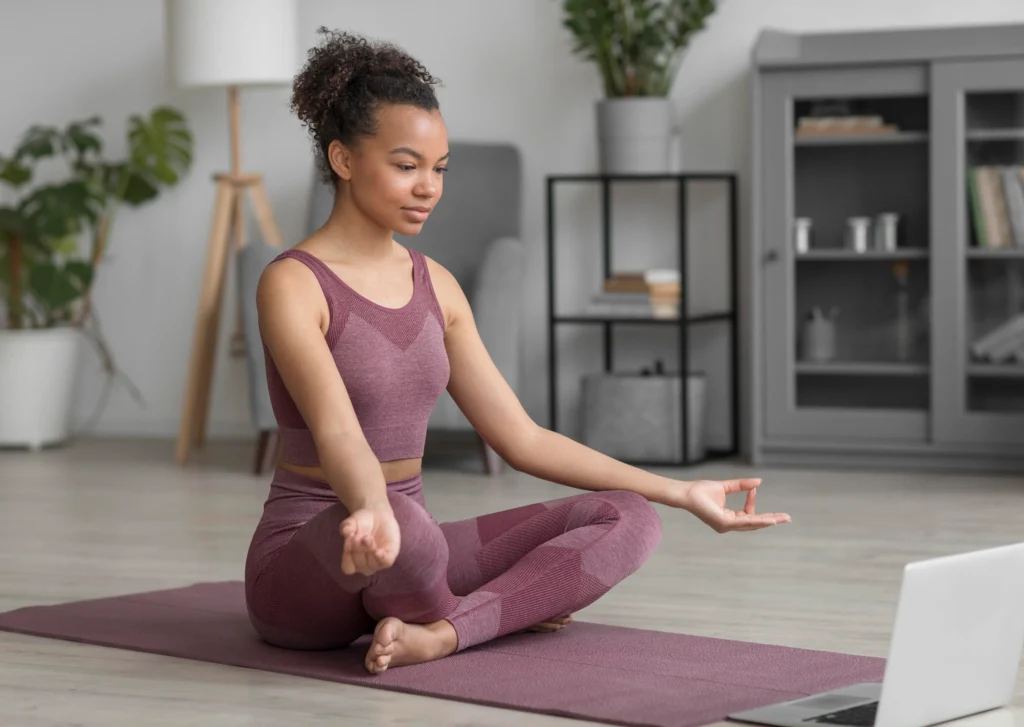
Many people think meditation is all about staying still with an empty mind.
But if that were true, none of us would succeed, and honestly, life is louder than that.
Dhyana, the seventh step in the Eight Limbs of Yoga Philosophy, is not about forcing silence, step by step. It is
continuous awareness …. without struggles
Not fighting your thoughts.
Not controlling them.
Just watching them gently.
What Dhyana Offers Beginners
- Your thoughts become less noisy
- You observe more and release less
- You are beginning to feel emotionally lighter
- You sleep better because your mind isn’t constantly racing
Simple Ways to Practice Dhyana (Without Stress)
- Sit for 2 minutes and take note of your breath.
- Listen to one calming sound, such as soft music, and stay with it.
- Imagine your thoughts passing like a moving car; you don’t chase any of them.
- Focus on your heartbeat for a few seconds.
As this awareness becomes steady and peaceful, you naturally approach the final limb, the one people often talk about, yet rarely understand deeply.
Limb 8 – Samadhi: The State of Deep Inner Peace
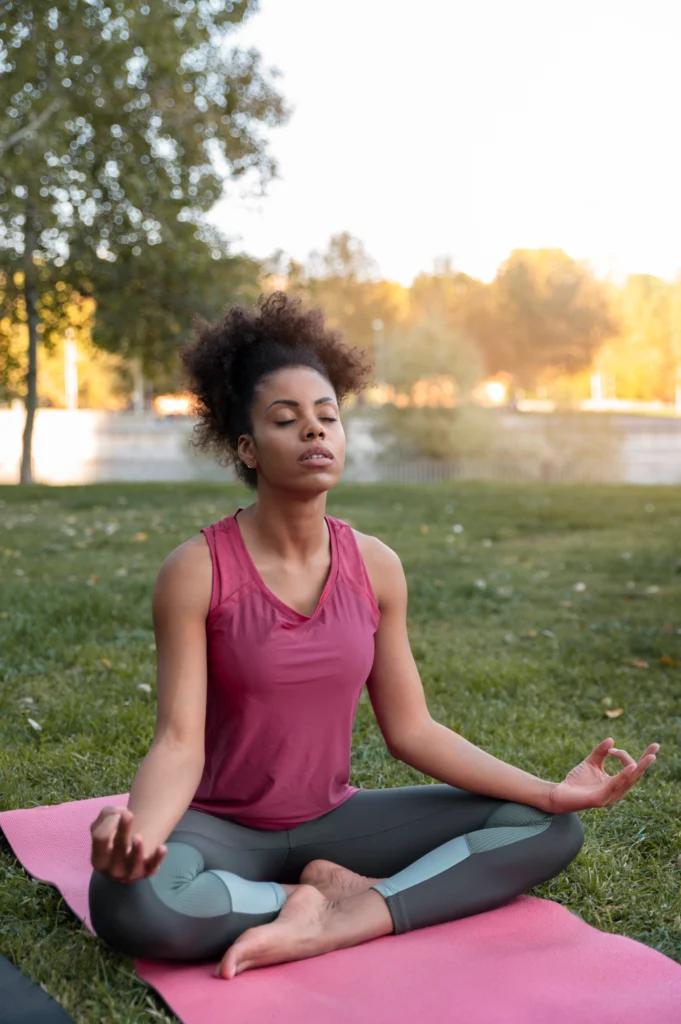
Samdahi is often described as the final goal of yoga and the culmination of all the previous seven limbs in the Eight Limbs of Yoga Philosophy, step-by-step
Here’s what Samadhi means in simple, beginner-friendly terms:
What Samadhi Feels Like
You’re fully present in the moment
. You feel clear and grounded, free from inner chaos
. You are connected to yourself, your mind and breath aligned
. You respond to life, not react to it, experiencing calm and balance even in challenging situations.
Samadhi is the natural result of consistent practice through Yama, Niyama, Asana, Pranayama, Pratyahara, Dharana, and Dhyana—It’s where deep inner peace, clarity, and harmony converge.
Most people walk into yoga thinking it’s all about the poses.
But now that you’ve seen the whole picture, the Eight Limbs of Yoga philosophy serve as a roadmap for living a calmer, more intentional life.
Yoga is more than just poses; it’s a journey through the Eight Limbs of Yoga Philosophy, step by step, guiding you from self-discipline to deep inner peace. Each limb builds on the last, helping you live with awareness, balance, and presence.
Want to explore more? Visit our About Us page to learn how we guide beginners on this transformative journey. Would you like to know more? Stay connected for practical tips, step-by-step guides, and mindful practices to bring yoga into every part of your life.
This guide was built from real experience, long study, and the lessons life forced me to learn—so you can navigate the Eight Limbs of Yoga with clarity instead of confusion. If you want to know more about my journey and why I teach yoga the way I do, you’ll find it on my About page.
Also Read: The Eight Limbs of Yoga: A Simple Guide to the Path Beyond Poses
Also Read: Printable Chair Yoga for Seniors: The Only 5-Minute Daily Routine You’ll Need.
Also Read: Why Is Kundalini Yoga Dangerous? (The Real Risks You Should Know)

Emmanuel Okafor
Emmanuel Okafor is a skilled SEO specialist and content writer with hands-on experience in optimizing websites for visibility, traffic, and authority.Emmanuel has contributed to the growth of several startups across various niches, including AI, technology, health, and mental well-being. He is passionate about storytelling, digital marketing, and helping brands meaningfully connect with their audience online.