

-
 by
Emmanuel Okafor
by
Emmanuel Okafor - December 10, 2025
- 0 Comments

The Truthful Confrontation (Satya)
Table of Contents
I am going to start by answering the question immediately without suspense, without fear and without tiptoeing around the anxiety many people feel:
No – yoga is not demonic. It never was. But the confusion has become so loud within the modern Christian communities, prompting people to ask this question, “Is yoga demonic?” as if it were a kind of mystery hidden that no one is ready to let out
Many people think that the problem lies in yoga itself, without realising that the problem is actually ignorance. Many people are unsure of what yoga truly is, which creates a sense of fear in them.
Before yoga became a global phenomenon, it was something far more disciplined, more universal, and far less mysterious. Don’t forget that Yoga had long existed before the modern commercial world and even before organised religions took recognisable form. The ancient philosophers who developed yoga were not building a religion; they were building a science of the mind: a direct method for understanding human consciousness.
Yet today, so many fear poses, Sanskrit words, or breathing practices because they’ve been separated from their original context. When language is removed from meaning, misunderstanding is inevitable.
So let us state a foundational truth:
Classical yoga was never designed to convert anyone, challenge anyone’s belief in God, or lead them toward another deity. Its goal is straightforward.
And what is it:
Internal clarity, a mind that is free from distortion, fear, and mental turbulence.
And that is the real reason we need to speak boldly: because the modern $125 billion yoga market has buried the original definition under commercial branding. When understanding disappears, suspicion rises. When suspicion rises, spiritual fear follows.
But fear dissolves when truth is spoken plainly.
The Thesis

Just as I mentioned earlier, the true meaning of Yoga has been greatly misunderstood, especially when people begin asking, “Is yoga demonic?” Much of this confusion stems from the merging of religion and modern interpretations that overlook the original philosophy.
The final goal of yoga is Samadhi, a state of complete mental stillness.
It is not Christian.
It is not anti-Christian.
Asking “Is yoga demonic?” assumes yoga is connected with worship. Still, classical yoga is a neutral discipline that uses universal human faculties, awareness, breath, and focused attention, to calm the mind.
I am writing this article to dispel fear, answer the question honestly, and return yoga to its original philosophical foundation, far from the misconceptions that lead people to wonder if yoga is demonic in the first place.
The Science of the Mind: Defining Yoga (The Eight Limbs)
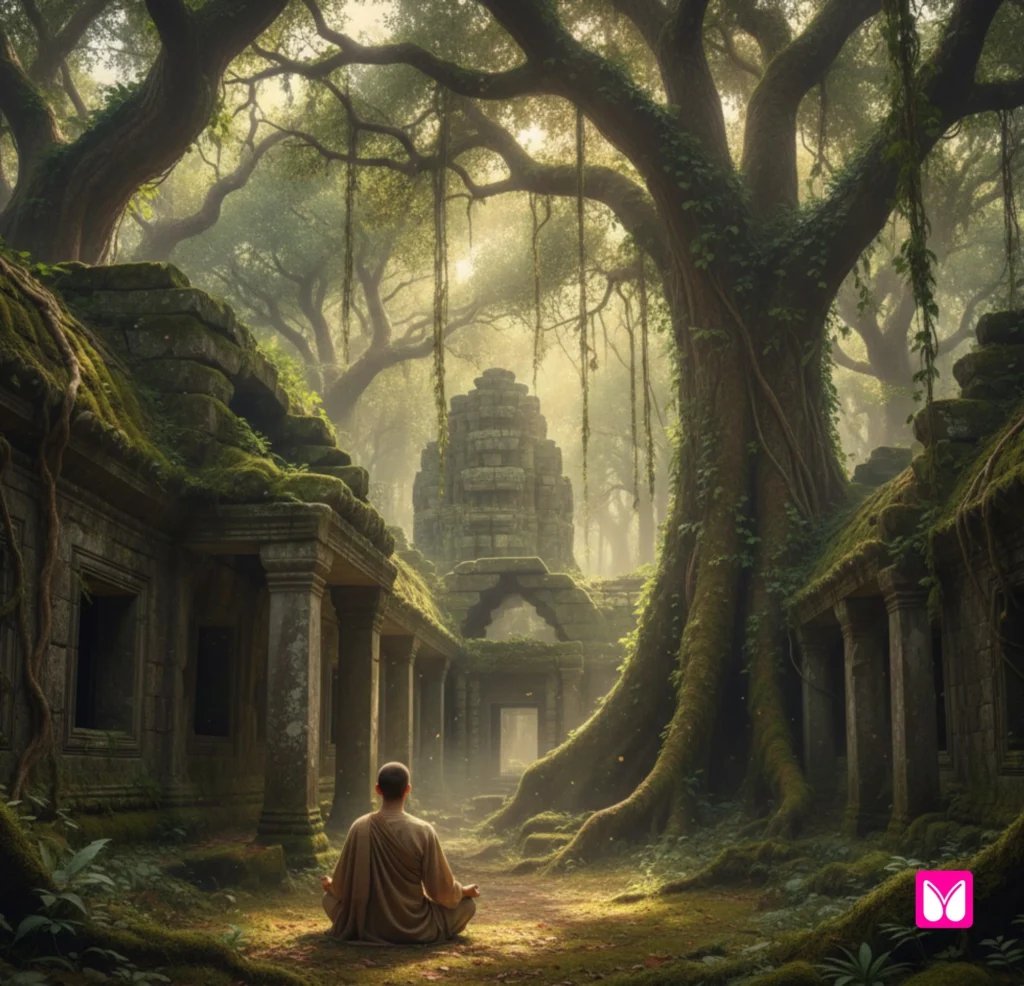
Before anyone asks, “Is yoga demonic?”, the honest response should be: Do you even know what yoga is?
Most modern interpretations draw assumptions from fragments, pose without philosophy, Sanskrit without meaning, and spirituality without context.
Classical yoga is not a religion. It’s a method of stilling the mind.
More precisely, the Yoga Sutra offers a single definition:
Also read: Eight Limbs of Yoga Philosophy Step by Step
“Yoga is the cessation of the fluctuations of the mind.”
(Yogaś citta-vṛtti nirodhaḥ)
That is not poetry; it is a psychological formula. Long before modern neuroscience, ancient thinkers observed that the human mind is restless, compulsive, reactive, and constantly disturbed by memories, anxiety, fear, desire, and imagination. Yoga emerged as a systematic practice to calm and organise the mind.
Many ask, “Is yoga demonic?” because they see its spiritual origins and fear hidden influence. The truth is, yoga was never designed to replace belief in God. Its purpose is simple and universal: to free the human mind from suffering caused by confusion and mental turbulence.
A. The Sanskrit Definition
When we translate the original Sanskrit, yoga is not “stretching,” “wellness,” or “Eastern religion.” Many people ask, “Is yoga demonic?” because they see its ancient roots and assume religious influence. The truth is that yoga is a disciplined regulation of consciousness—a neutral practice using techniques that anyone, regardless of belief, can apply.
- Breathing is universal.
- Concentration is universal.
- Self-awareness is universal.
Nothing in its foundation requires cultural conversion.
B. The Eight Limbs: A Neutral Path
The classical path of yoga comprises eight limbs, which is a comprehensive psychological framework.
- Yamas – universal ethics
- Niyamas – personal disciplines
- Asana – physical posture
- Pranayama – breath regulation
- Pratyahara – withdrawal of senses
- Dharana – concentration
- Dhyana – meditation
- Samadhi – complete absorption
Each step refines the mind toward clarity, not toward worship.
Yamas & Niyamas
The Yamas and Niyamas are often misunderstood as “Hindu rules.” These are universal principles found across all faith traditions:
- non-violence
- truthfulness
- non-stealing
- purity
- contentment
Now, let me ask you…
If a Christian practices truthfulness, is that demonic?
Of course not.
These are human ethical values.
Asana
Today’s Western practice primarily focuses on the third limb, Asana. But many still ask, “Is yoga demonic?” because they see poses with spiritual names or origins. Originally, asana was a simple concept: finding a steady, comfortable seat for meditation. That was the entire purpose.
The body posture was never the goal.
Stillness was.
A pose is a geometry.
It has more meaning when intention is involved.
Pranayama & Dhyana
Breathing techniques and meditation are actually more “yogic” than the poses themselves. Many people wonder, “Is yoga demonic?” when they hear about these practices, fearing hidden spiritual influence. In reality, these techniques focus the nervous system, balance the mind, and remove internal noise. They are mental sciences, not religious rituals, and anyone, regardless of faith, can safely practice them for clarity and calm.
The Goal: Samadhi
All eight limbs lead to one destination: Samadhi, the complete integration of attention.
This union does not refer to merging with a deity. It refers to the unification of consciousness, a state in which the mind becomes still, stable, and clear.
If we understand this, the question “Is yoga demonic?” collapses instantly.
There is nothing demonic about clarity, stillness, or awareness.
The real danger is misunderstanding.
Addressing the Core Christian Concerns
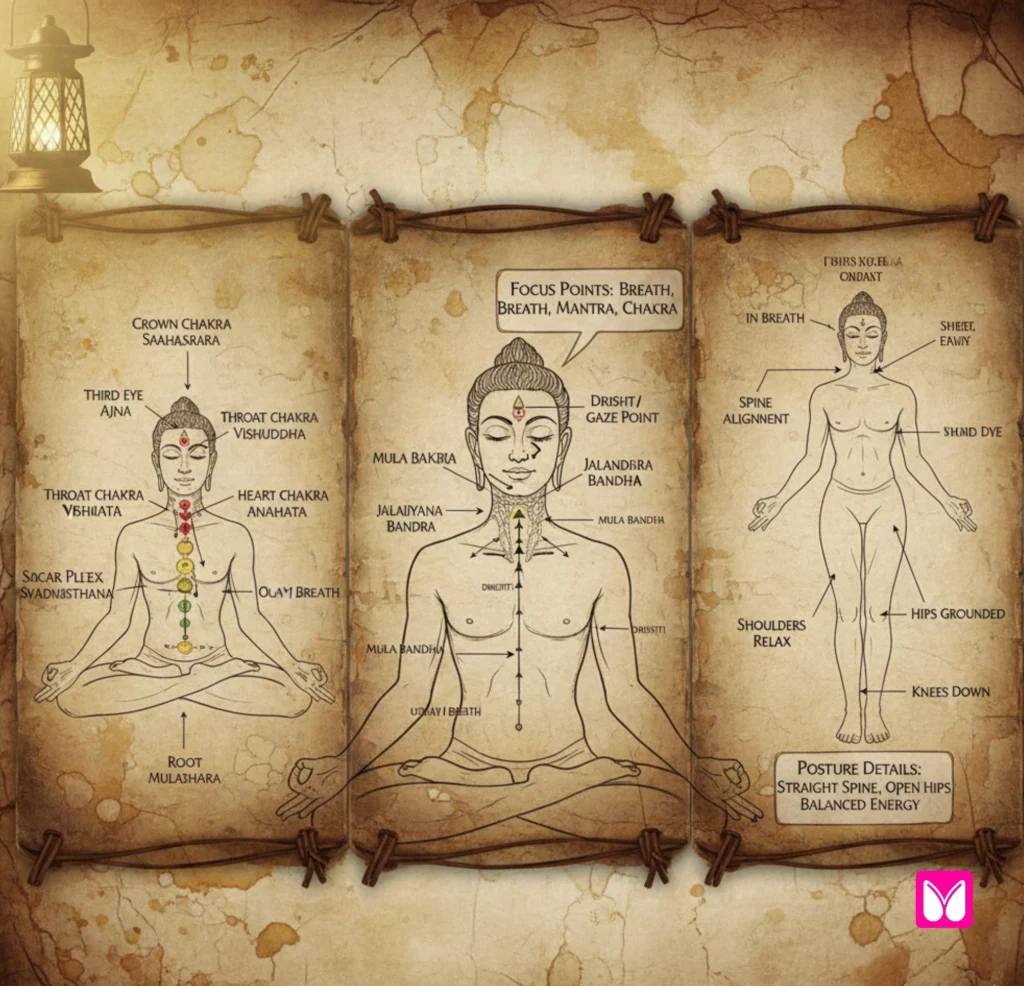
Now that we’ve grounded yoga in its original meaning, we can finally address the question that many Christians and curious minds ask: “Is yoga demonic?” They wonder if its symbols, names, or spiritual associations carry hidden spiritual influence.
Most concerns fall into three areas: poses, chanting, and the concept of energy. Each of these deserves a clear explanation, grounded in authentic yoga philosophy rather than modern assumptions or misconceptions.
A. The Pose Conflict (Idolatry)
Some people notice that specific postures have mythological names, such as Virabhadrasana (also known as Warrior Pose), and immediately ask, “Is yoga demonic?” They worry that performing a pose could be a form of worship.
Let’s clarify:
A posture is simply a physical alignment of the body. Nothing more.
In a gym, an instructor may casually refer to a stretch as “Warrior,” just as someone might say “pigeon” or “bridge.” The name is cultural vocabulary, not a spiritual transaction.
Worship only exists if the intention of the practitioner is worship.
Flexing the spine is not bowing to a deity. The pose itself is neutral—what matters is the mind guiding the body.
B. The Mantra and Chanting Concern
Some practitioners encounter chanting or the sound “Om” and immediately ask, “Is yoga demonic?” They fear it might invoke a spirit. Historically, Om represents the vibration underlying existence, the same concept that Christianity might describe as the Word or Logos.
The truth is simple: a mantra is a tool of concentration, not a form of religious allegiance.
If a mantra explicitly refers to another deity, anyone has the right to replace it or avoid it. A Christian can meditate on Scripture just as easily as another practitioner meditates on a sound vibration. The practice remains a tool for focusing the mind—nothing more, nothing less.
Intention determines meaning.
C. Kundalini (The Energy)
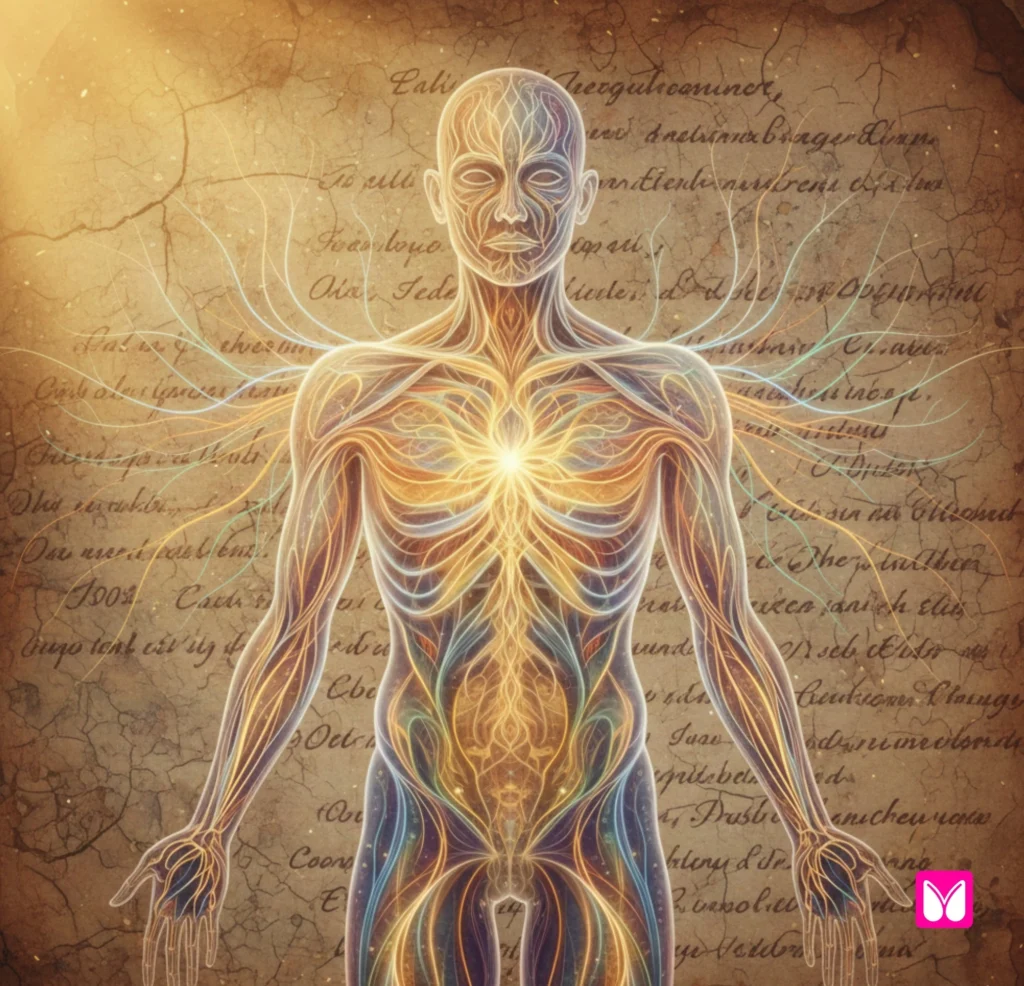
Few topics create more confusion than Kundalini. Many people imagine a mysterious force entering the body from outside, which evokes a sense of fear. However, classical texts describe Kundalini as internal energy, the potential that lies within every human being.
It is not an external spirit, and indeed, it is not a demon.
It is a metaphor for human consciousness awakening from distraction to a state of awareness.
Breath, focus, and posture purify the nervous system, not summon spiritual beings.
When stripped of mythology, Kundalini is a psychological reality: the unfolding of inner awareness.
When we separate yoga from misunderstanding, we see that nothing about its actual purpose conflicts with faith itself. If someone asks, “Is yoga demonic?” our answer becomes clear the moment we understand what yoga actually teaches: awareness, intention, and clarity, not worship.
Also read: Why is Kundalini Yoga Dangerous?
Conclusion: The Power of Intention and Integrity
The straightforward conclusion is that yoga is not demonic. Yoga is a science of the mind.
Its purpose is inner clarity, not religious conversion, not worship, and indeed not spiritual danger. Every technique, from posture to breath, is designed to bring the mind into a state of stillness. That is a psychological state, not a theological allegiance.
What can be dangerous is ignorance.
When people perform yoga without understanding its philosophy, they get lost between fear and misinformation.
Intention is the real moral boundary.
If a person seeks physical well-being, they will achieve it. If they seek mental stillness, they will find it. Nothing in the practice automatically leads them away from faith.
Yoga becomes what the practitioner intends.
- Do not fear yoga.
- Fear of misunderstanding.
And most importantly, as Nandini Sharma teaches:
The greatest threat to yoga today is not its origin but what the commercial industry has turned it into.
This article is the beginning of reclaiming the truth that modern marketing has buried.
Also read: Yoga Self-Care Rituals for Daily Bliss
Frequently Asked Questions
1. Is yoga demonic according to Christian belief?
No. Yoga is not inherently demonic, despite common misconceptions. Classical yoga is a psychological discipline focused on concentration, mental clarity, and inner stillness. The real question is intention: the practitioner’s mindset, not the pose or technique, determines whether an action carries spiritual significance.
Many ask, “Is yoga demonic?” out of fear or misunderstanding—but understanding its true purpose removes that concern entirely.
2. But yoga came from Hindu culture, doesn’t that make it religious?
Yoga originated in India, but its techniques are philosophical and psychological, not worship-based. Just as philosophy originated in Greece or mindfulness in Buddhism, a practice can emerge from a culture yet remain universally applicable.
3. Are specific yoga poses connected to Hindu gods?
Some postures have cultural names, but a physical shape does not carry spiritual power. A pose is geometry. Worship requires intention. Without intention, a stretch is simply a stretch.
4. Is chanting “Om” a form of worship?
Not automatically. “Om” represents a universal vibration used to steady the mind. If someone prefers not to chant, they can replace it with silence, breathing, or scripture-based reflection. Intention determines meaning.
5. What about Kundalini? People say it is spiritual power.
Kundalini refers to the human life force (Prana), similar to the body’s subtle nervous energy. Many who ask, “Is yoga demonic?” worry that Kundalini represents an external spirit or supernatural force. The truth is that it is neither a demon nor a spirit. These practices are designed to purify attention, focus the mind, and awaken inner awareness, rather than summoning spiritual entities.
6. Can Christians practice yoga safely?
Yes – if the practice is approached as physical or mental training, without engaging in religious worship. Many believers focus only on breath, posture, and relaxation, which are entirely neutral.
7. Should I avoid classes with spiritual elements?
If a class includes chanting to deities or religious rituals, you are free to avoid or modify it respectfully. The goal is clarity, not fear. Choose what aligns with your conscience and your faith.
8. What is the real danger in yoga today?
Ignorance. When yoga is misunderstood, either demonised or commercialised, its true purpose is lost. The most significant risk is misinformation, not the practice itself.
9. Is yoga a religion?
No. Classical yoga is a philosophical system that trains the mind and body in harmony. Religion involves worship, doctrines, and deities. Yoga involves awareness, concentration, and stillness.
This article reflects the philosophical truth and revolutionary perspective of Nandini Sharma, the voice and heart behind Mindful Yoga. As a dedicated student of the original Yoga Sutras and classical texts, Nandini Sharma is the sole author of the philosophical and ethical content presented here. This work is part of her mission to reclaim the integrity of Yoga from the commercial market.
Content Strategy & SEO Optimization: This article was strategically structured and optimized for reach by Emmanuel Okafor, Content Strategist, to ensure this essential truth breaks through the noise of the $125 Billion yoga industry.

Emmanuel Okafor
Emmanuel Okafor is a skilled SEO specialist and content writer with hands-on experience in optimizing websites for visibility, traffic, and authority.Emmanuel has contributed to the growth of several startups across various niches, including AI, technology, health, and mental well-being. He is passionate about storytelling, digital marketing, and helping brands meaningfully connect with their audience online.